In this article: Mezquita-Catedral de Córdoba – Between Light, Stone, and Faith
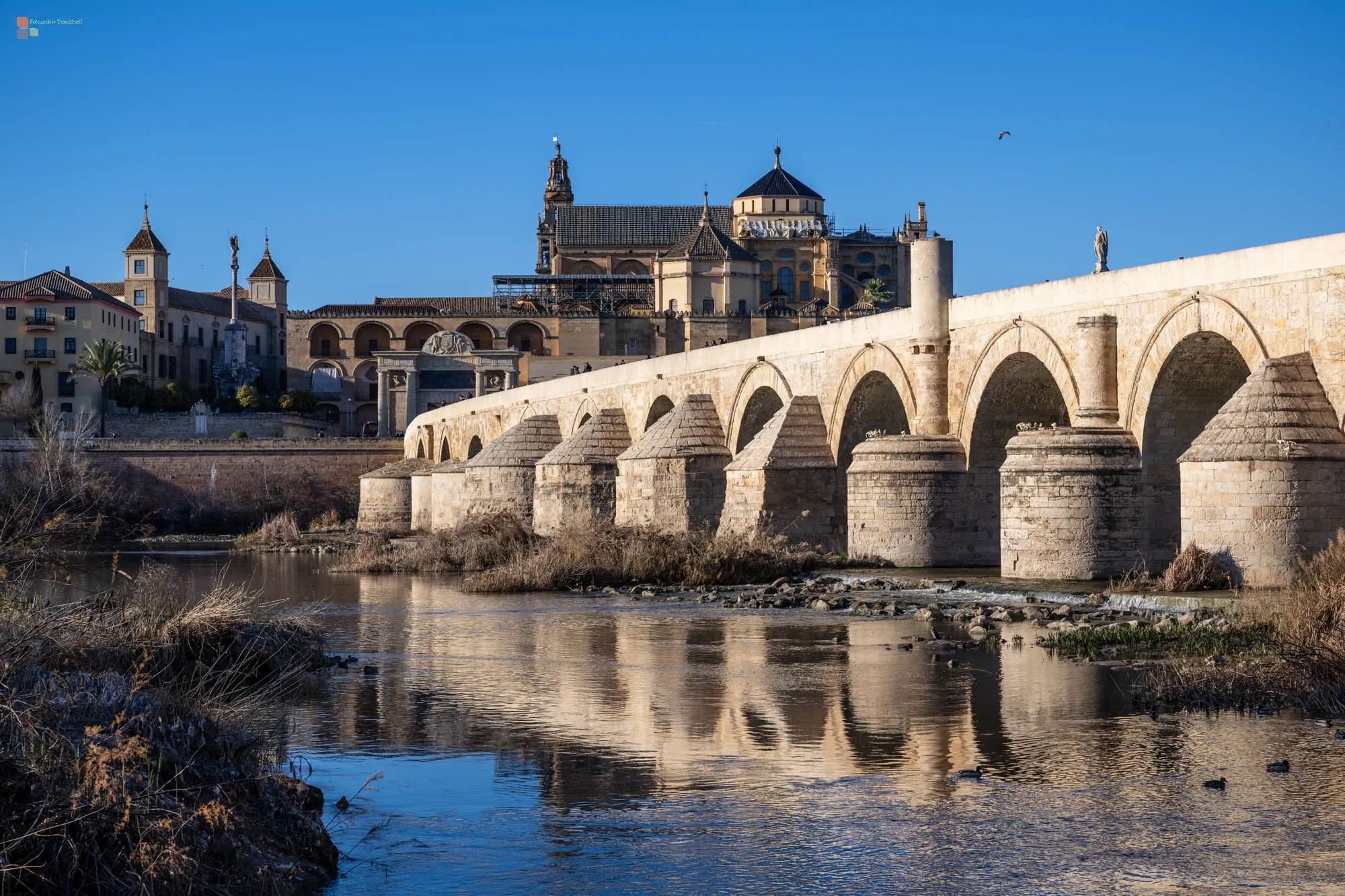
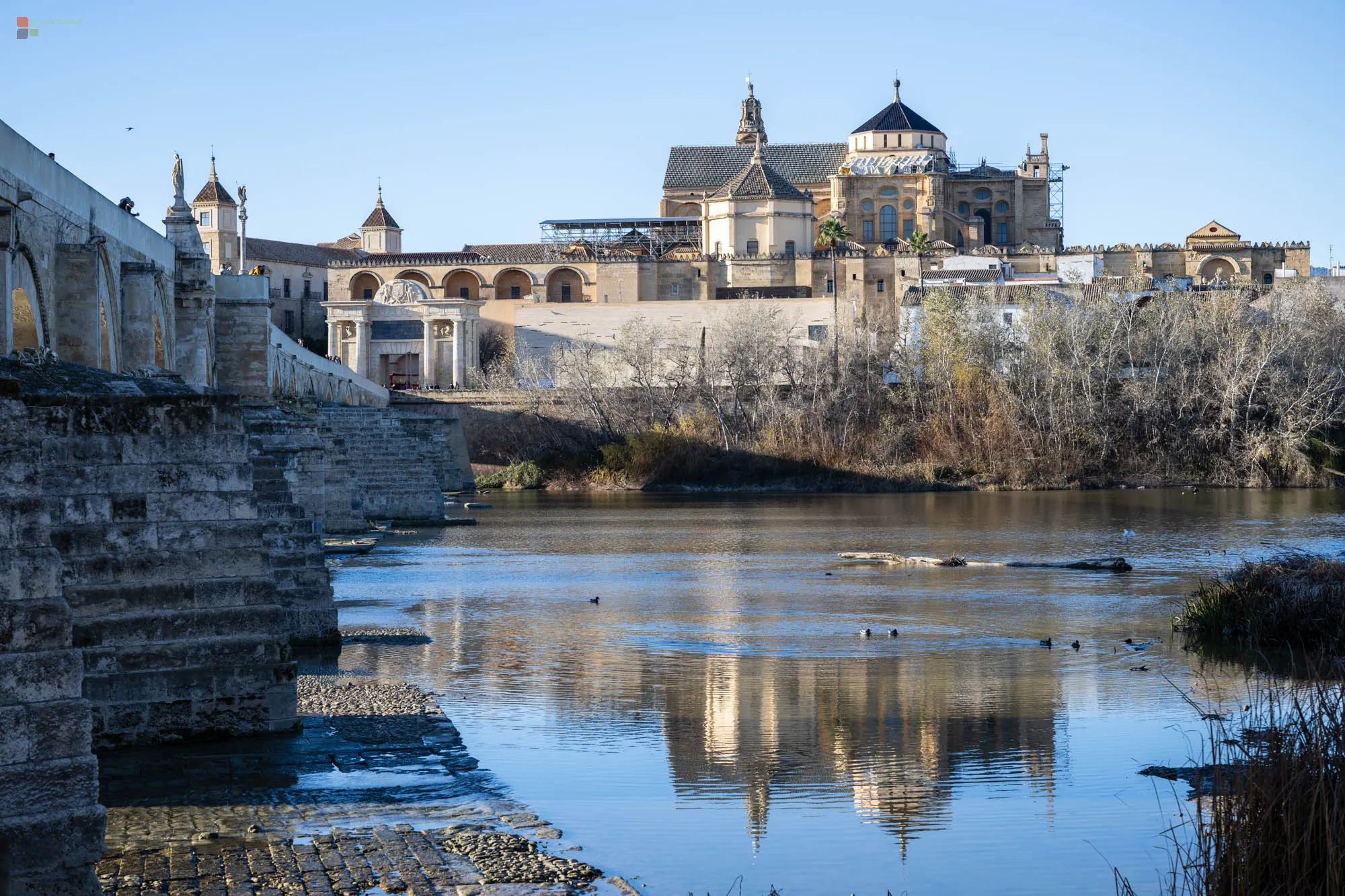
Few buildings embody the dialogue between religions as profoundly as the Mezquita-Catedral de Córdoba. In the heart of Córdoba’s old city rises this monumental house of worship — once a mosque, now a Christian cathedral. Its spaces tell of centuries of belief, transformation, and the quiet power of light that falls through its arches.
From Mosque to Cathedral
The story of the Mezquita begins in 784, when ʿAbd ar-Raḥmān I commissioned the construction of the Great Mosque of Córdoba on the site of a former Visigothic church dedicated to Saint Vincent of Saragossa. Expanded over the centuries, it became one of the most important Islamic monuments of the Middle Ages. Under al-Ḥakam II (961–976), the mosque reached its architectural perfection — a harmonious order of light, geometry, and space.
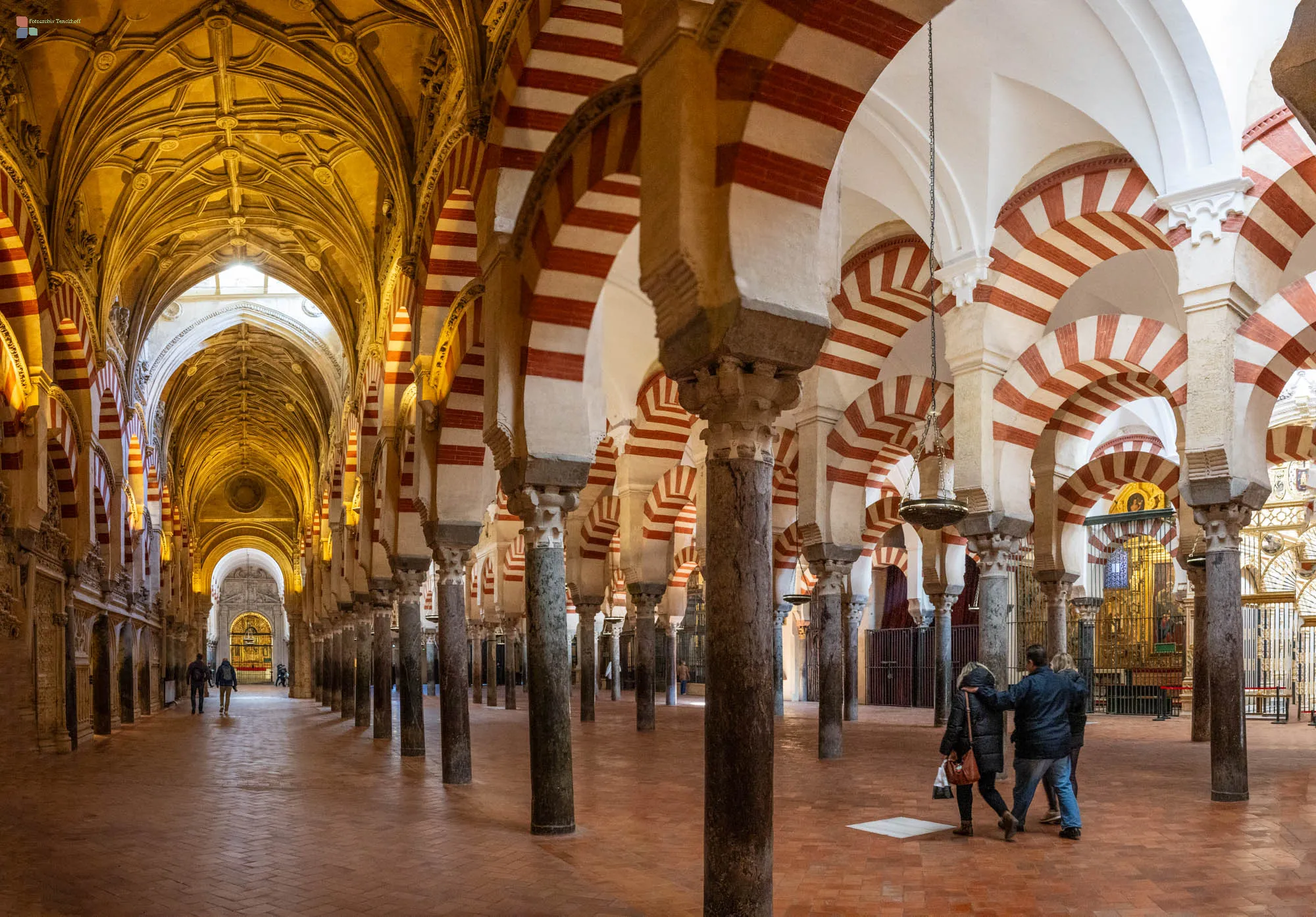
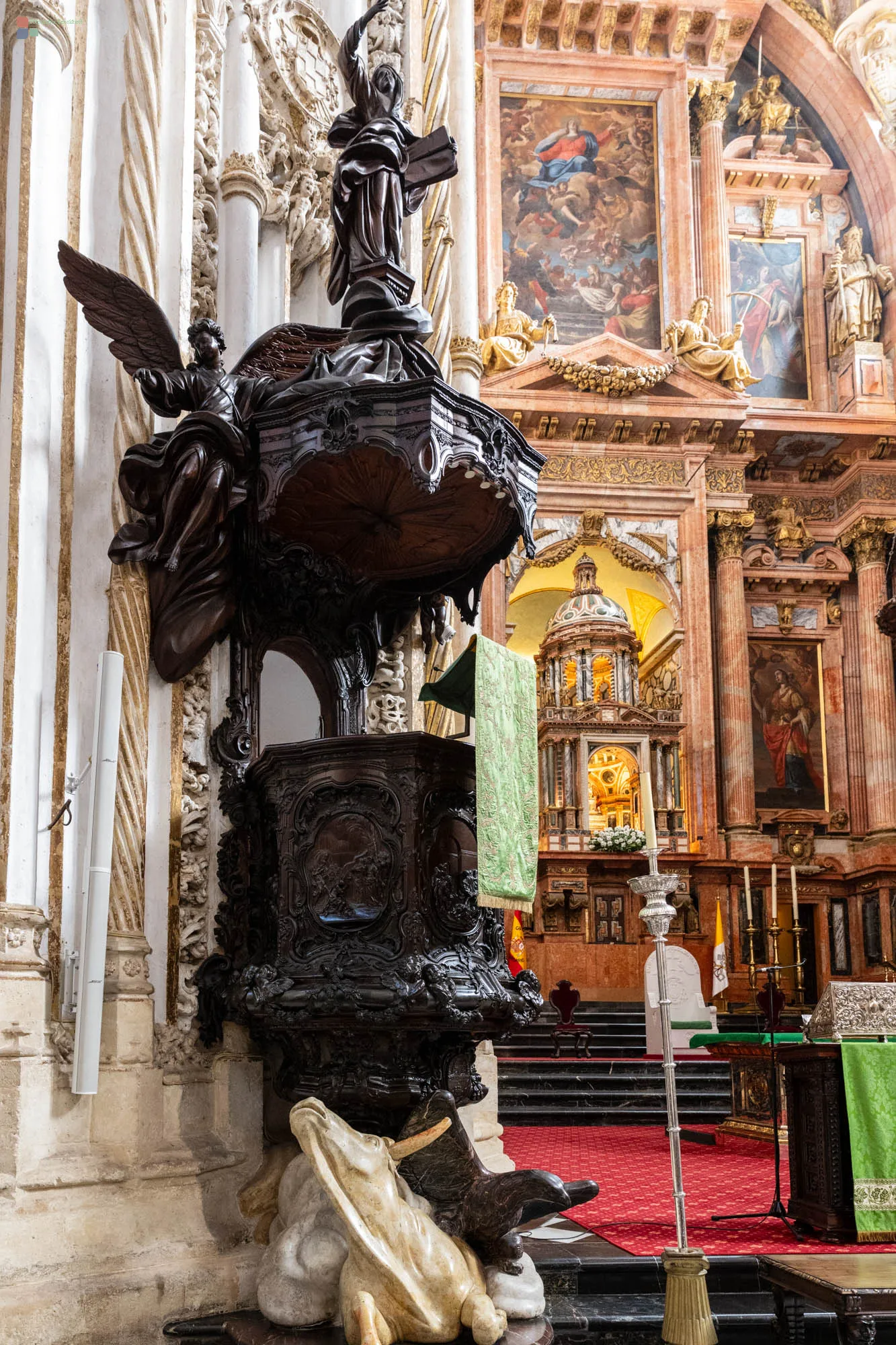
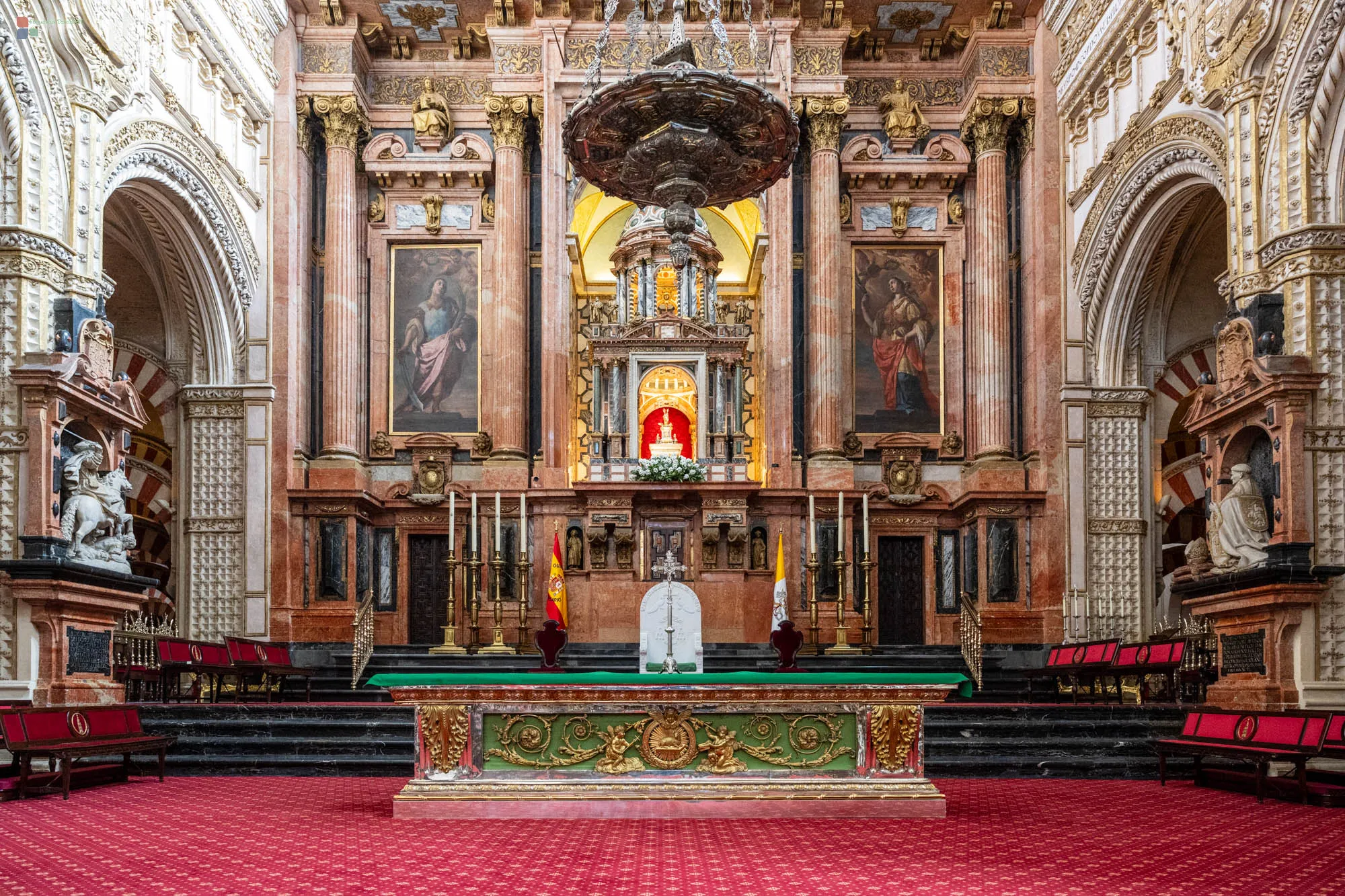
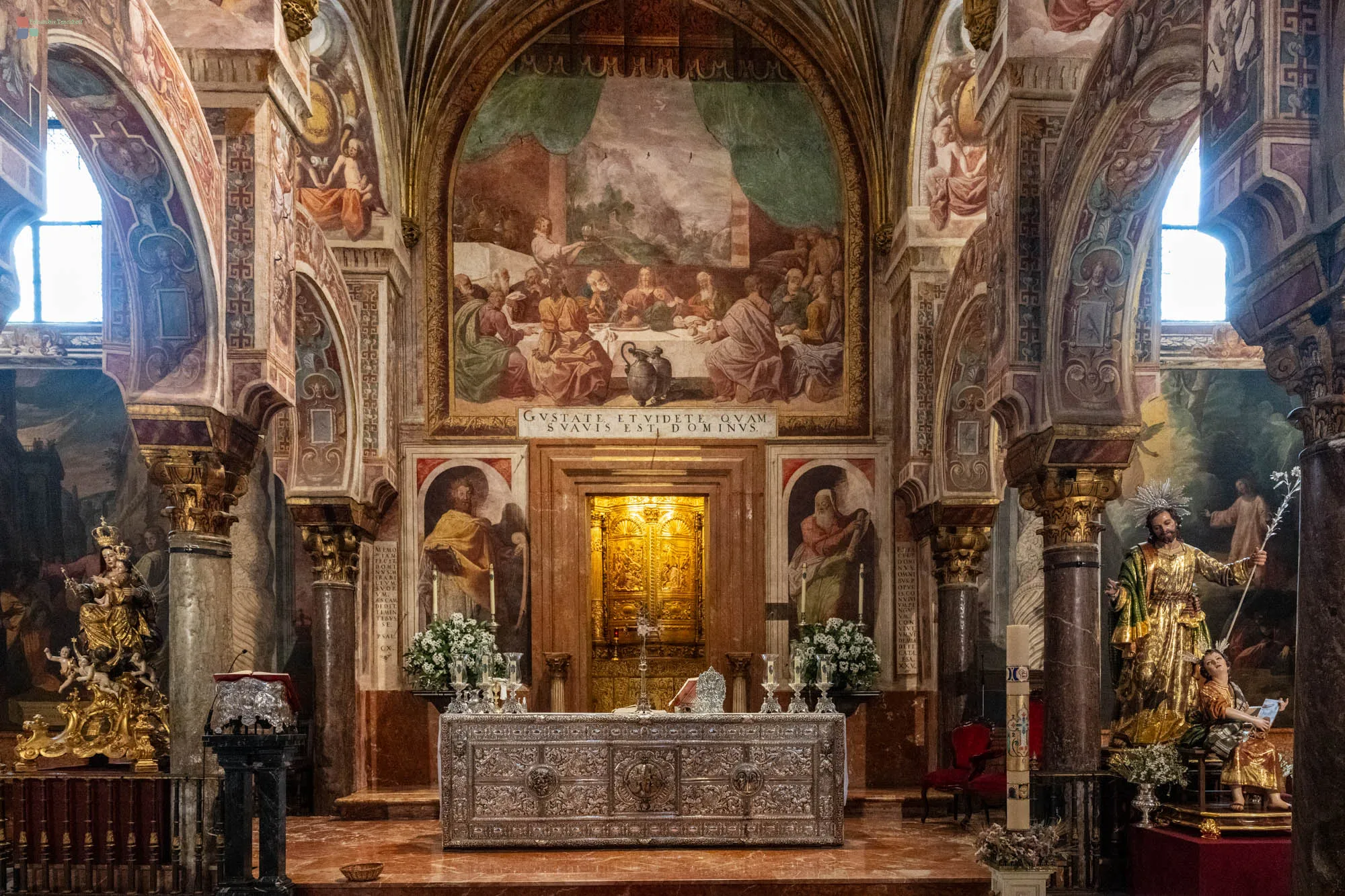
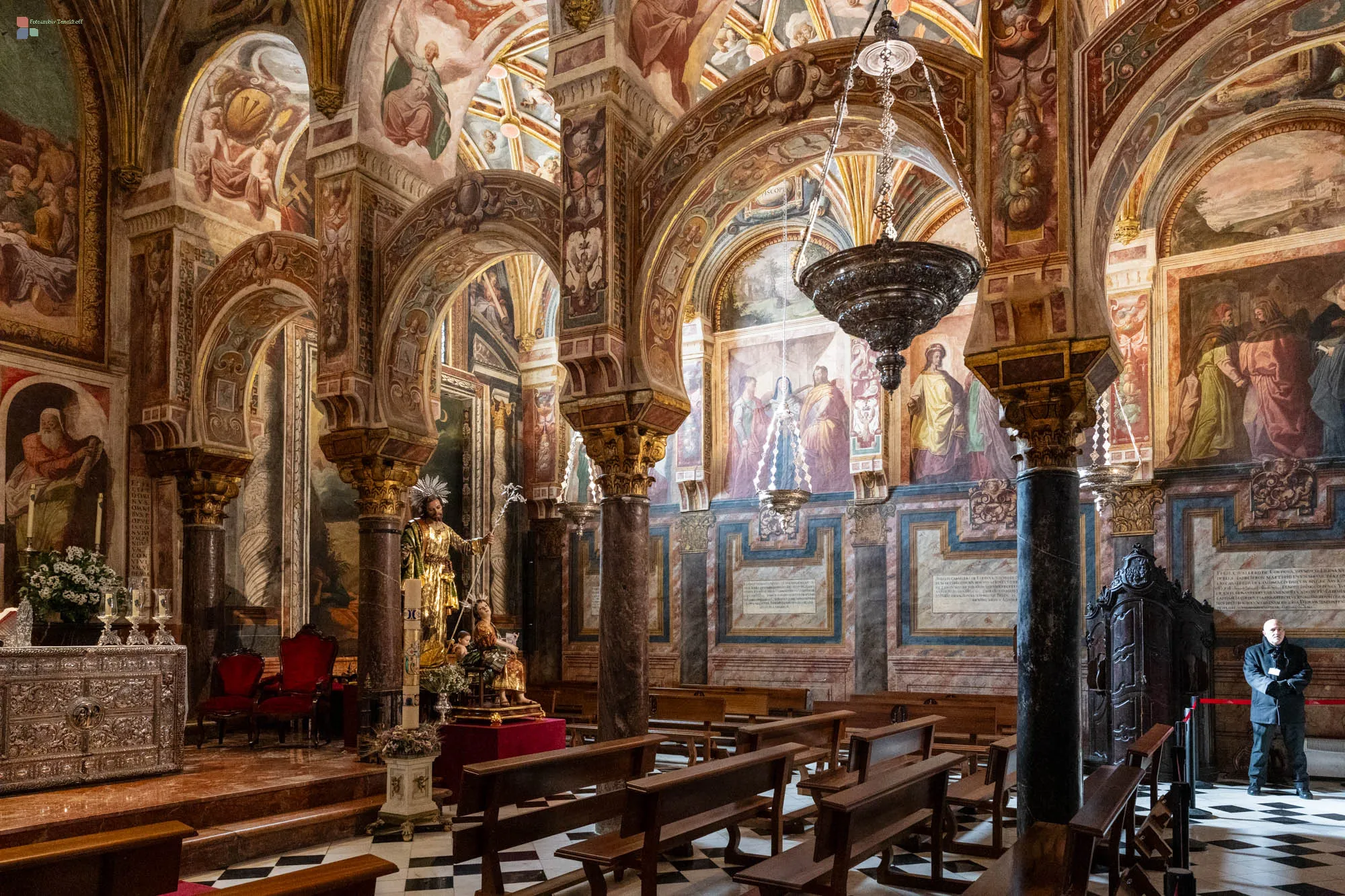
After the Christian reconquest of Córdoba in 1236, the mosque was consecrated as a cathedral, Catedral de Nuestra Señora de la Asunción. In the 16th century, a soaring Renaissance nave and choir were built into its center — a bold intervention that forever changed the interior. Emperor Charles V is said to have remarked: “You have destroyed something unique and built what can be found everywhere.”
Architecture of Transition
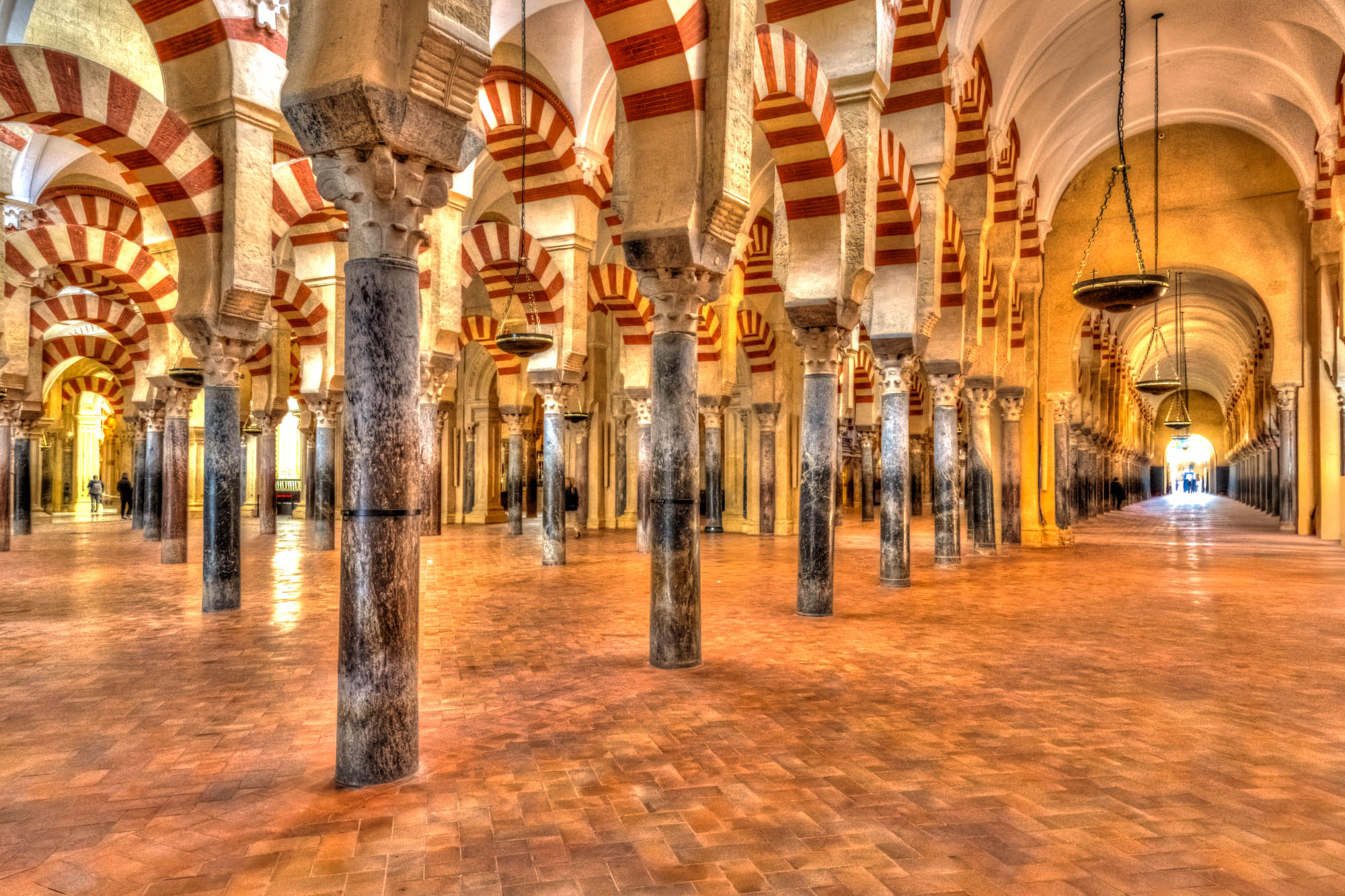
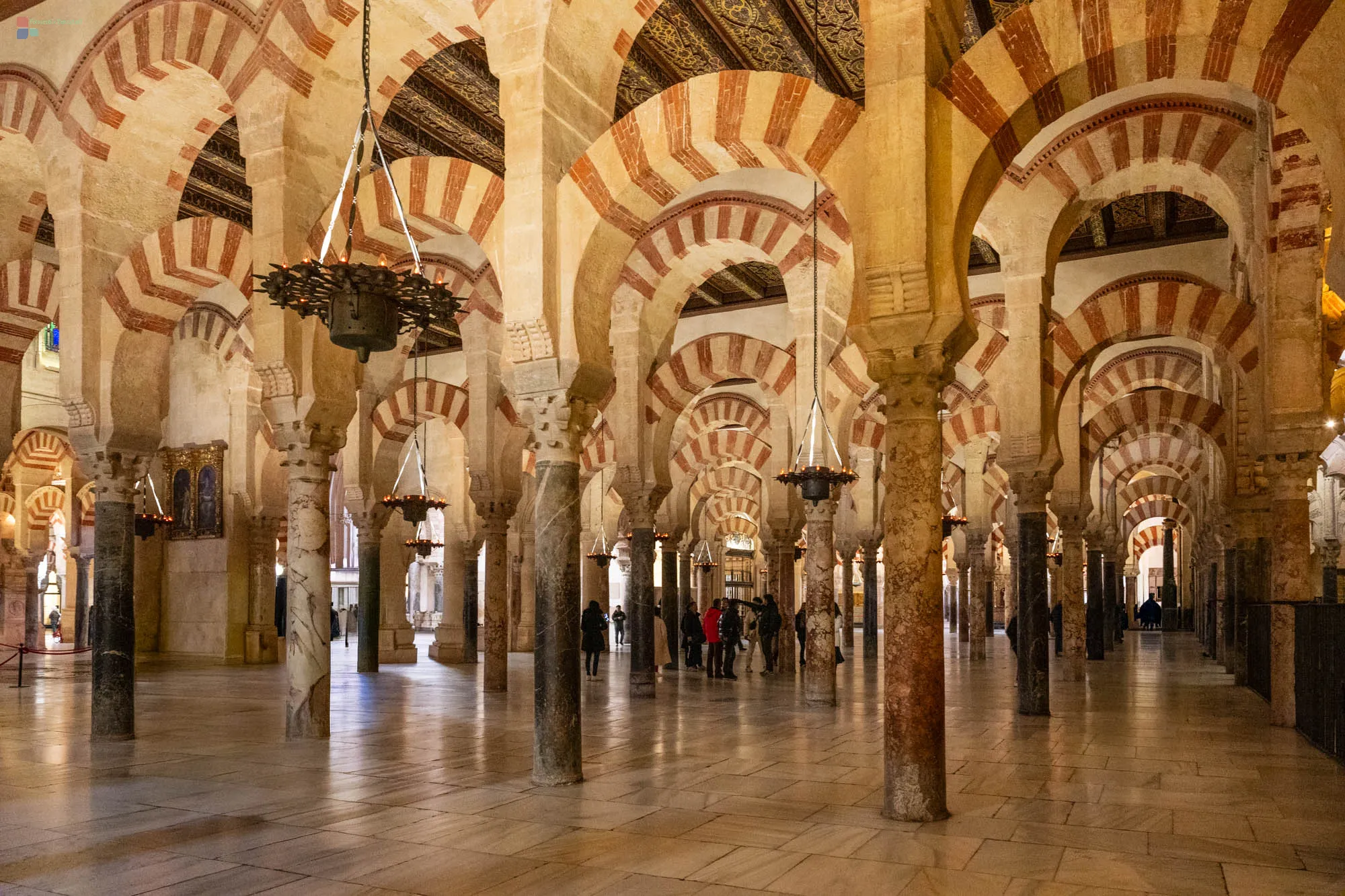
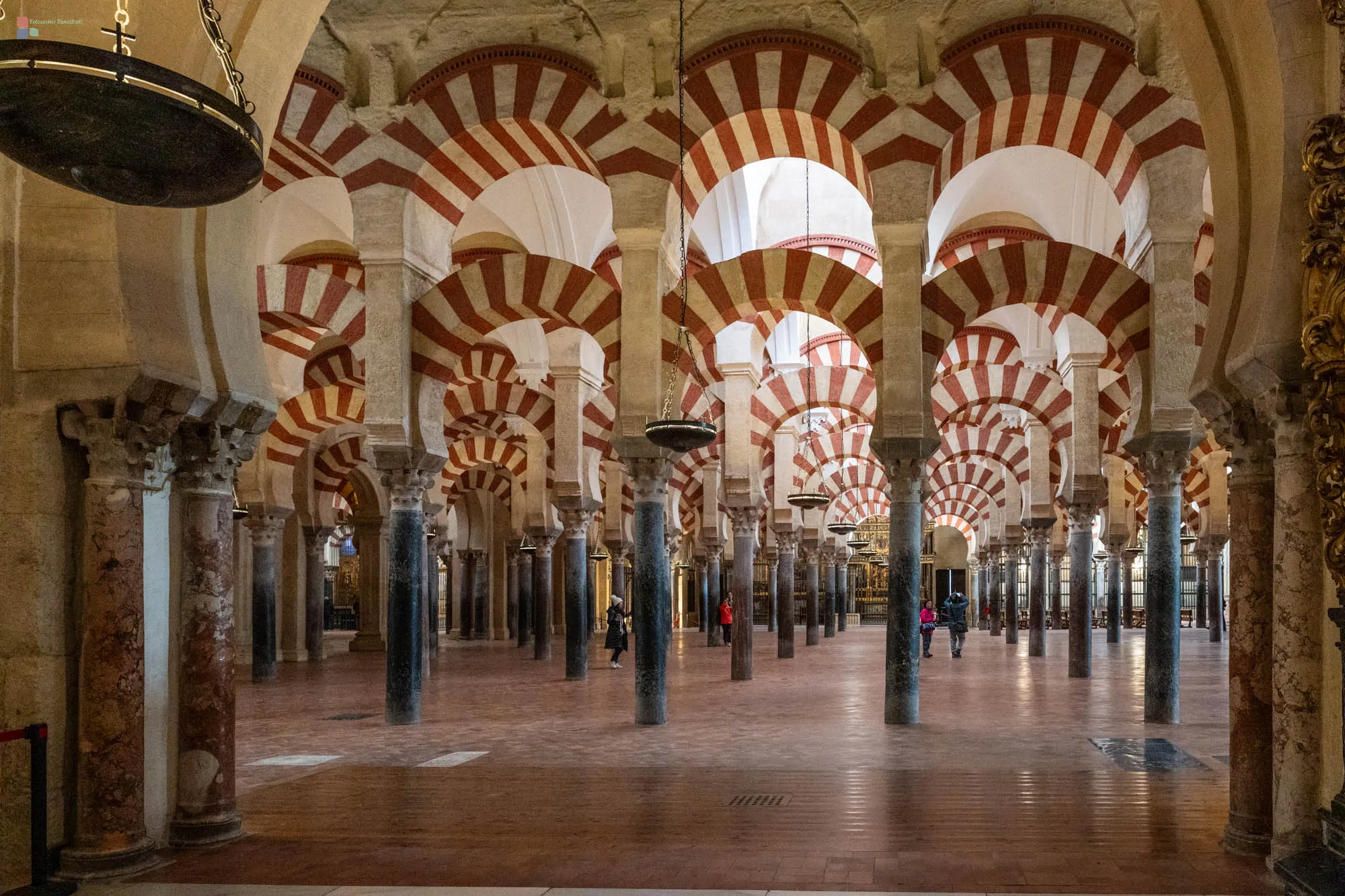
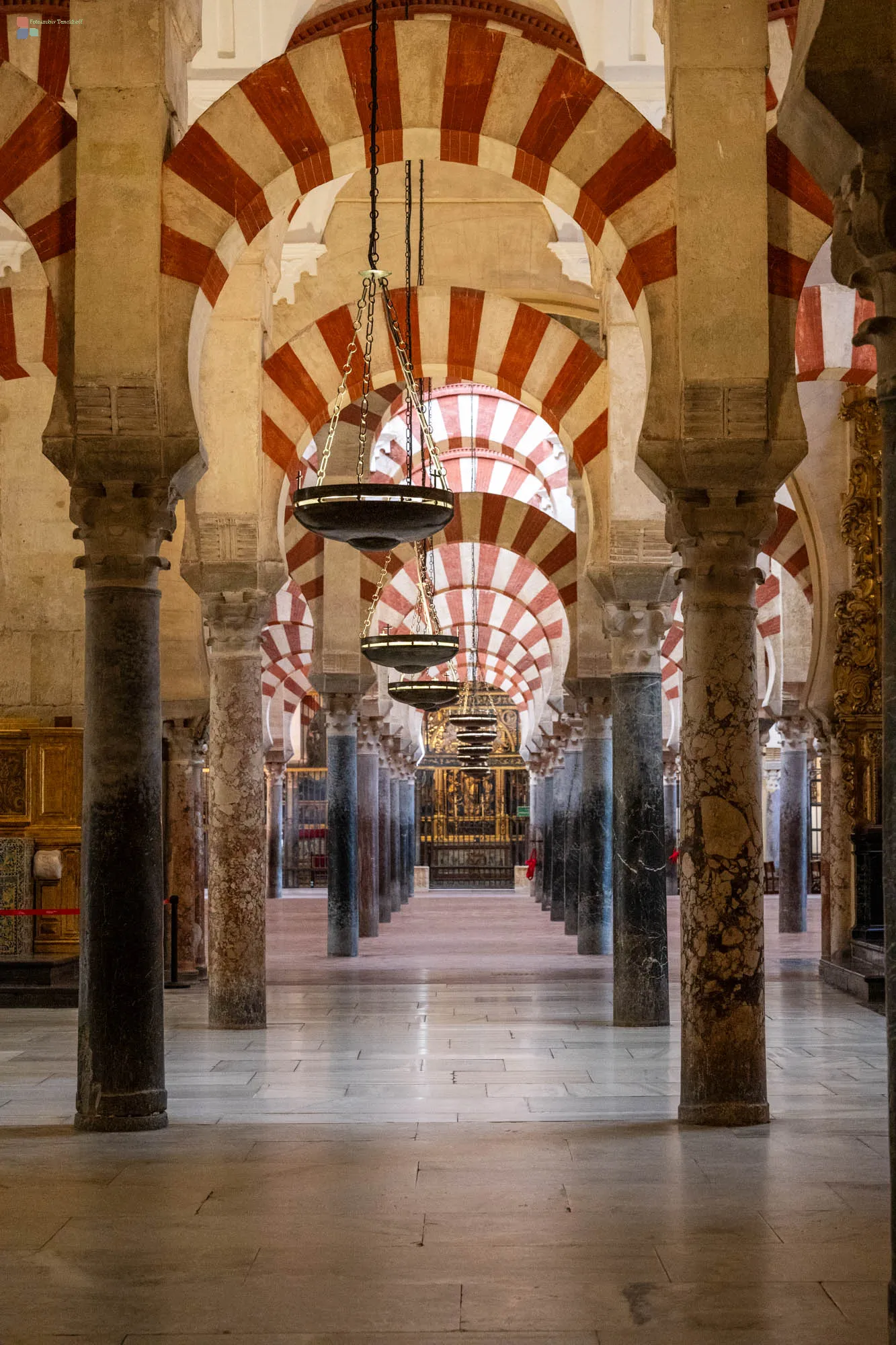
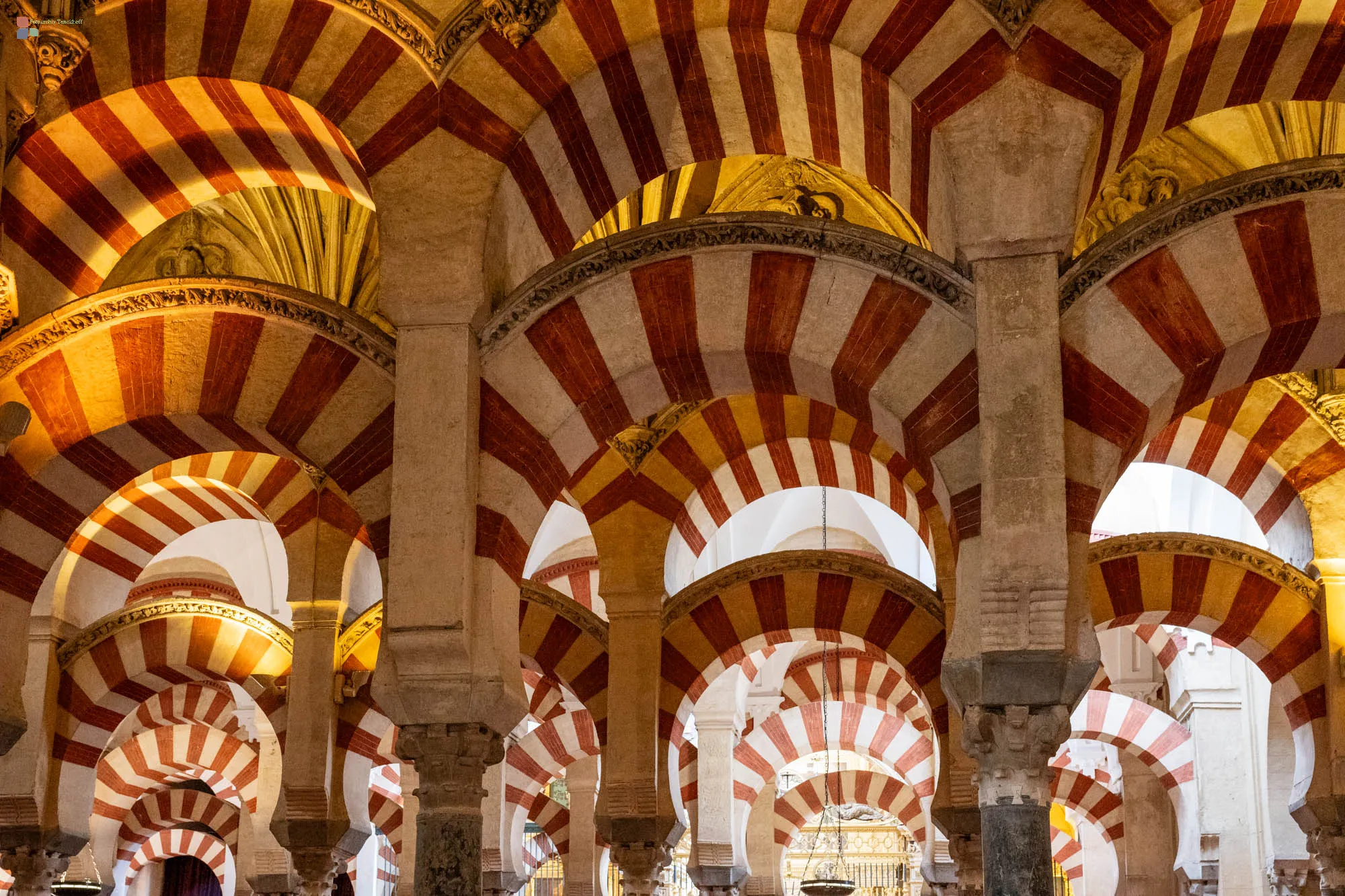
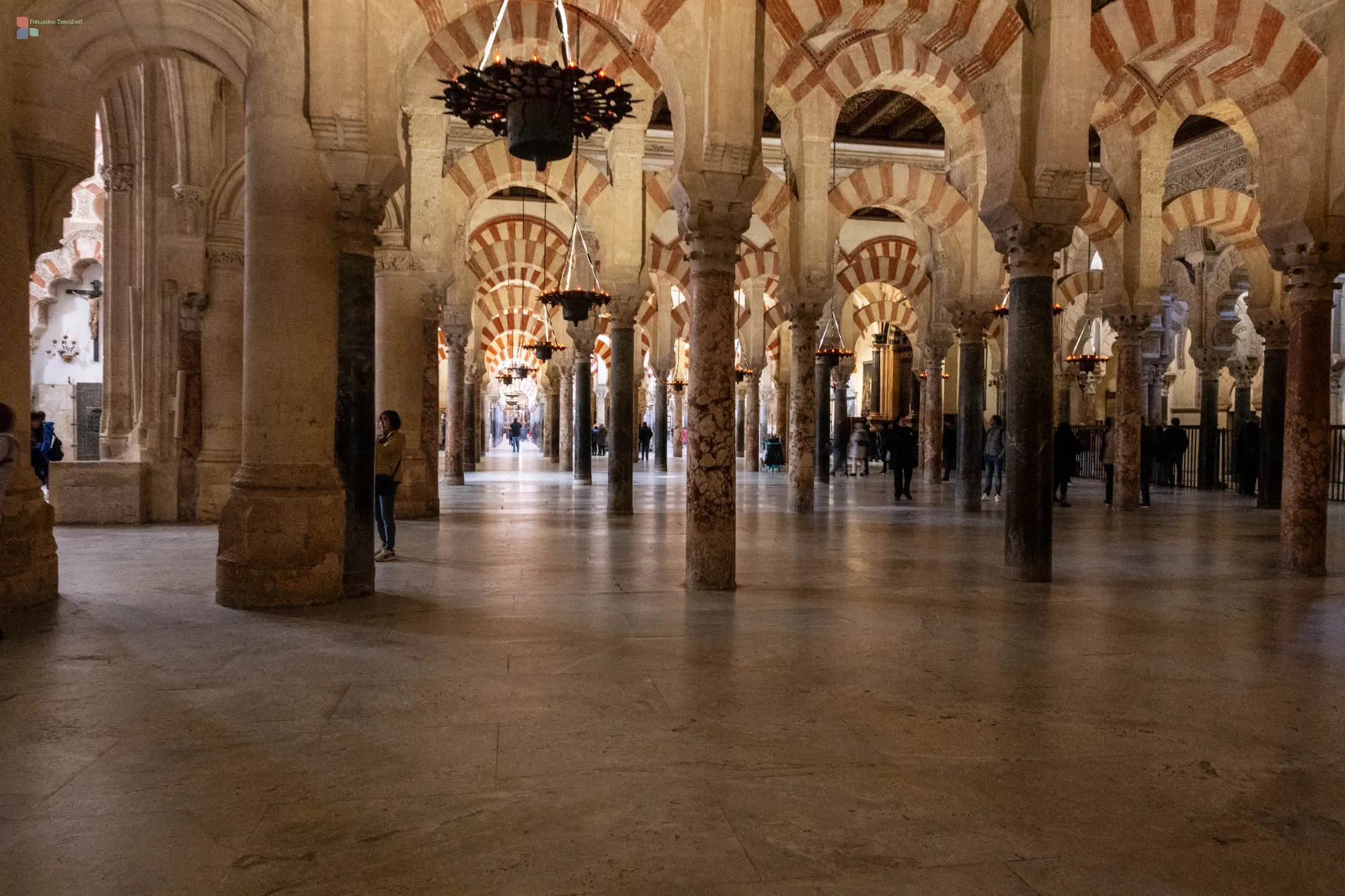
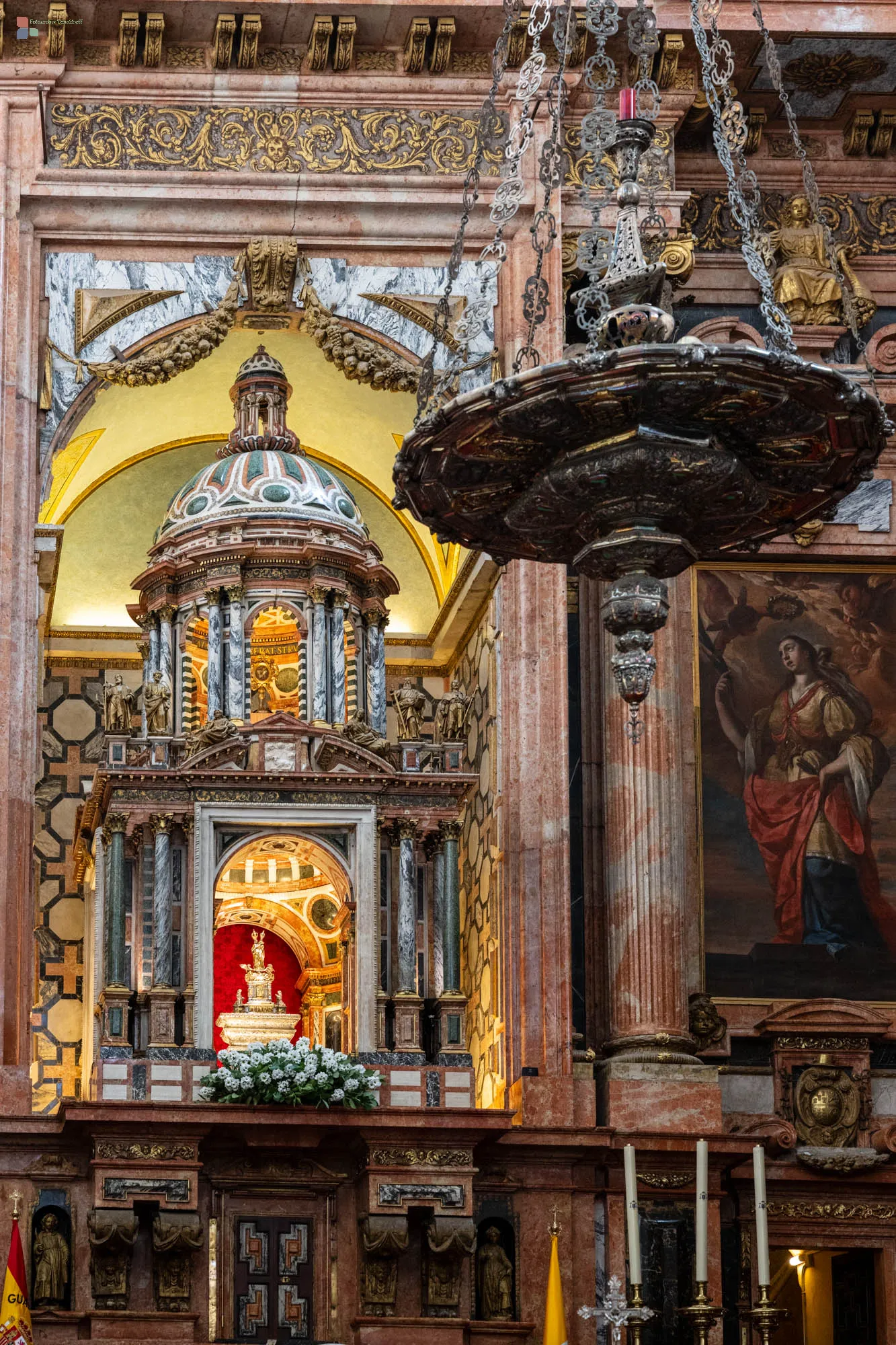
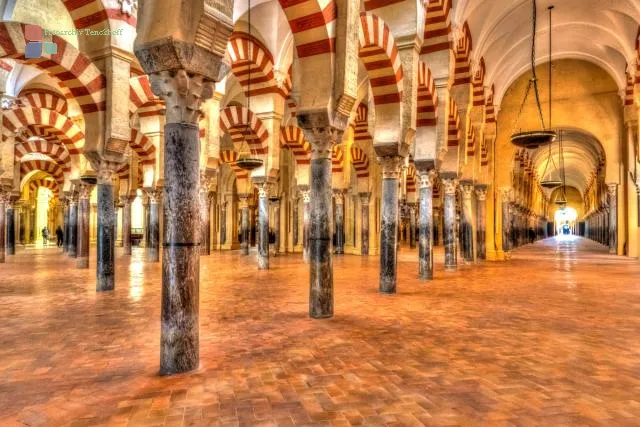
Entering the Mezquita, one stands amid a forest of over 850 marble columns supporting red-and-white horseshoe arches that seem to stretch into infinity. The light filters softly through, gliding over stone and silence, dissolving the sense of time. At the heart of this vastness rises the Baroque altar — luminous, powerful, almost contradictory, yet undeniably part of the whole.
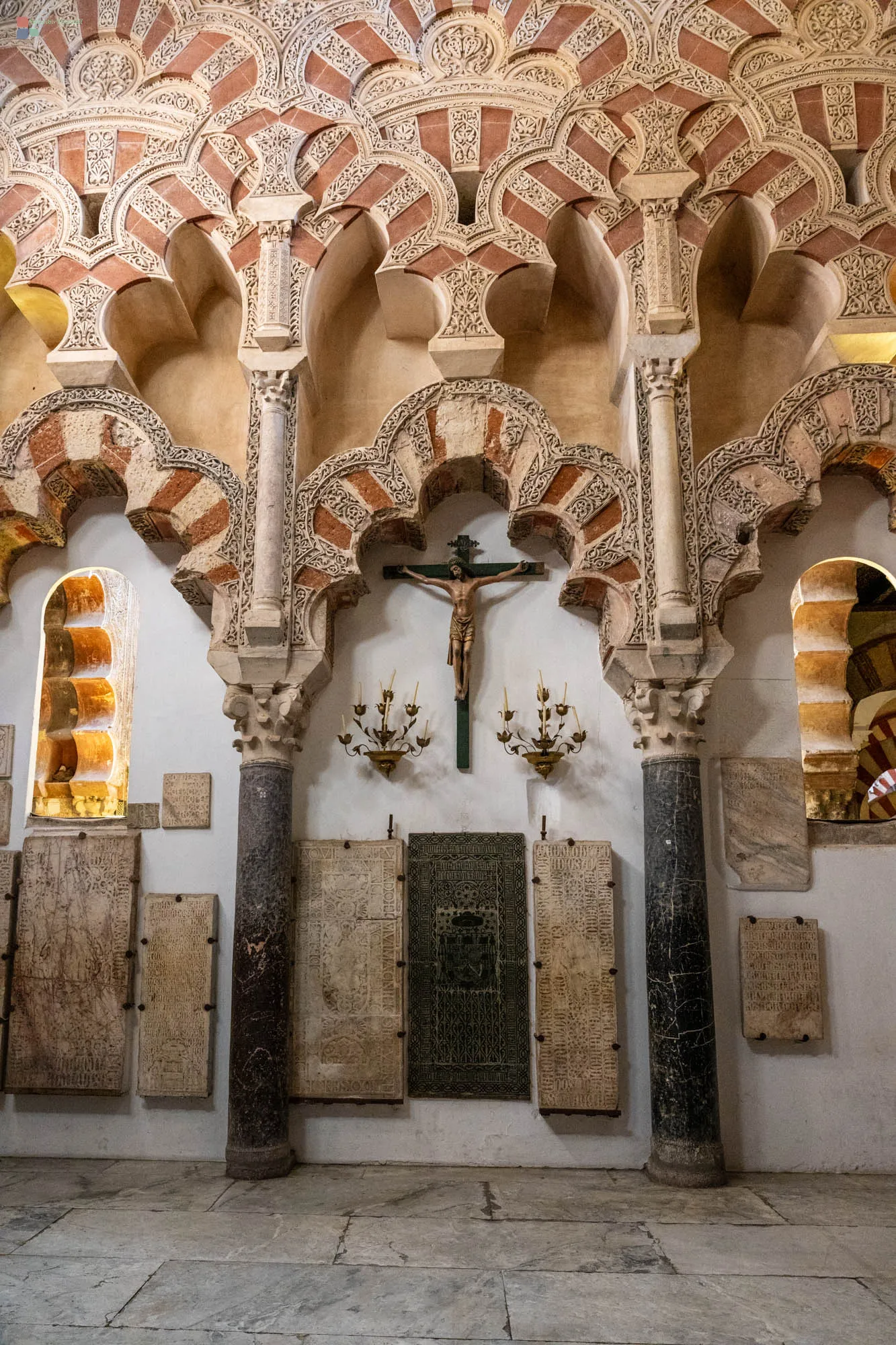
The ancient mihrab, the mosque’s prayer niche, still remains. Its Byzantine mosaics shimmer in gold and blue, its patterns flow together like geometry and devotion intertwined. Before it now stands the Christian cross, above it Arabic ornament — a space where history does not erase, but layers itself.
A Space of Light
The Mezquita is not a place of opposition but of transition. Its light is soft and constant, penetrating the structure, uniting matter and spirit. Perhaps its strength lies precisely in this — in bearing witness to a time when faith did not divide but connected.
Standing beneath its arches, one hears not echoes of conflict, but the quiet breath of centuries. In that stillness, it becomes clear that light — whatever name one gives it — has only one source.
A Monument to Humanity
Today, the Mezquita-Catedral de Córdoba is a UNESCO World Heritage Site and a living symbol of cultural continuity. It is mosque and church, history and present, space and consciousness. Its stones hold the spirit of tolerance — an architectural prayer for all that binds us together.