In this article: Yehliu Geopark – Between Mushrooms, Monarchs and Maritime Myths
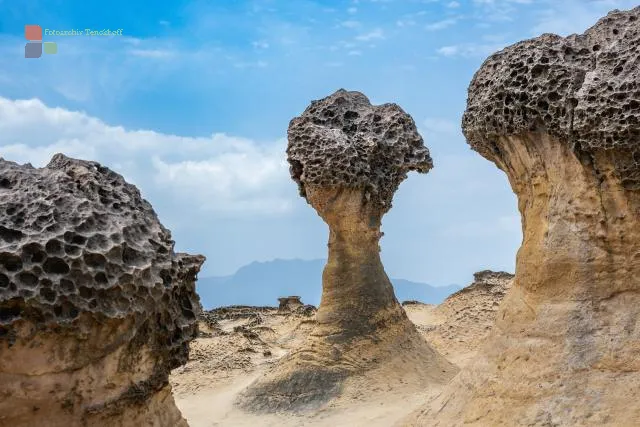
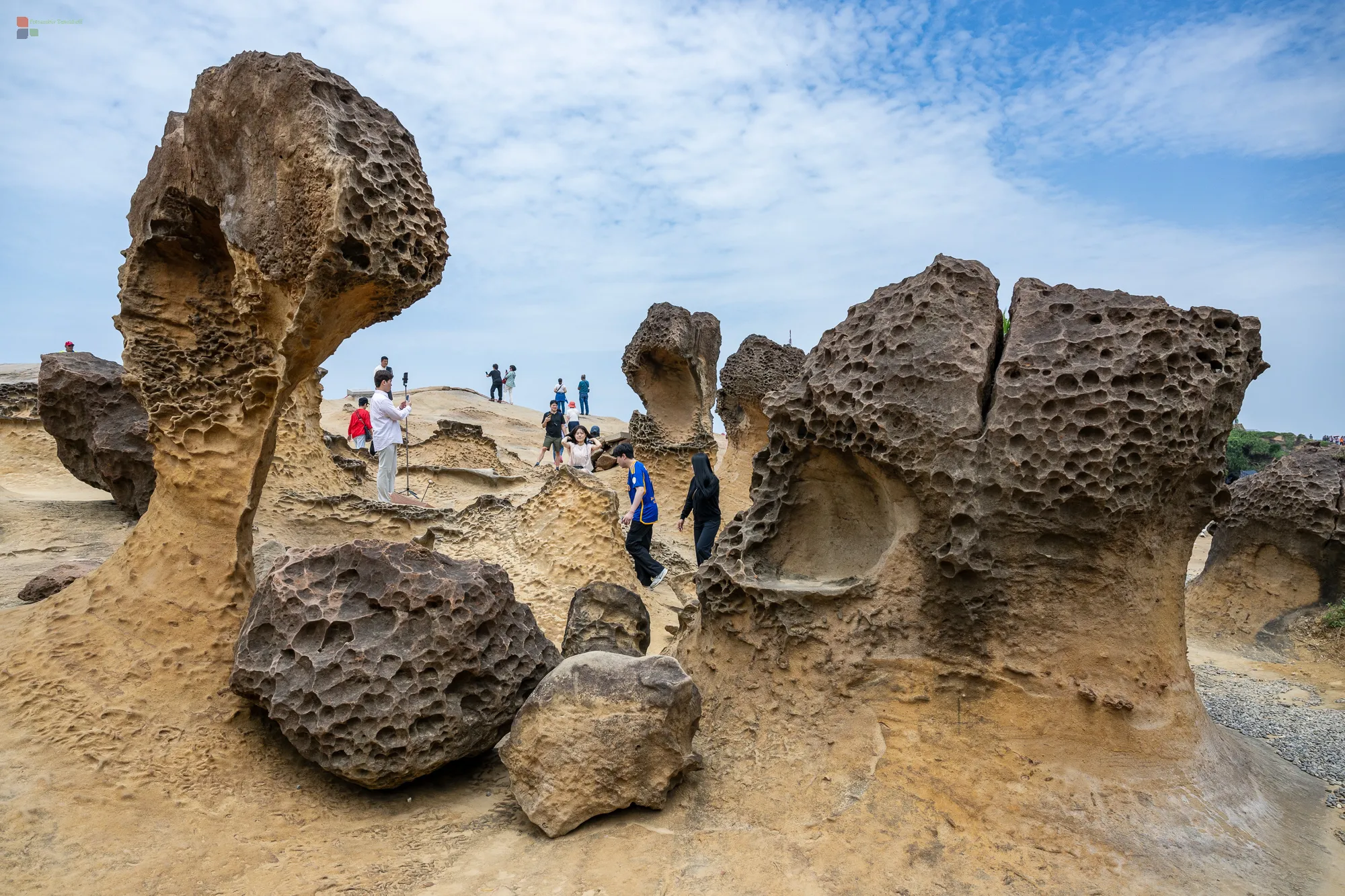
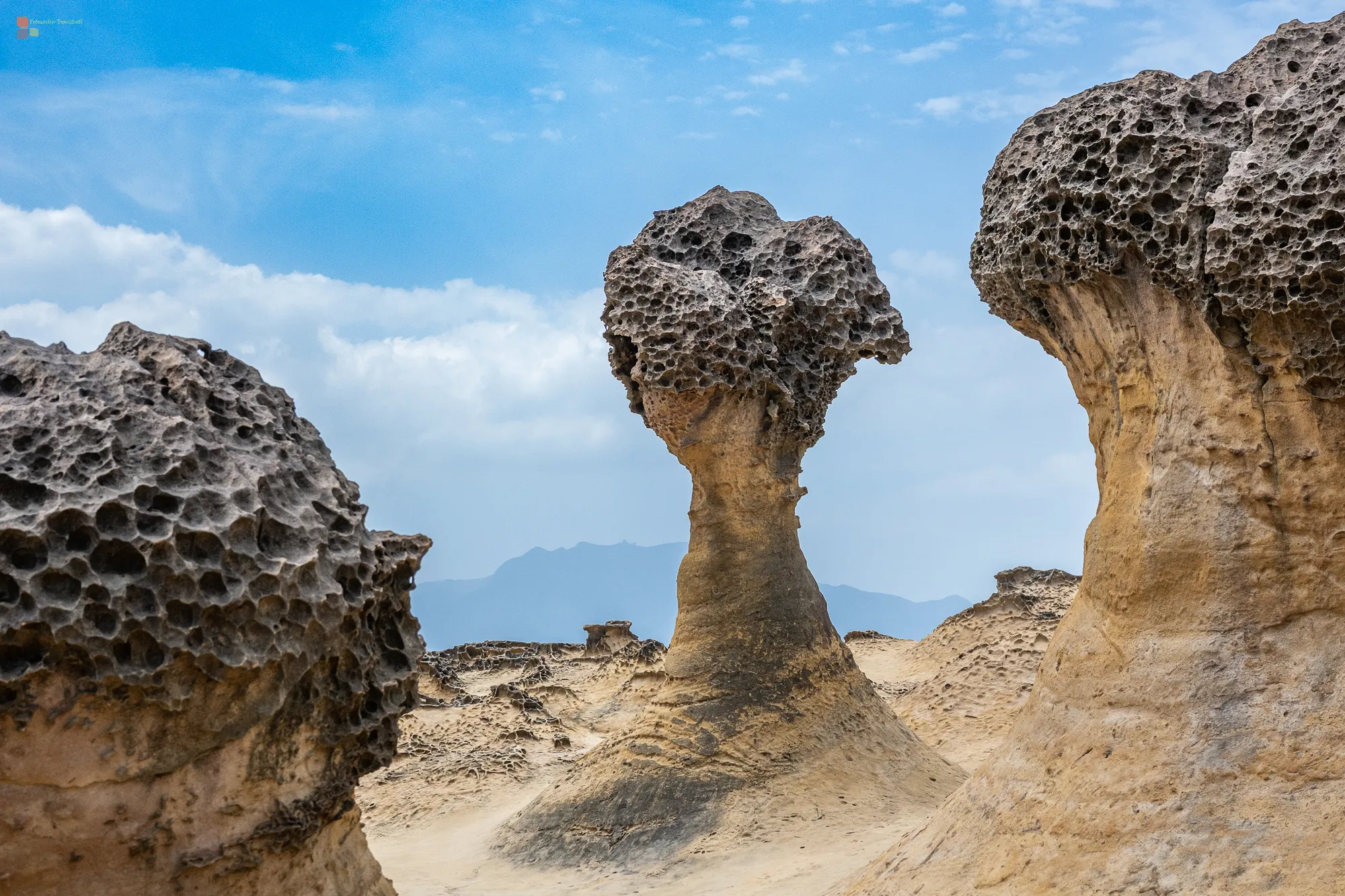
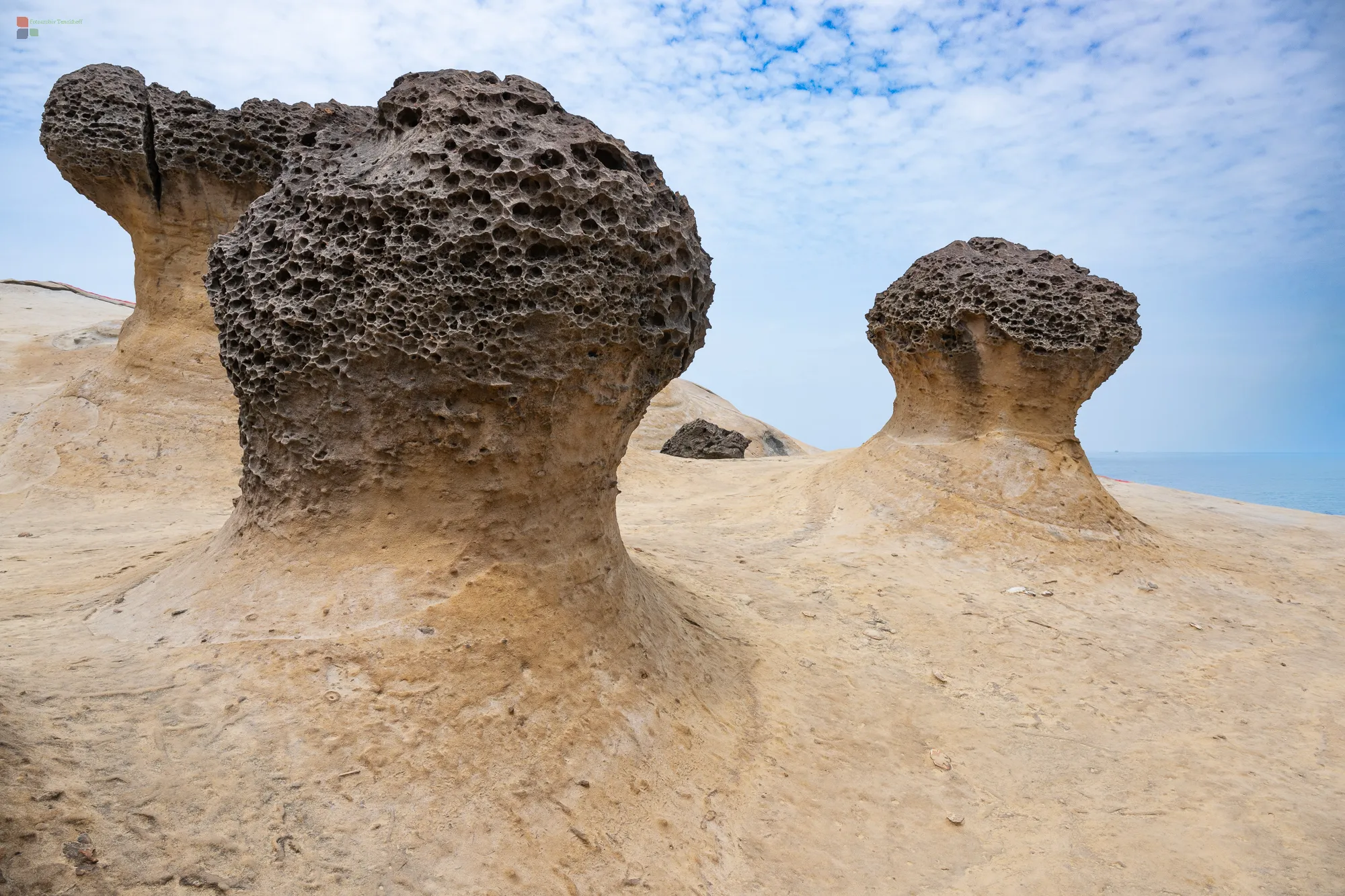
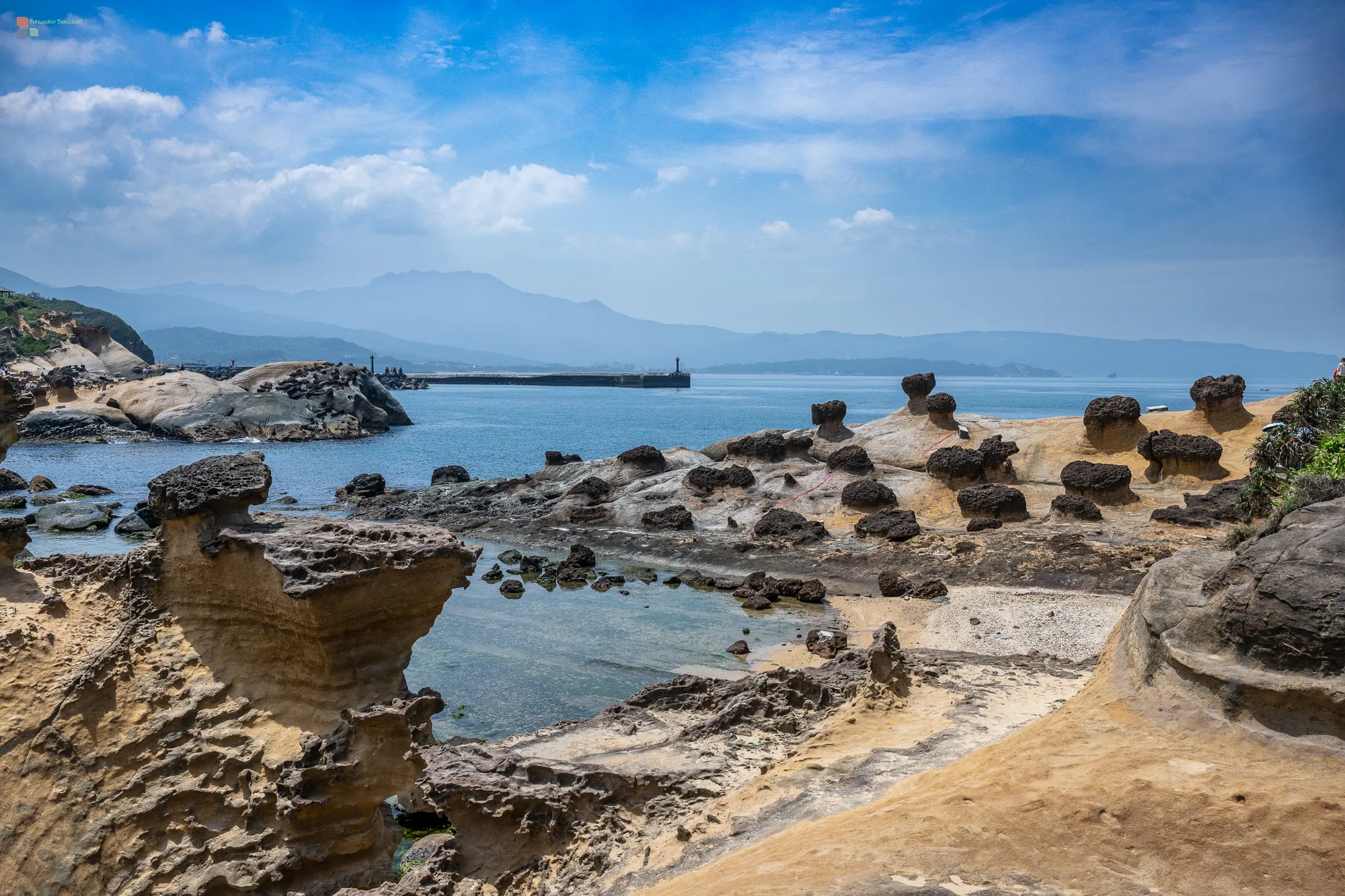
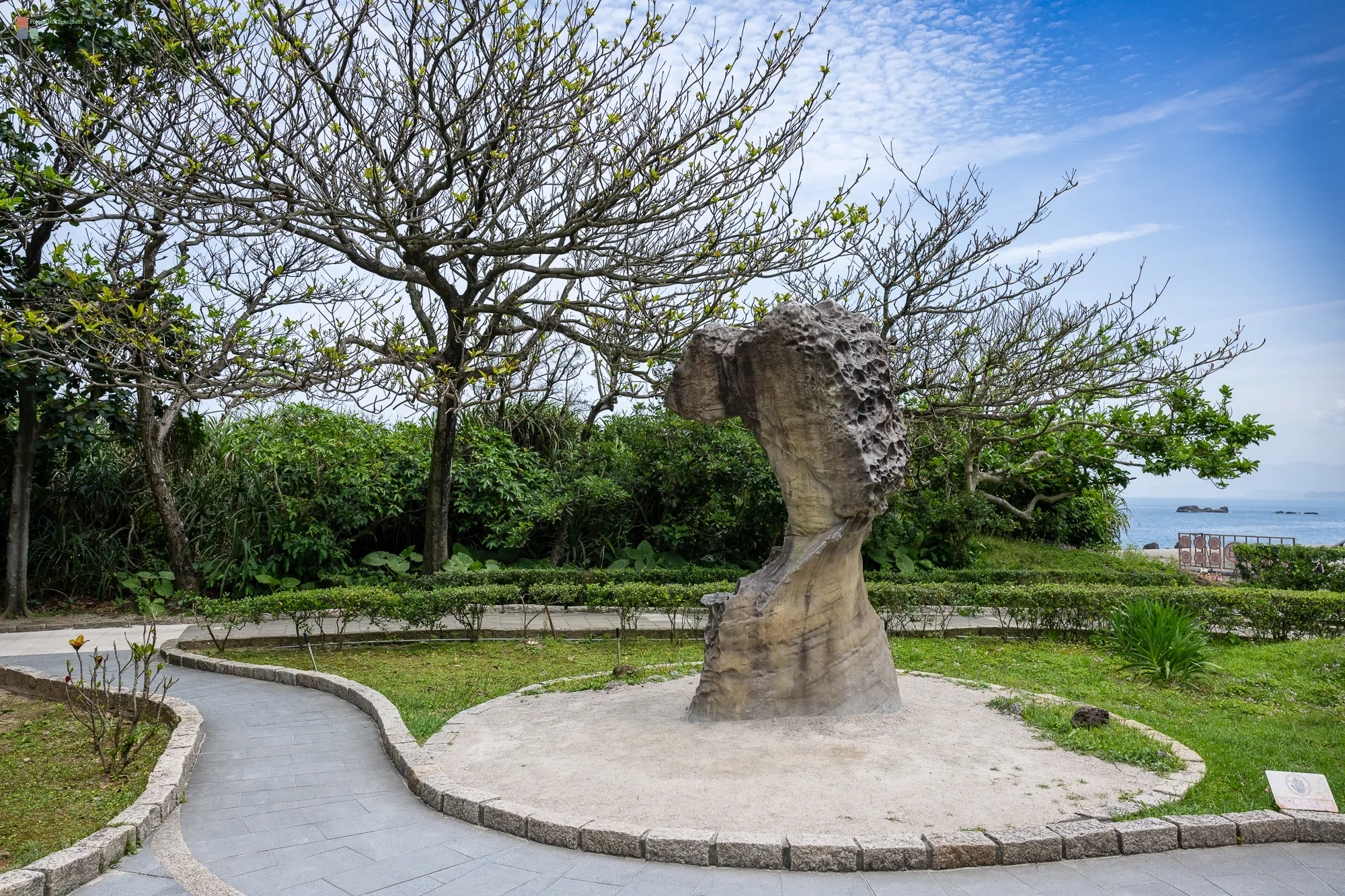
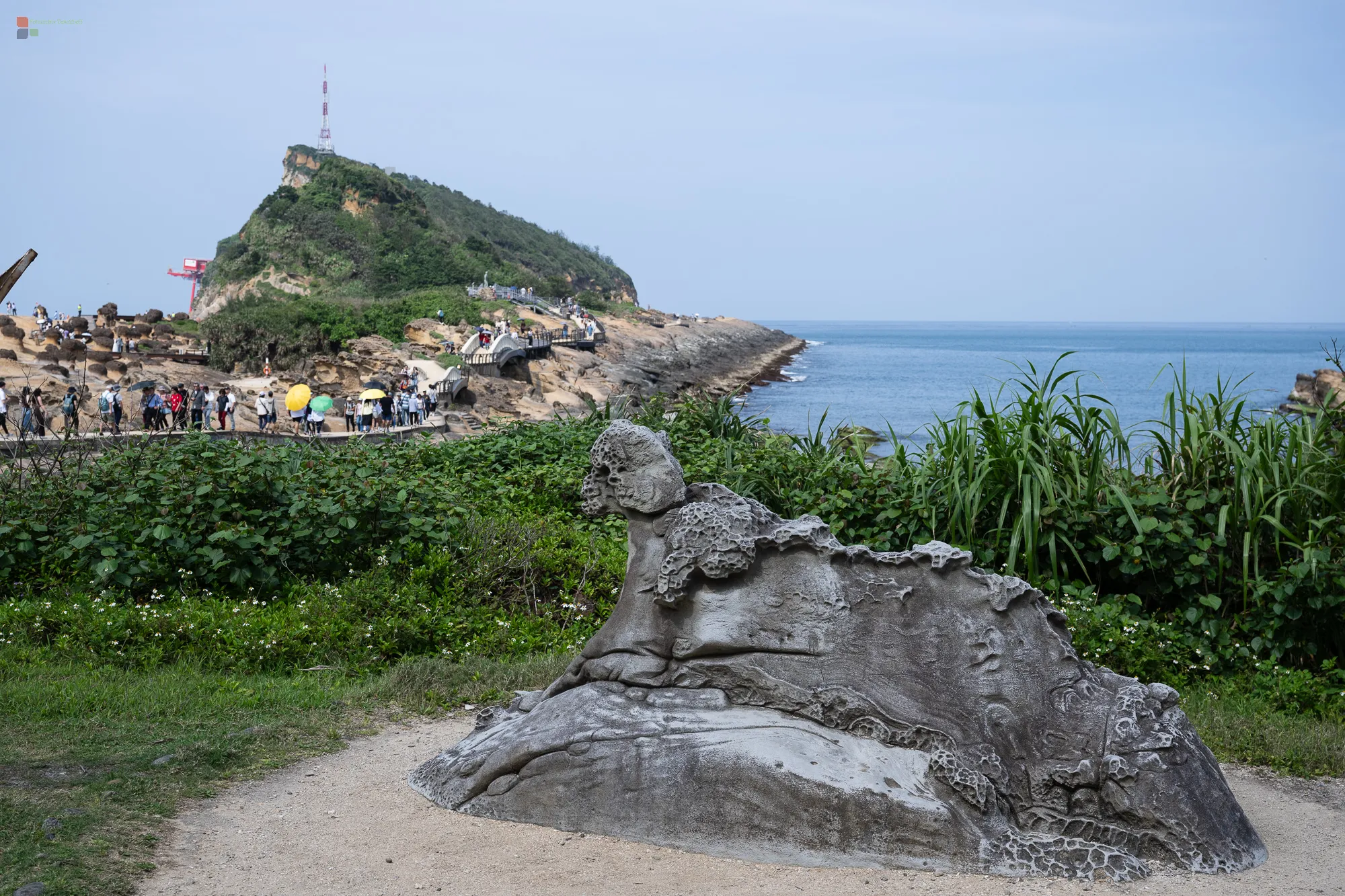
Visiting the Yehliu Geopark felt a bit like stepping into Gulliver’s Travels: walking among gigantic morels made us – and everyone else – feel miniature. Knowing that these strange formations had nothing in common with mushrooms did little to dissolve the impression of being in a fairytale landscape. The names given to the rocks – from the “Princess” and the “Jaguar” to the legendary “Queen’s Head” – only deepened that sense of enchantment.
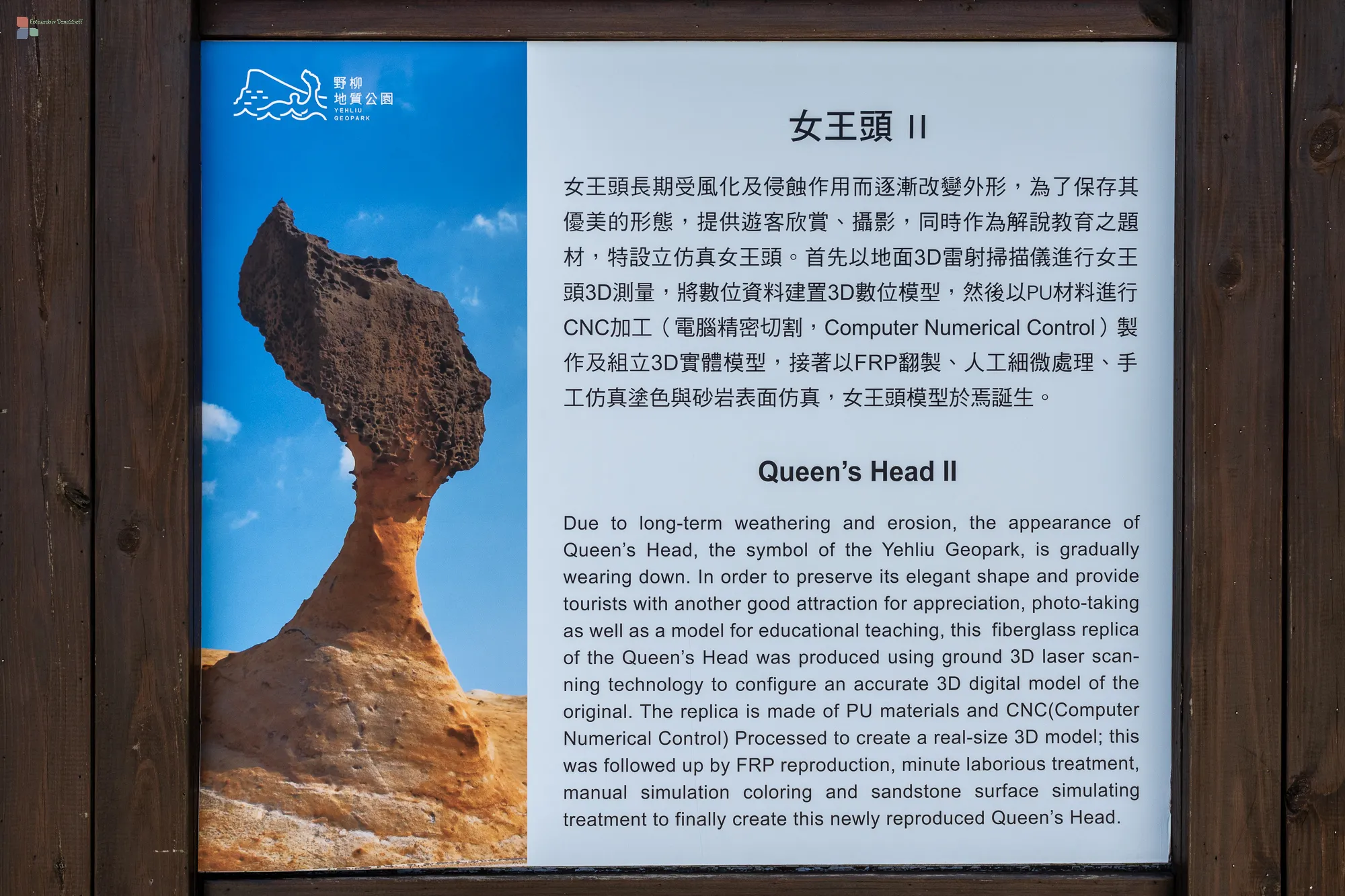
Were it not for the endless sea of selfie sticks, one might believe that the Earth itself was dreaming here – carved in stone. Long queues formed in front of the famous formations, each visitor waiting for a solitary photo with the Queen, whose delicate neck is thinning year by year.
Yet despite the crowds, Yehliu remains one of the most extraordinary landscapes we have ever visited.
The Miracle of Forms
Geologically speaking, Yehliu sits on a 1.7-kilometre rock cape that continues the Daliao Formation far out into the sea. Over millions of years, wind, waves and tectonic uplift sculpted the sandstone layers – the softer rock eroded away, leaving the harder sections as pillars and caps. This is how the typical “mushroom rocks”, the slender “candle rocks” and the knobbly “ginger rocks” came into being. It is an open-air laboratory of erosion – both instructive and poetic.
The Hill above the Sea
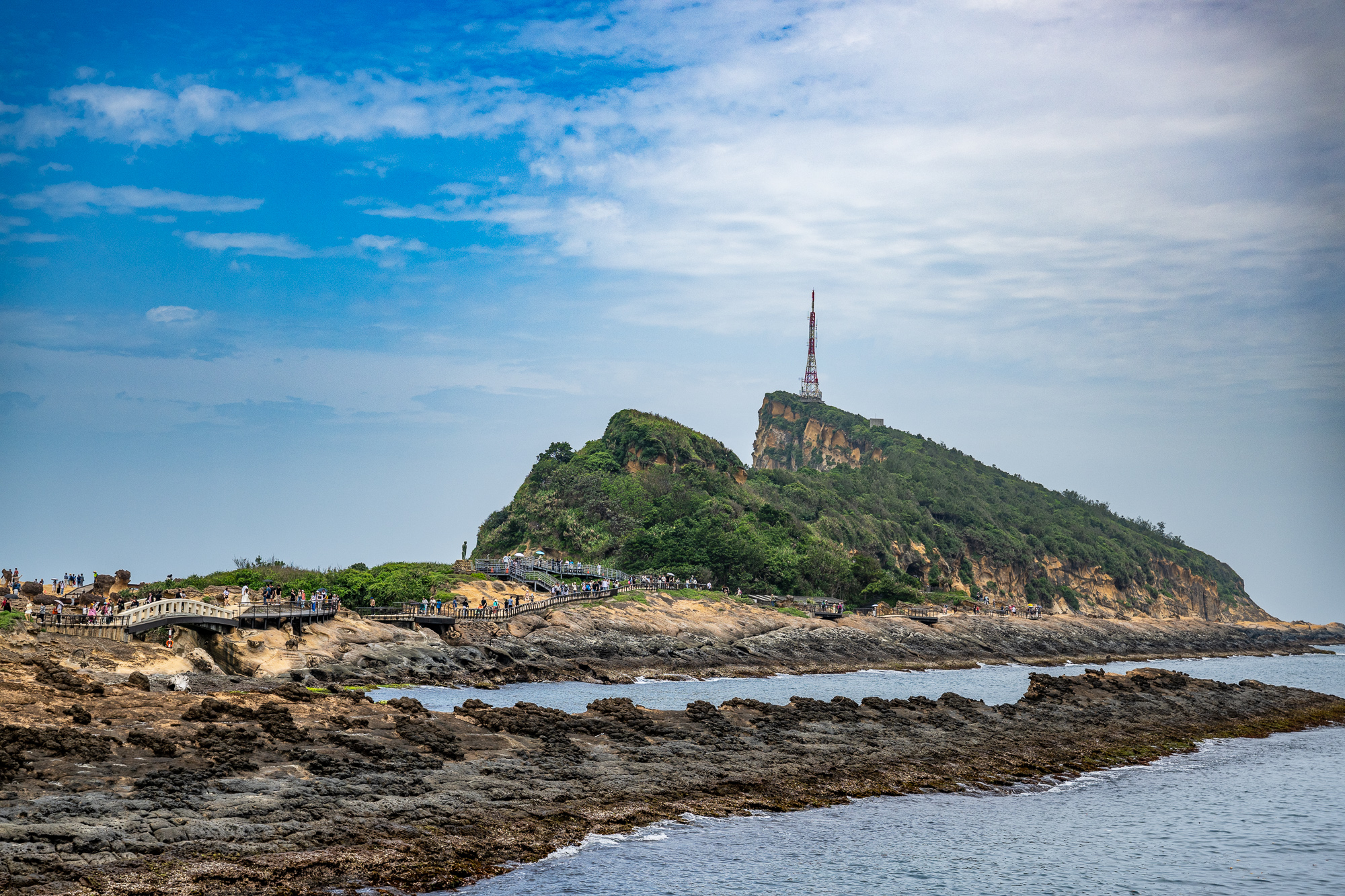
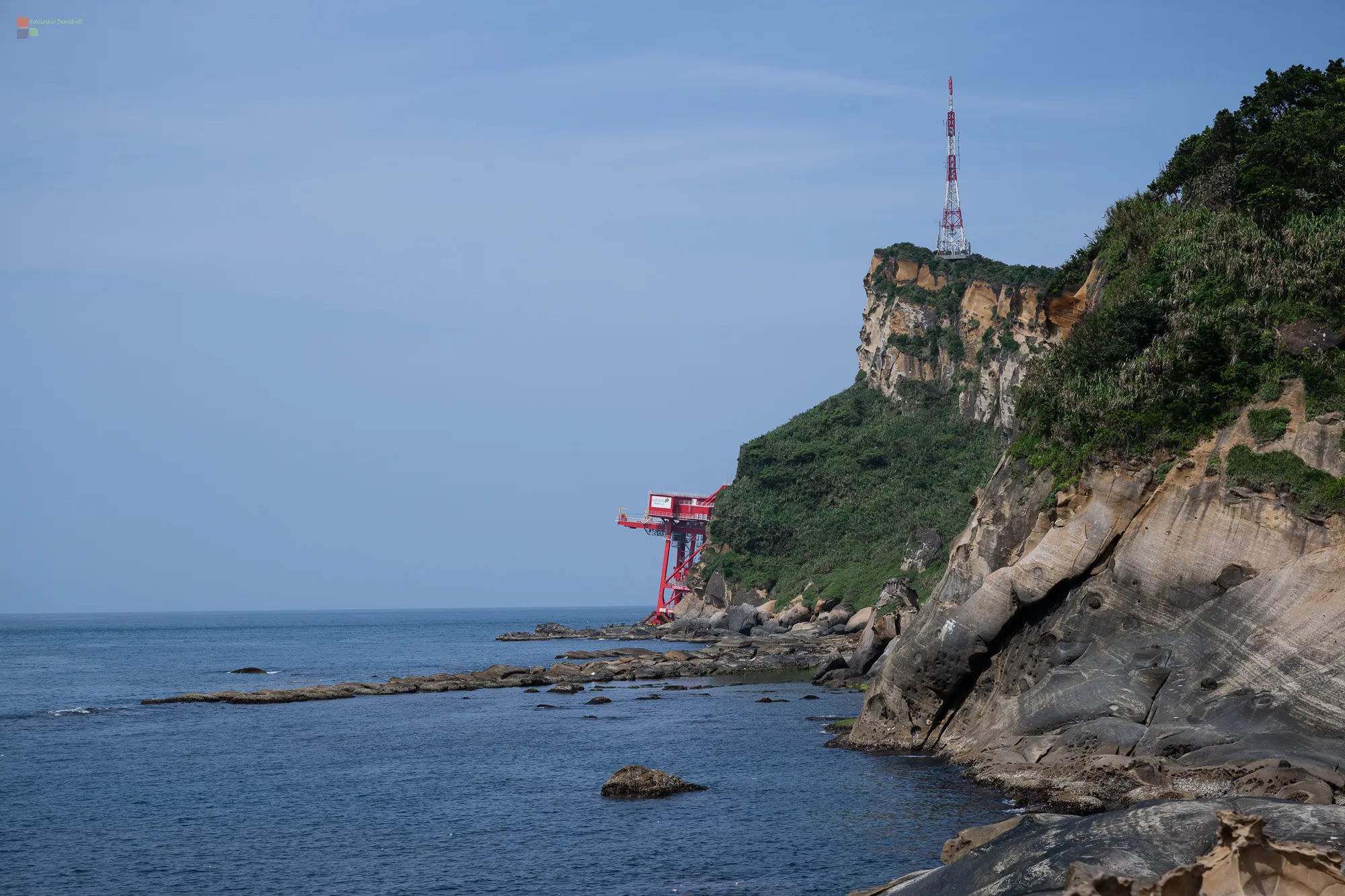
After our circuit through the park, the wooded hill nearby lured us upward. The path is well marked, the climb moderate but steady, and at the top the reward is a sweeping view: the fractured coastline, the surf – and something wholly unexpected.
The Wreck of the Yu Zhou Qi Hang
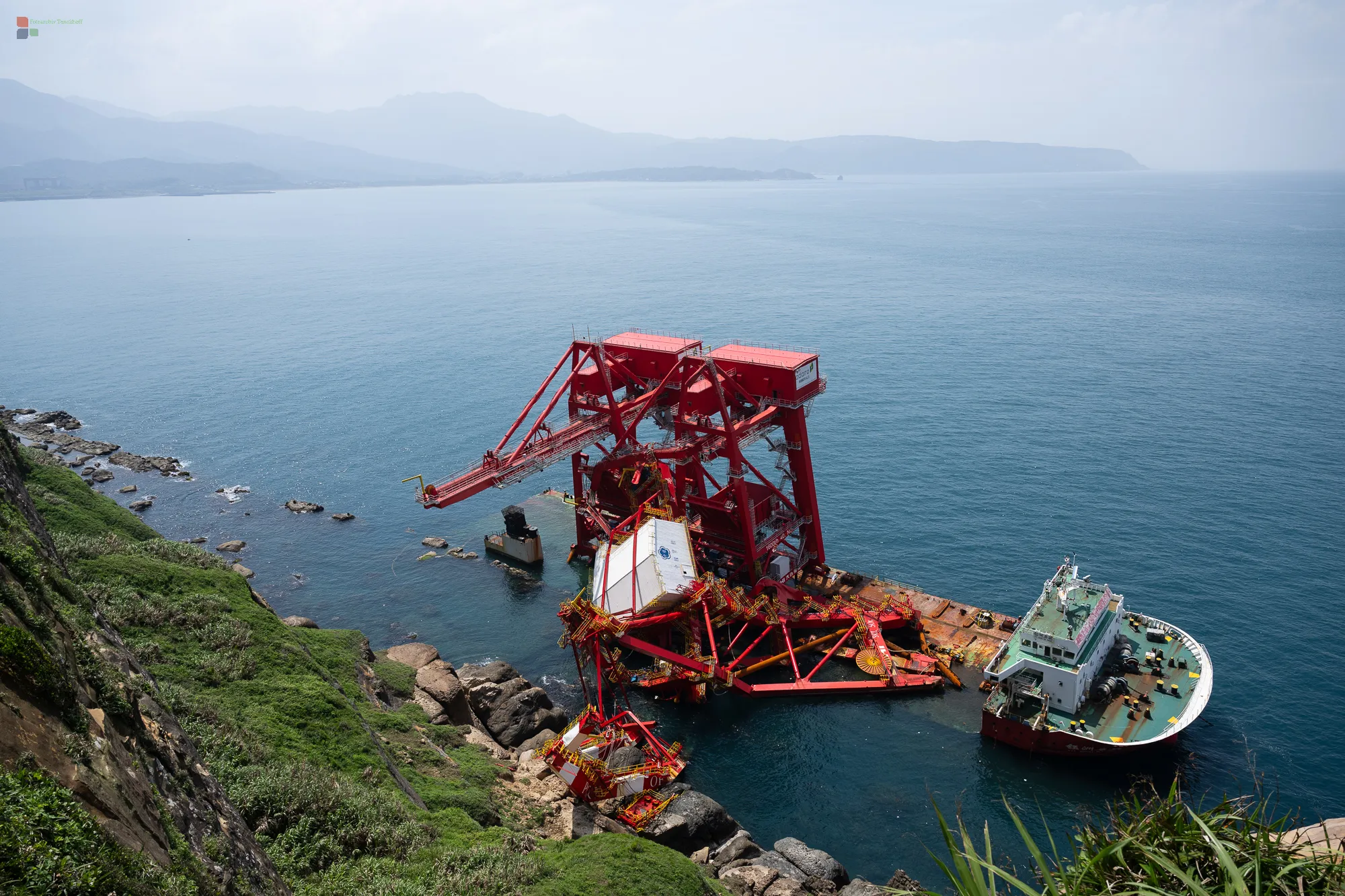
Lying almost motionless off the coast was the wreck of a cargo ship that had run aground here in the autumn of 2024. The Yu Zhou Qi Hang (鈺洲啟航, IMO 9643776) lost engine power during the approach of Typhoon Kong-rey and struck the rocks on 31 October 2024. Fuel and oil were later removed, yet when we visited in April 2025, the hull still lay tilted off the shore – a rust-coloured reminder of the forces that constantly shape this coast.
Silent Observers
The hill is also beloved by ornithologists: herons, shearwaters and sea eagles circle in the updrafts, and those with patience are rewarded with remarkable sightings.
At the summit, the wind carries the scent of salt, and one looks upon a landscape at once majestic, bizarre, and fragile. Perhaps that is Yehliu’s true wonder – that one can feel how alive even stone can be.
Between Incense and the Fishing Harbor – Yehliu's Bao'an Temple
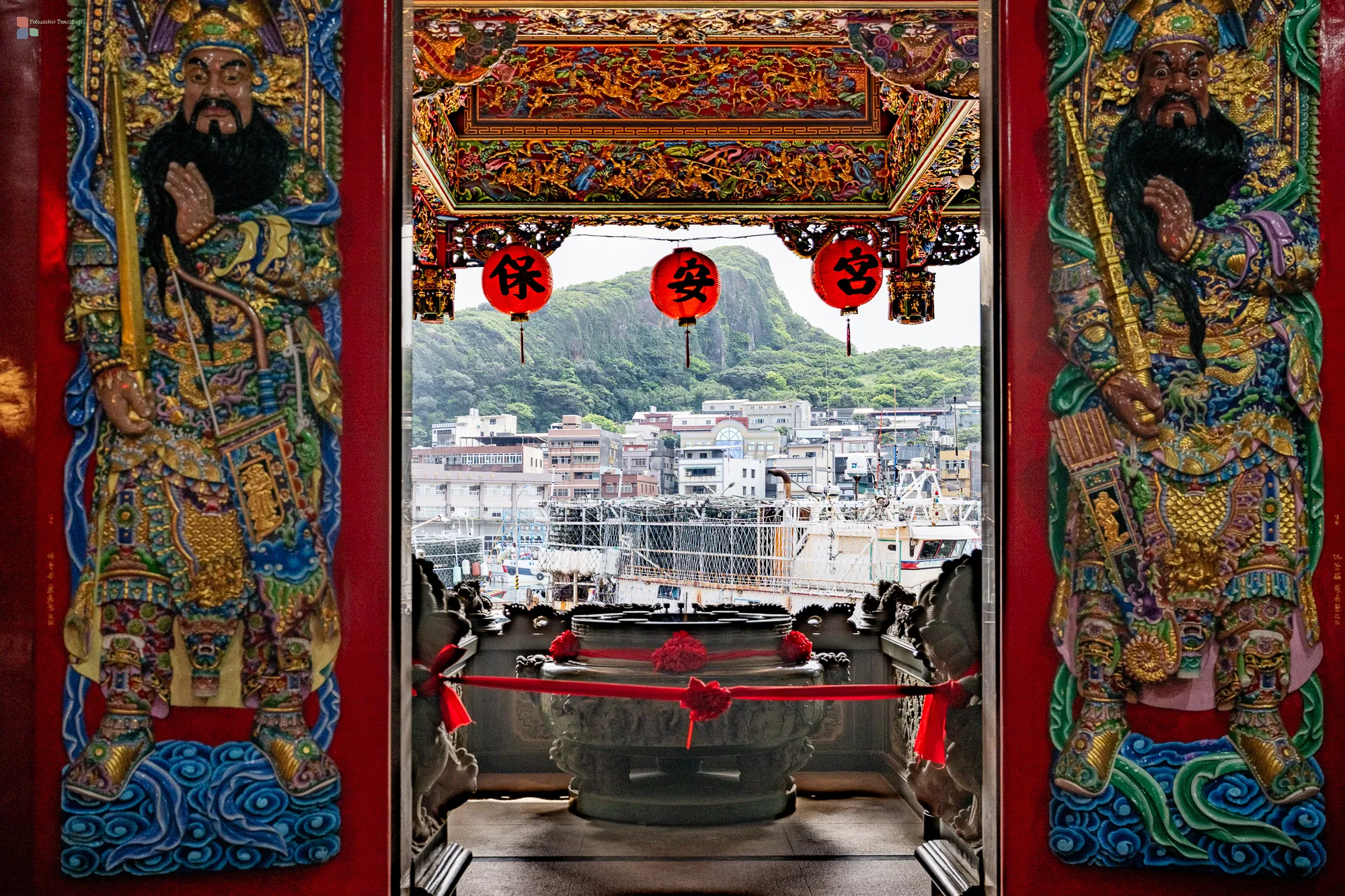
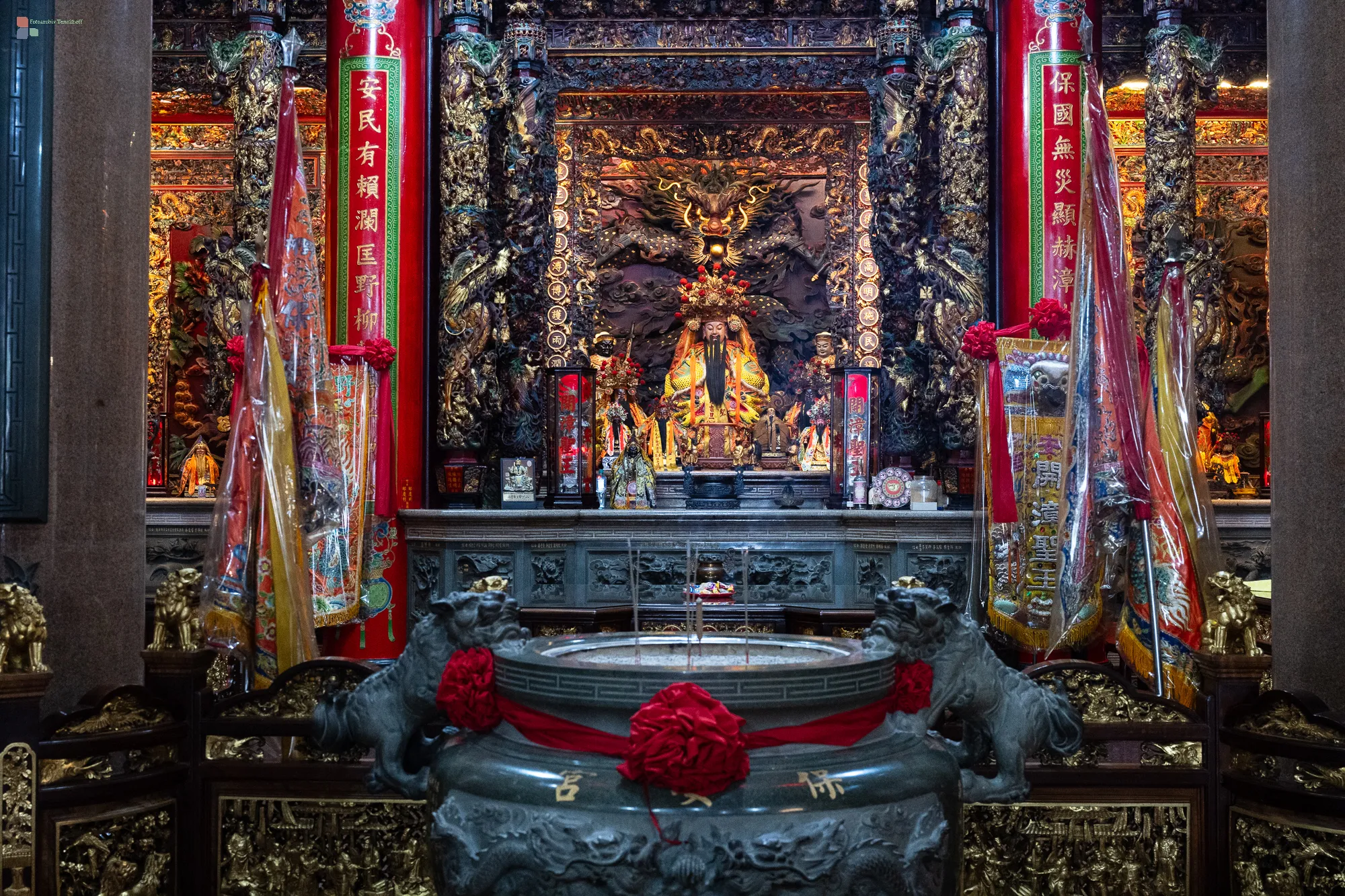
Walking from the Geopark down to the harbor is almost inevitable: Bao'an Temple (保安宮) – a colorful gem of Taiwanese folk religion. Even before entering, the scent of incense greets you, and through the gilded portal, you look directly out over the harbor, the boat masts, and the green hills rising beyond.
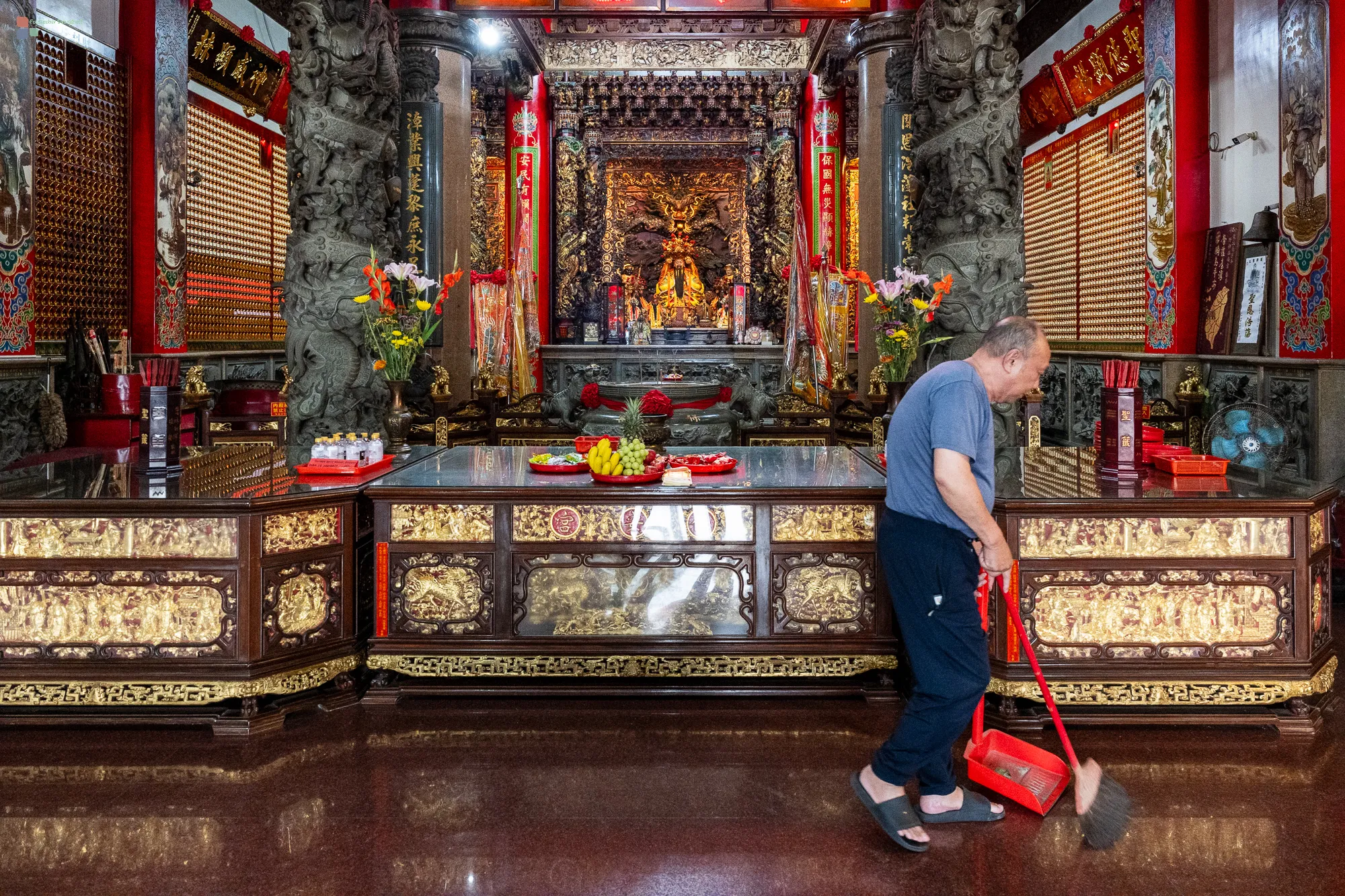
The temple is dedicated to the patron gods of sailors, most notably the legendary Kai Zhang Sheng Wang, a Tang-era prince venerated in Taiwan as the patron of fishermen and coastal communities. His statue sits enthroned in the main shrine, flanked by richly ornamented dragons and lions. The interior is a microcosm of Taiwanese craftsmanship: intricate wood carvings, painted beams, and golden characters shimmering in the candlelight.
Bao'an Temple is not only a place of prayer, but also the ritual heart of Yehliu. Every spring, the Harbor Cleansing Festival (淨港祭) takes place here – a ritual over a hundred years old in which the deities are symbolically carried out to sea to bless the water, the harbor, and the community. Fishermen decorate their boats, carrying flags and palanquins, accompanied by drums, fireworks, and prayers. For locals, this is a moment of renewal – for visitors, a rare spectacle of living tradition.
The temple combines the profane with the spiritual: outside, nets clatter, inside, prayers resound. Through the open doors, one sees the sea, both a source of life and a threat. In this tension, between wind, waves, and incense, perhaps lies the true meaning of this place – as a sanctuary in a landscape shaped by the power of the elements.