In this article: Kinkaku-ji the Golden Pavilion Temple in Kyoto
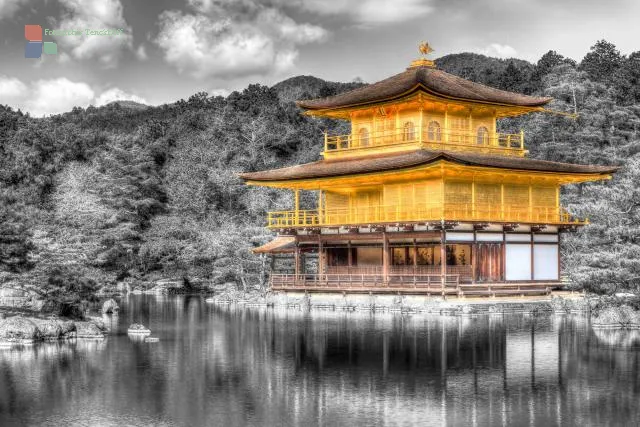
Kinkaku-ji, located in western Kyoto, is known worldwide as the Golden Pavilion and ranks among Japan’s most important temples. Its three stories, partly covered in gold leaf, are reflected in the adjoining Kyōko-chi Pond, creating an image of striking brilliance. Originally built in the 14th century as a shogun’s retirement villa, it is now a UNESCO World Heritage site and one of Kyoto’s most visited landmarks.
For photographers, the Golden Pavilion presents a unique challenge: the radiant gilding, combined with changing light conditions, produces countless variations in its reflection on the water. Particularly in the early morning hours or in autumn, when the red maple leaves provide strong contrast, the temple offers impressive visual opportunities.
The work shown here applies the Colorkey technique, in which most of the image is rendered in black and white while selected elements remain in color. In the case of Kinkaku-ji, the golden façade of the pavilion is highlighted, standing out vividly against the subdued surroundings. This technique directs the viewer’s gaze straight to the essence of the scene and makes the unique aesthetics of the temple immediately tangible.
Kyoto, with its numerous temples, gardens, and traditional districts, offers endless opportunities to capture the interplay of architecture, nature, and culture. Within this context, the Golden Pavilion holds a special place—not only for its beauty but also for the artistic way it is anchored in Japanese tradition and contemporary photographic expression.
