In this article: Fushimi Inari Taisha – Paths of Light
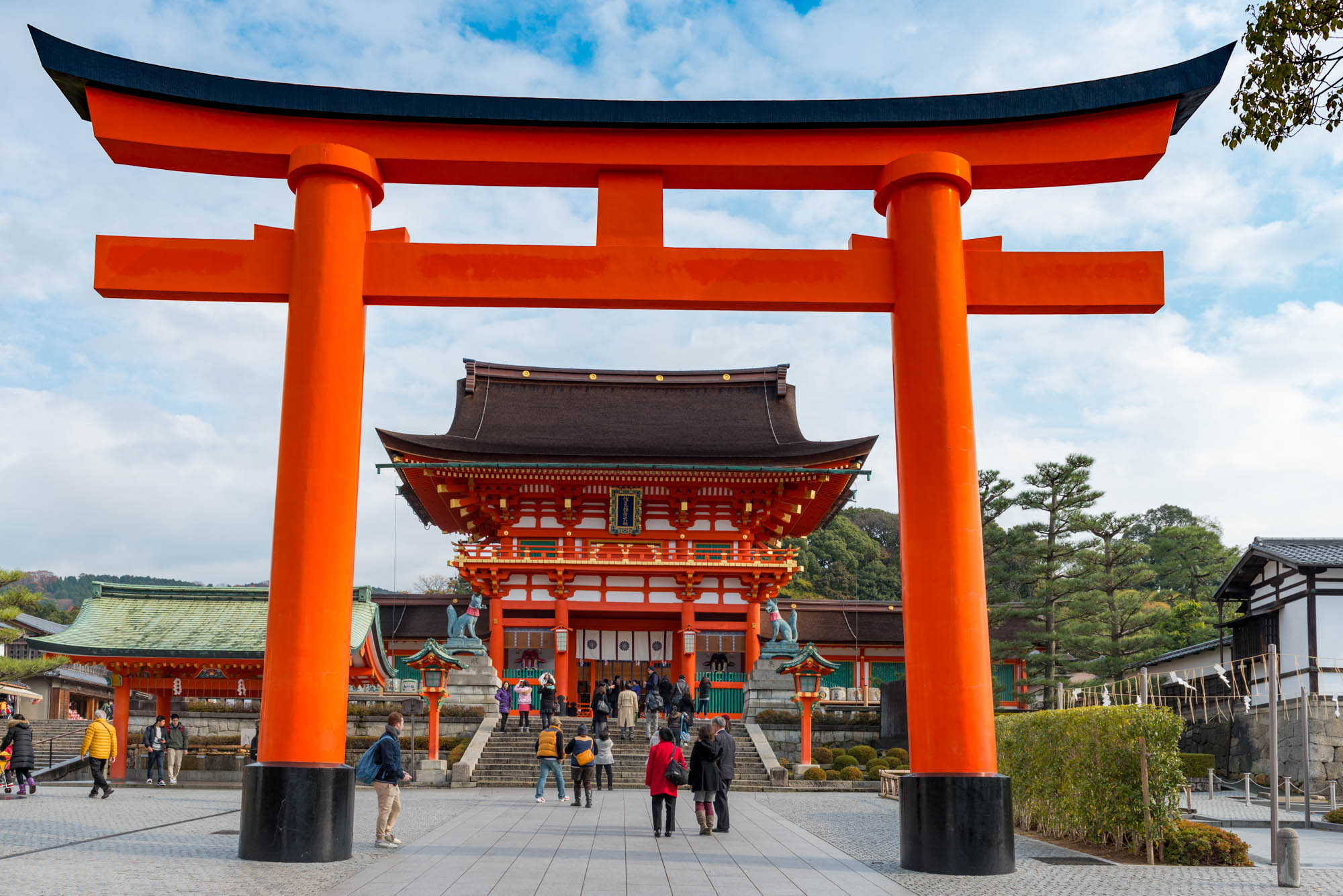
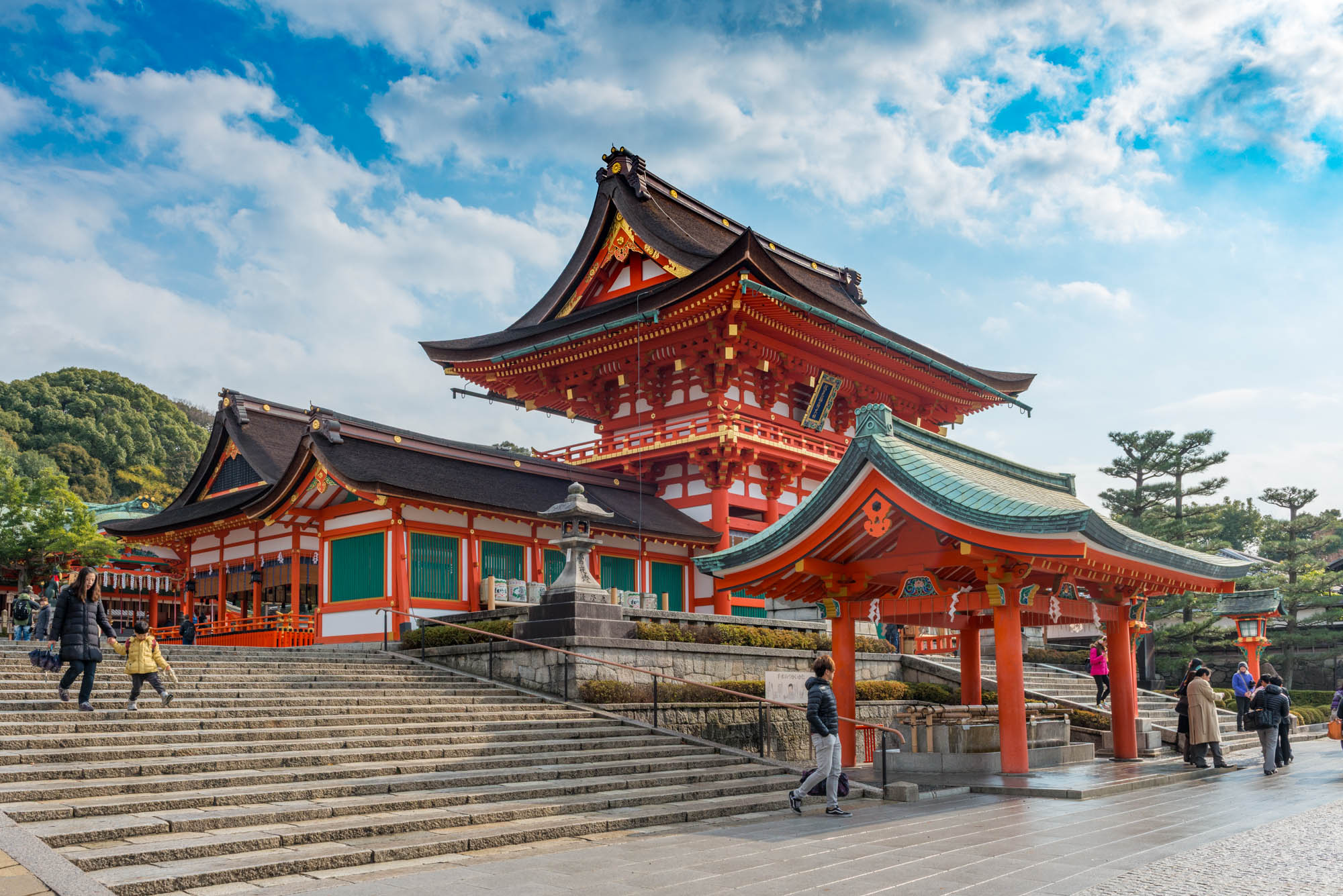
South of Kyoto lies one of Japan’s most famous yet most mysterious places – the Fushimi Inari Taisha.
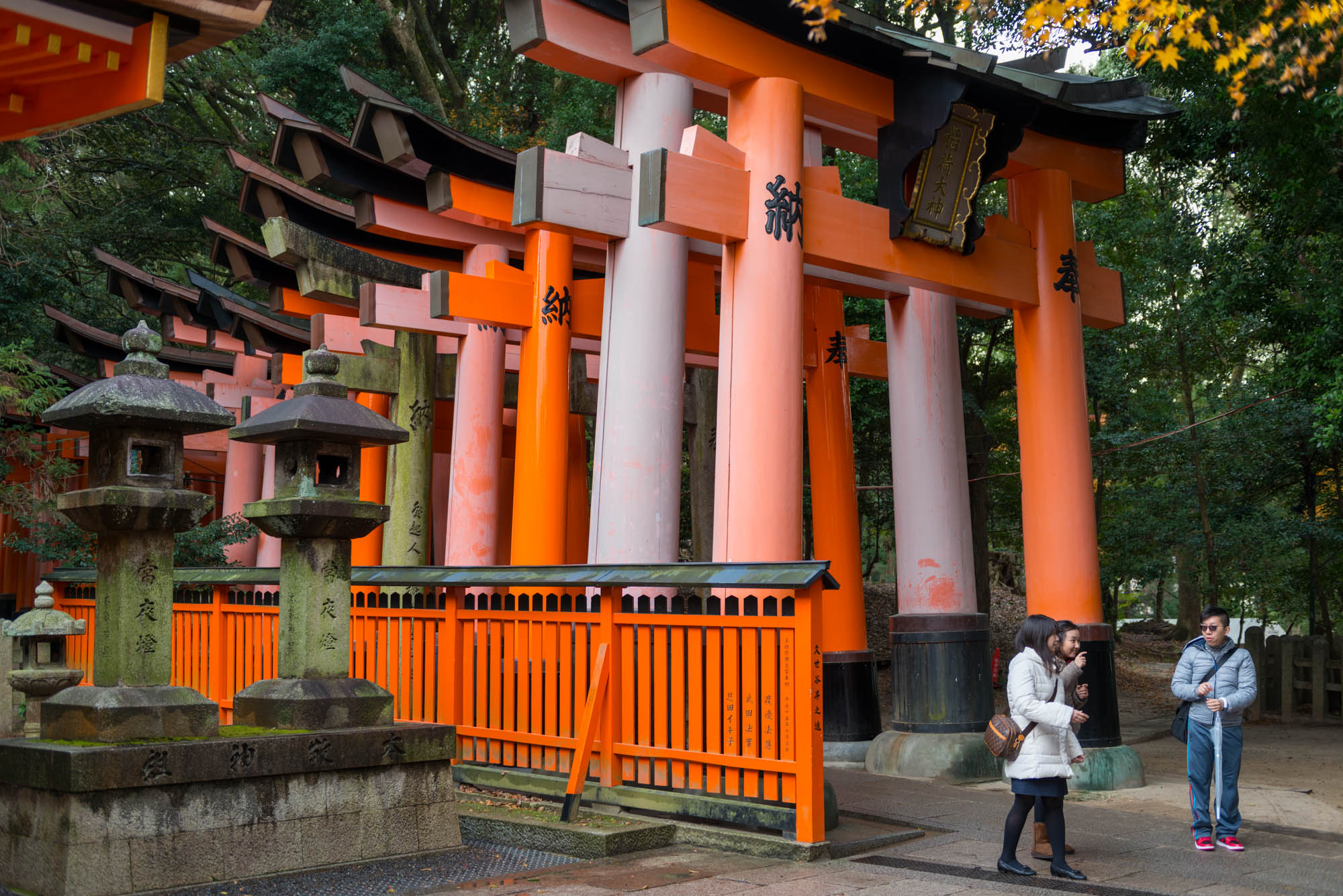
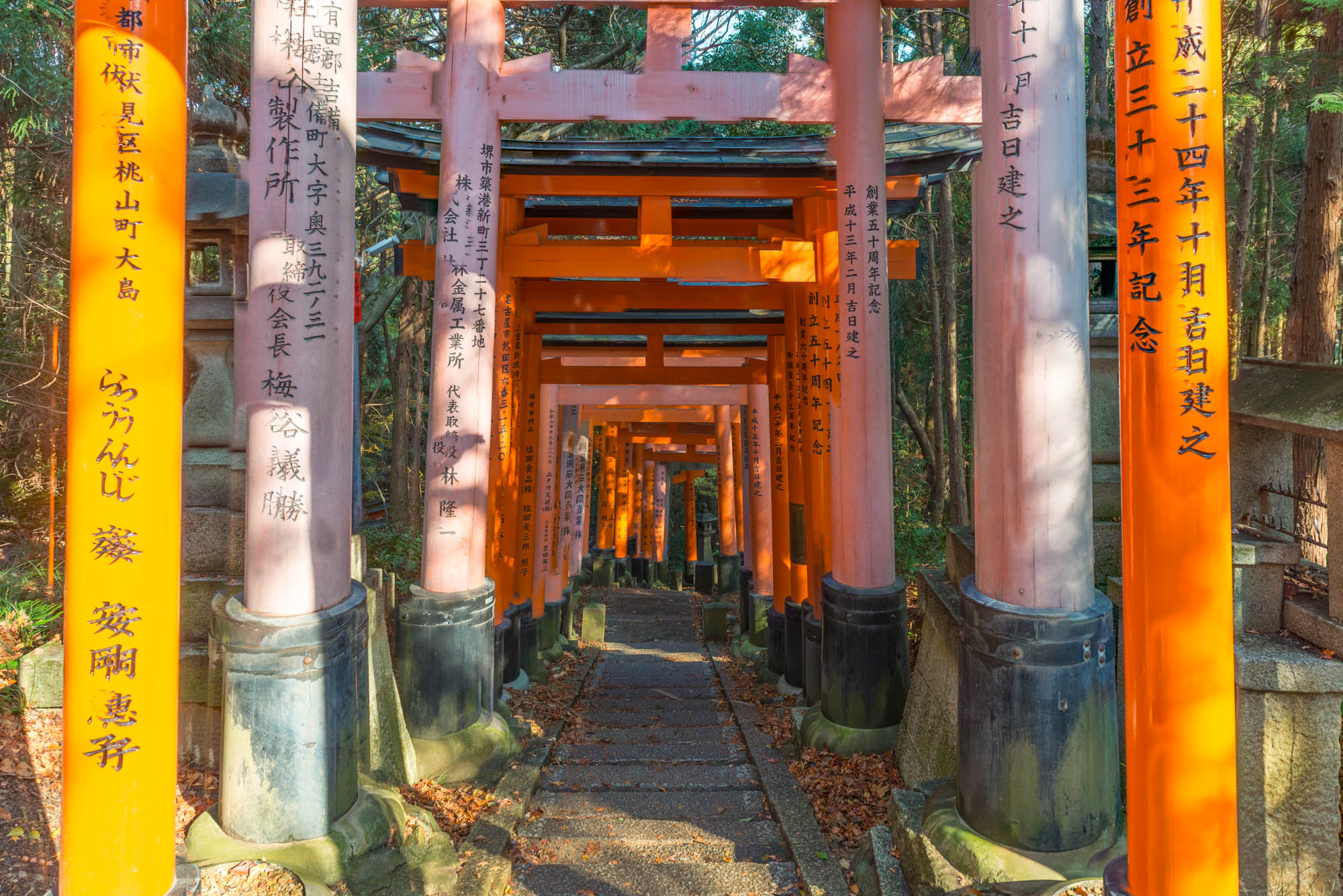
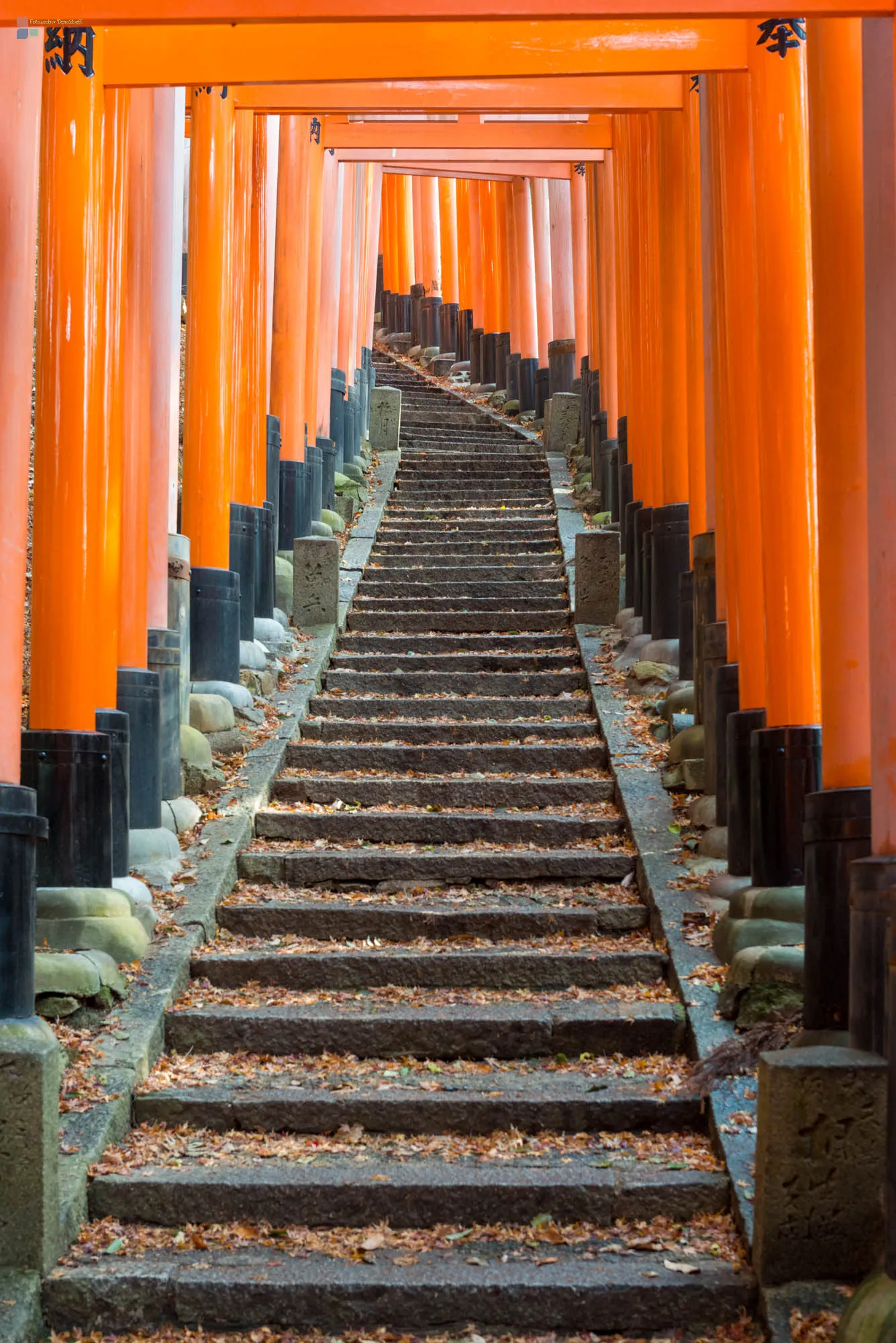
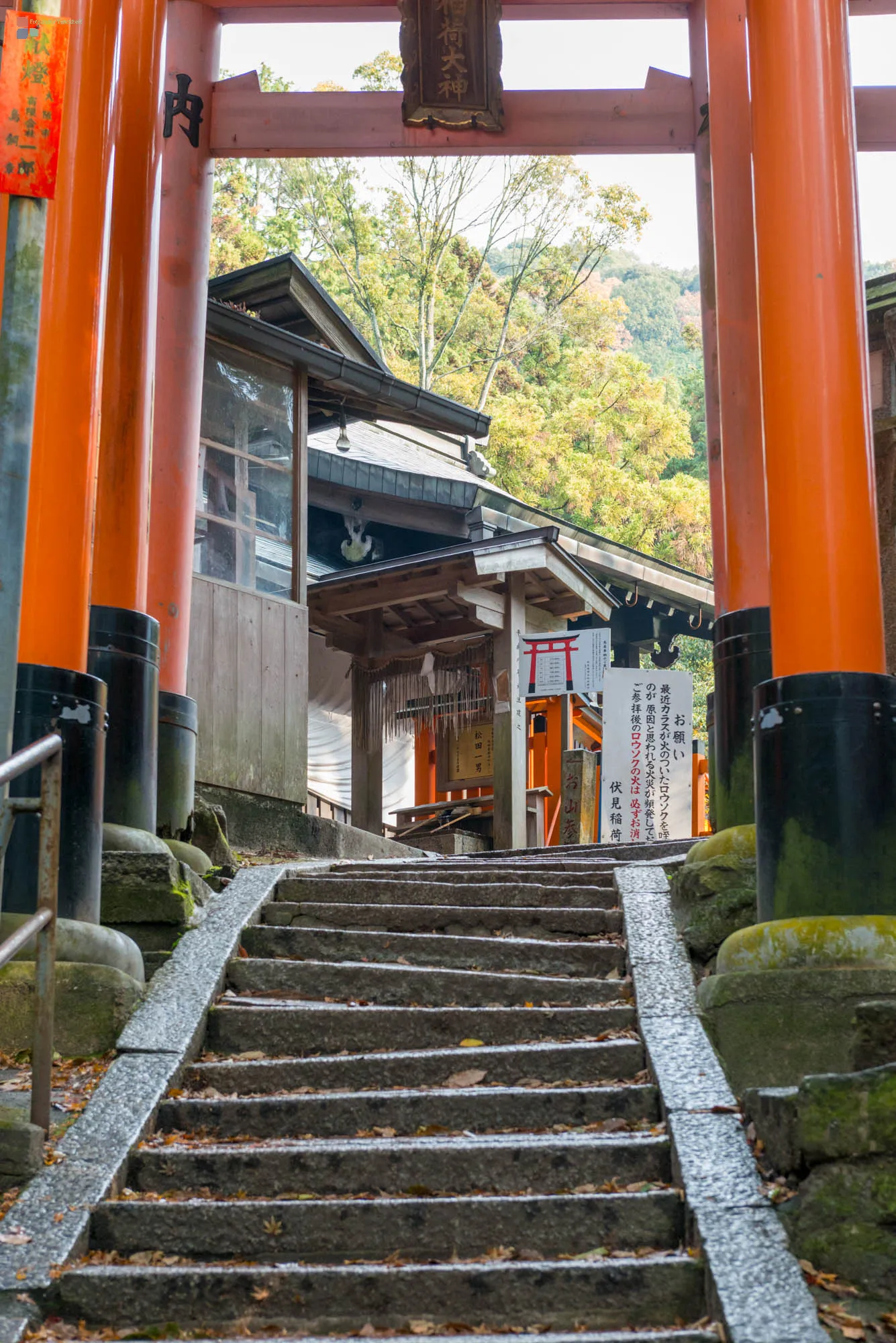
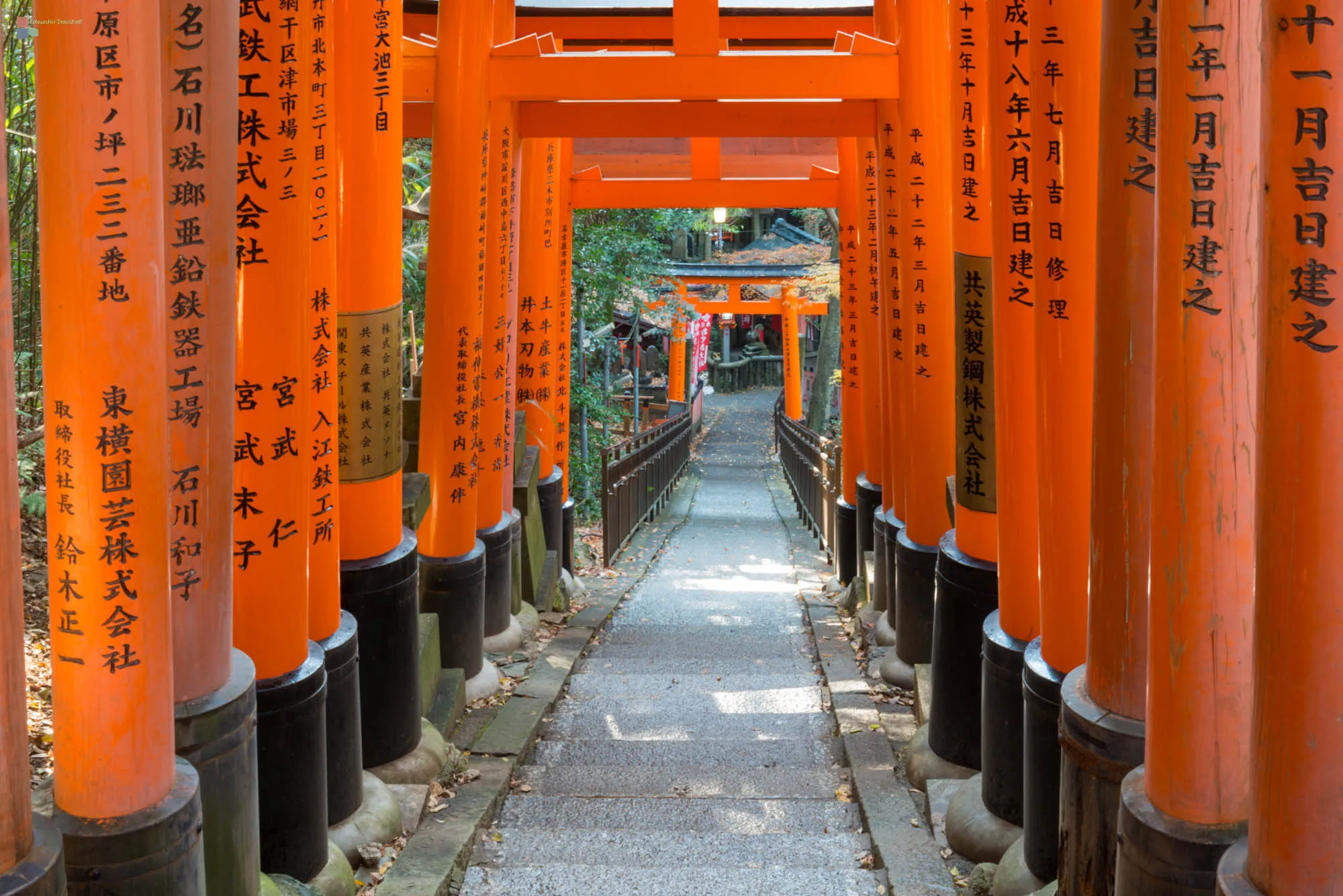
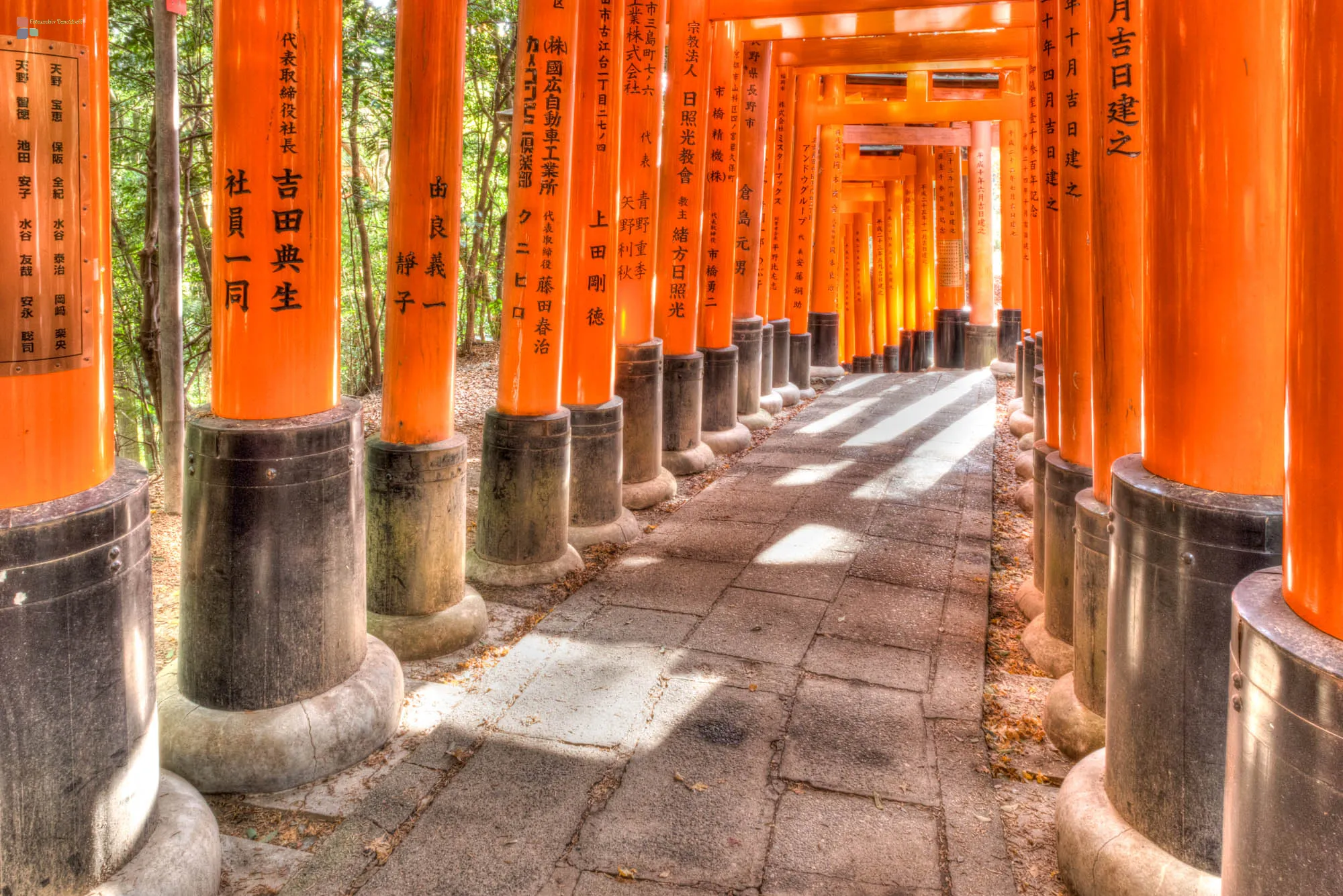
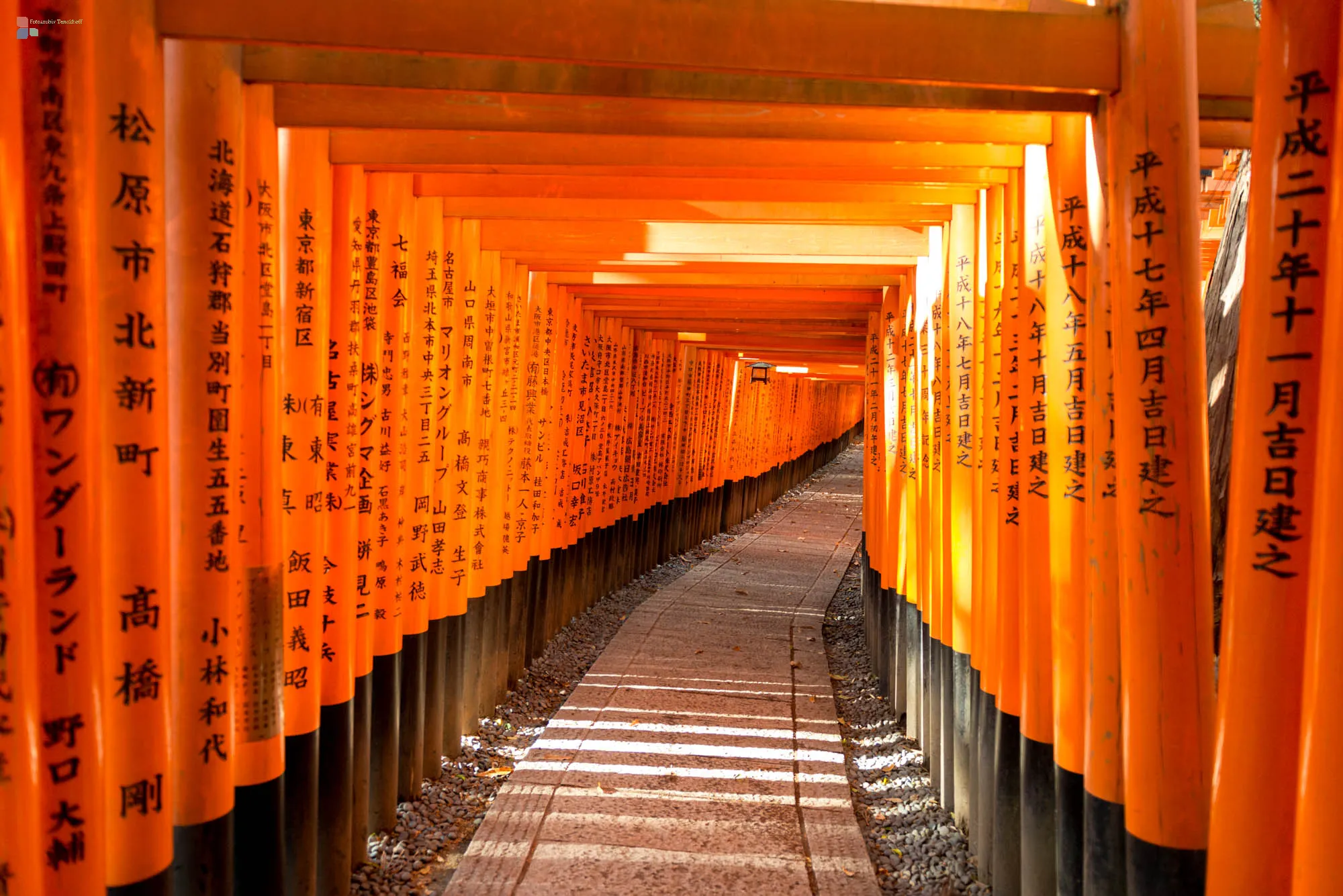
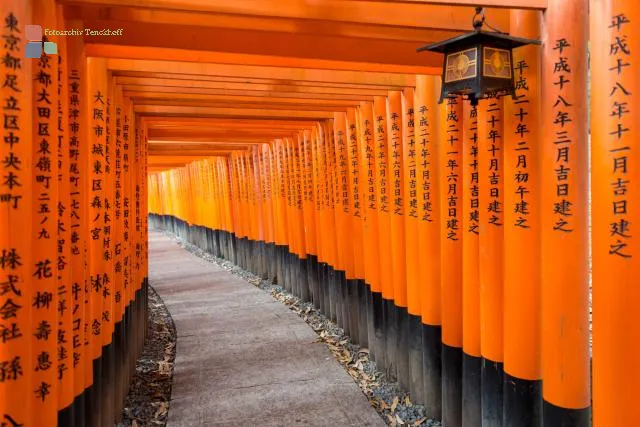
Early in the morning, sunlight greets us as we step through the first of thousands of torii gates. The orange lacquer shimmers, and the light dances across the black calligraphy, across the faces of other visitors, across our shoulders – painting a living pattern of brightness and shade that stays with us all along the way.
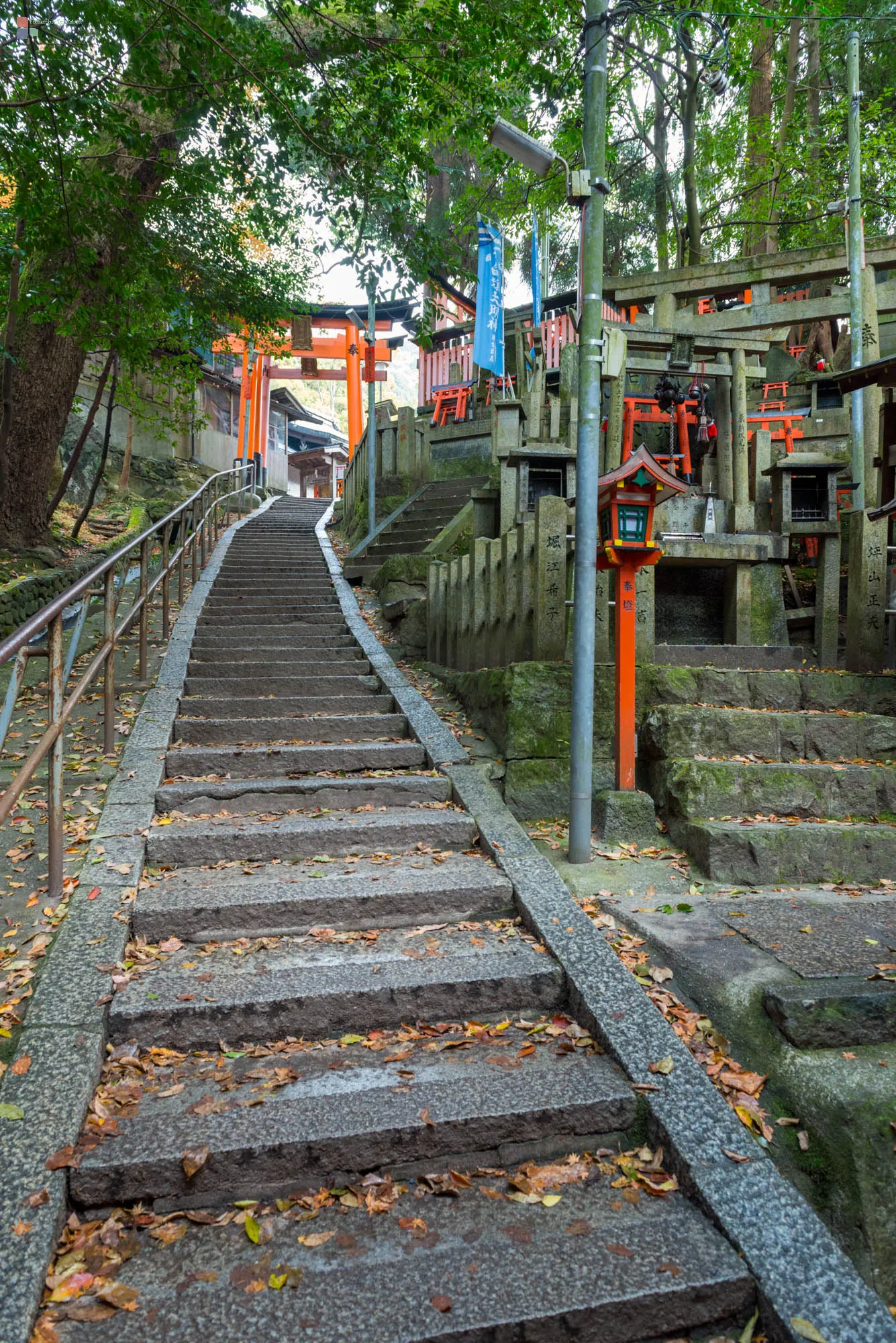
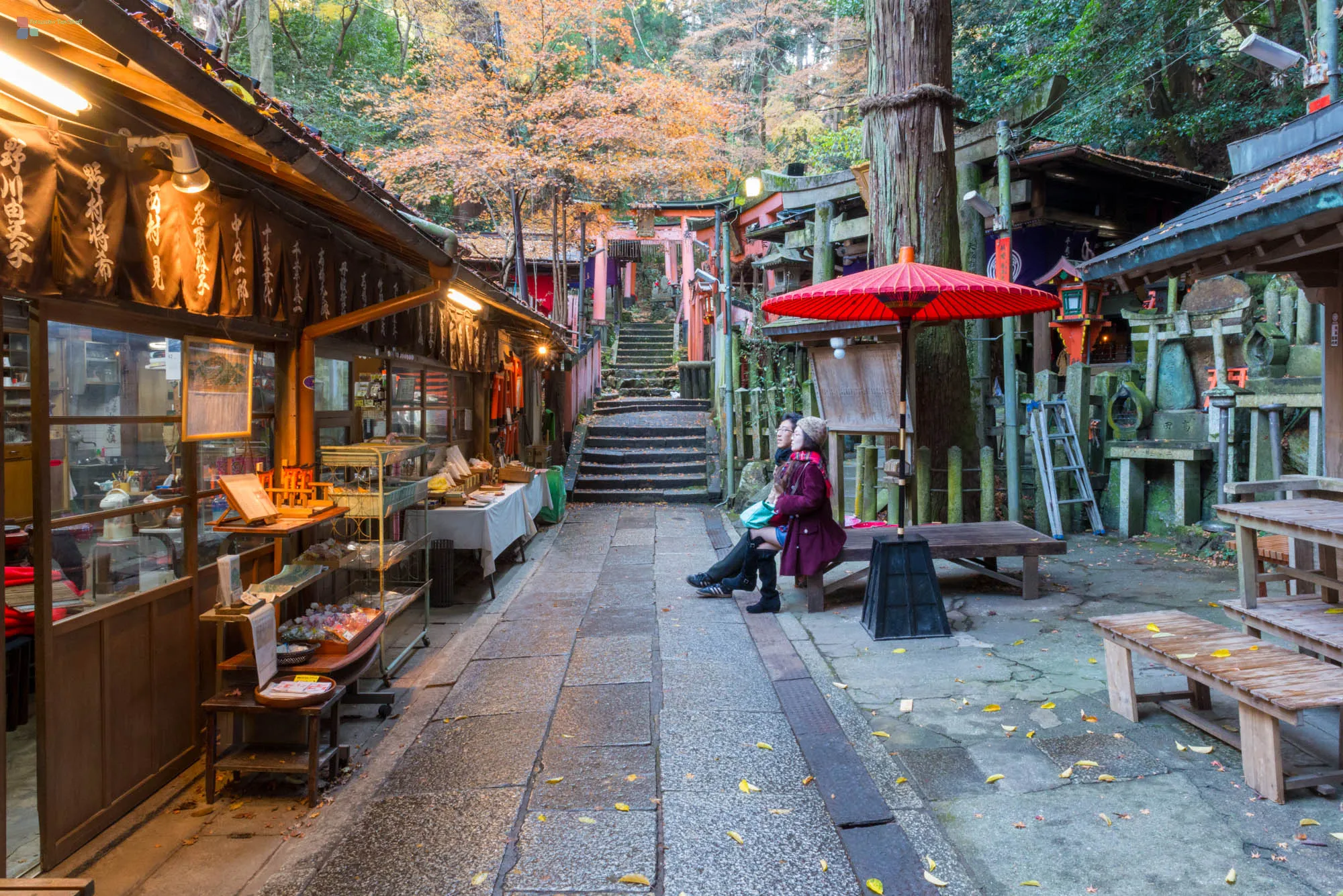
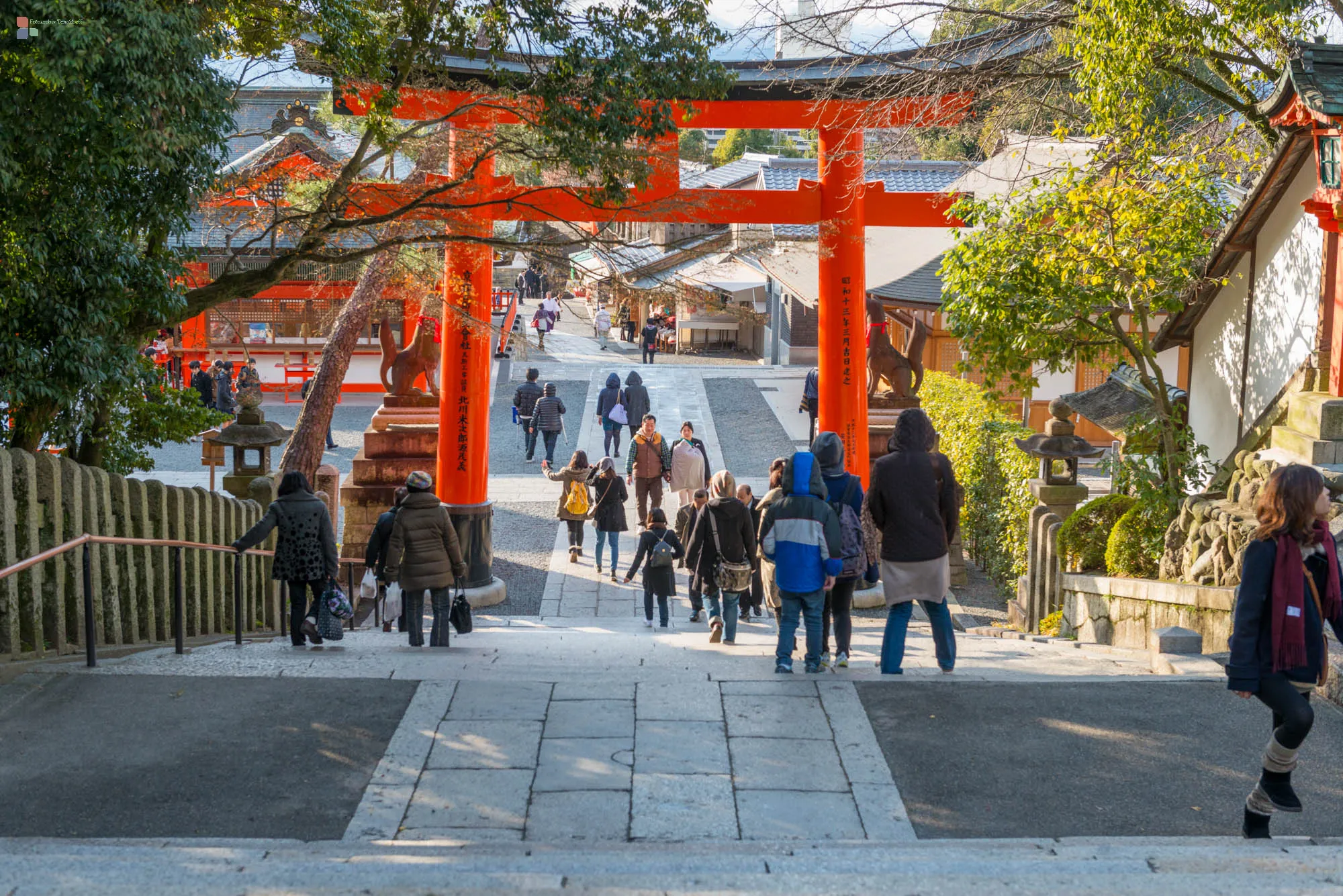
At the start of the trail it’s lively, even crowded. Tour groups, school classes, travelers from all over the world fill the first section near the main shrine. But one should not be discouraged – the higher you climb, the quieter it becomes. The voices fade, replaced by the rhythm of your own footsteps and the rustling of leaves in the mountain breeze.
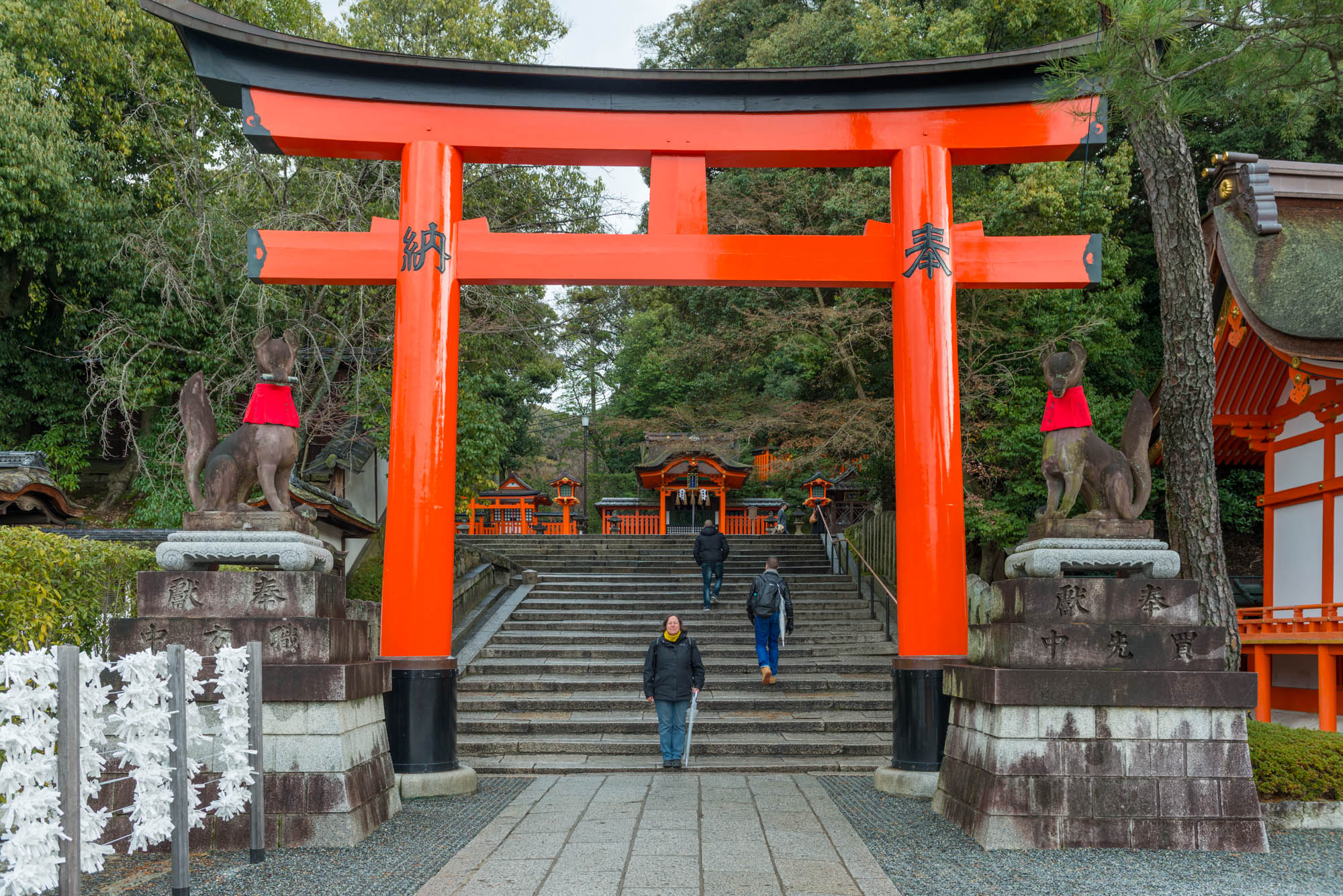
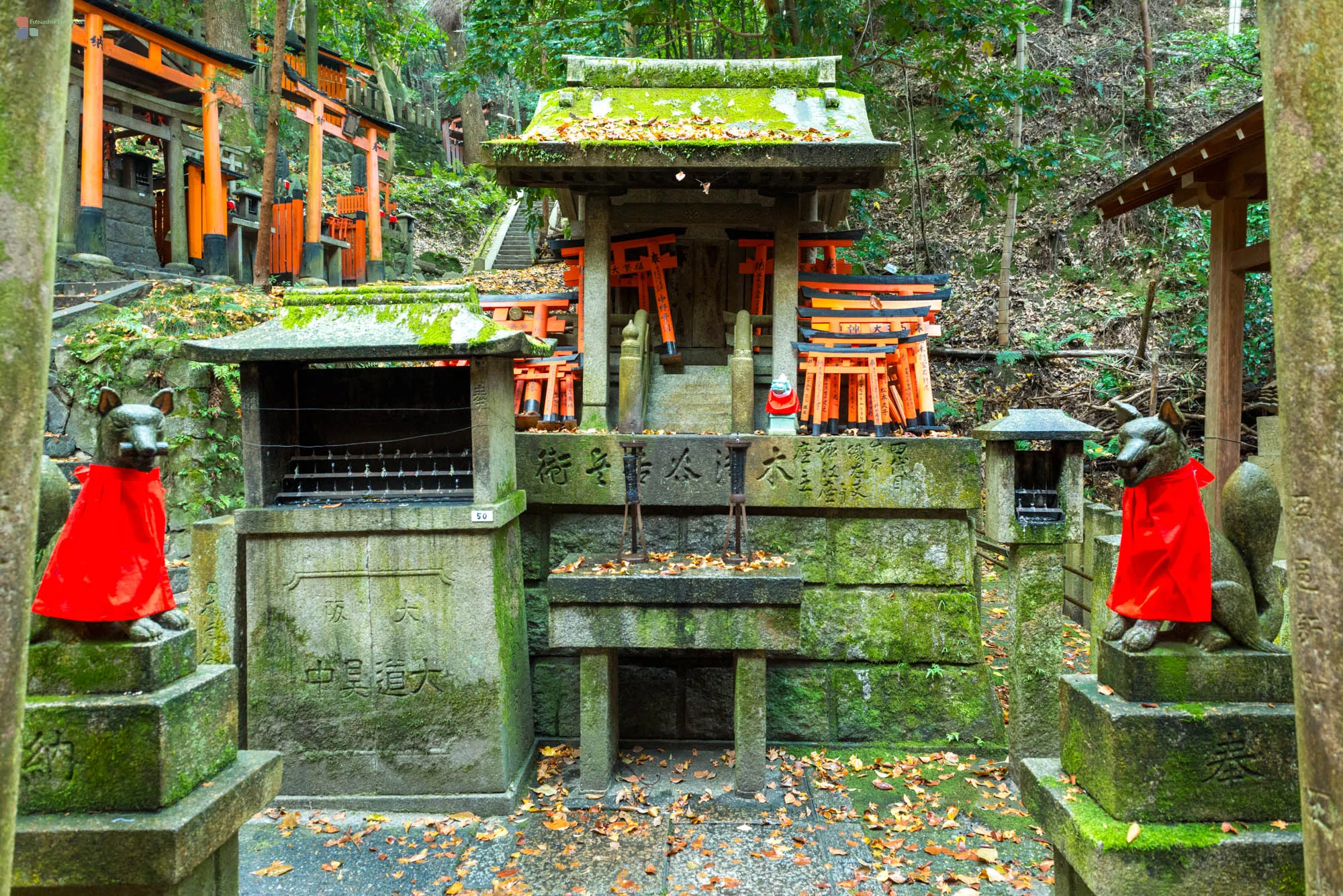
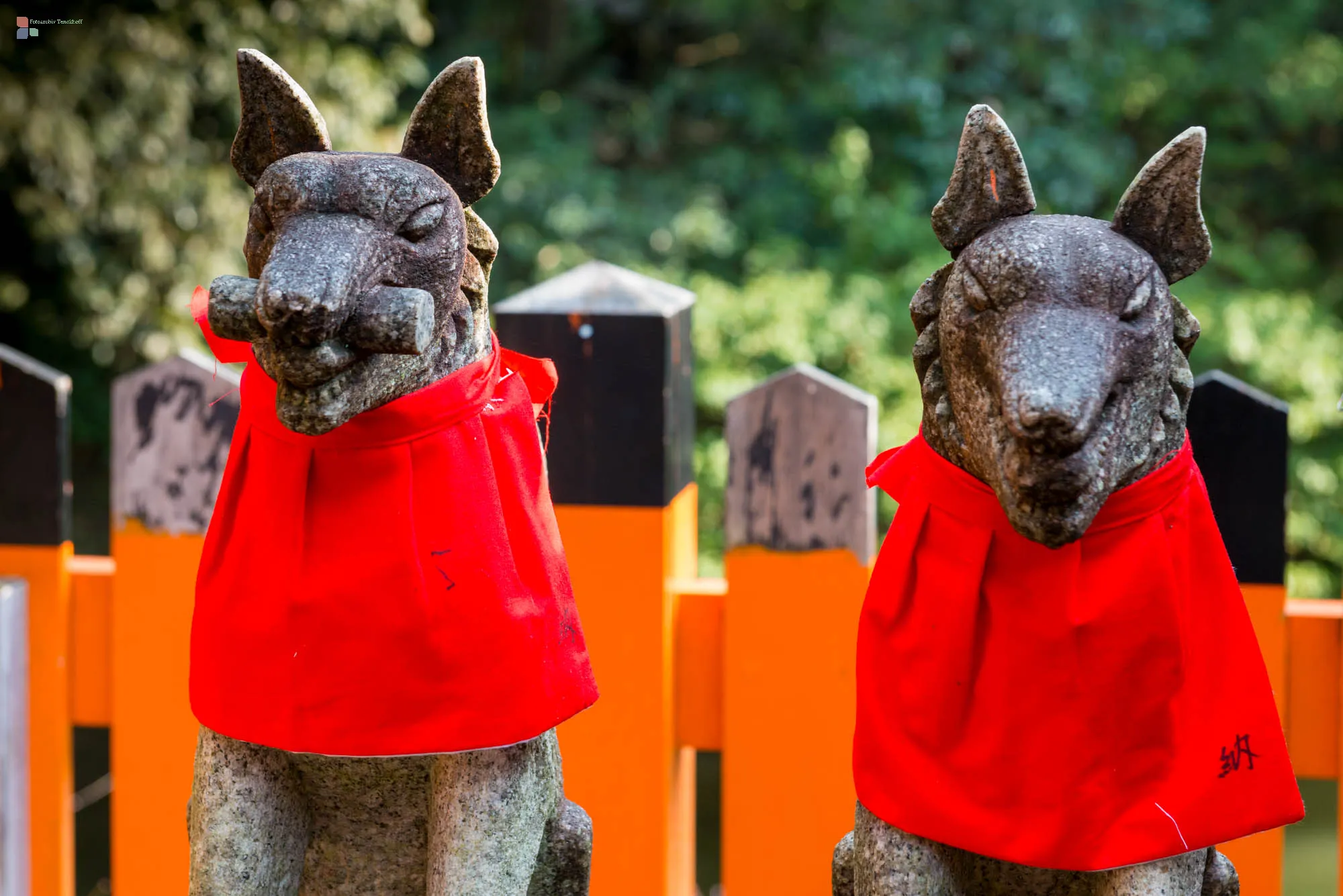
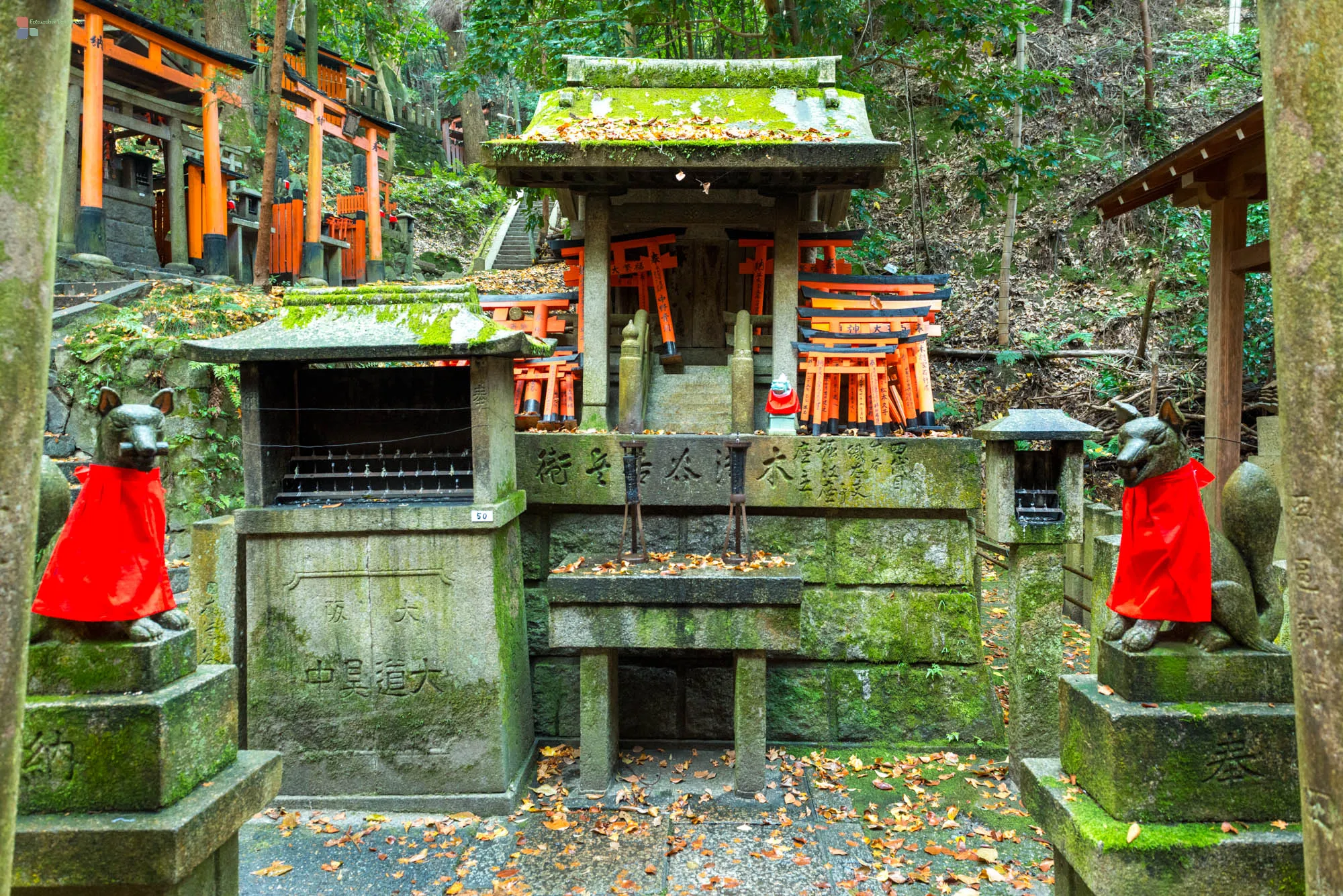
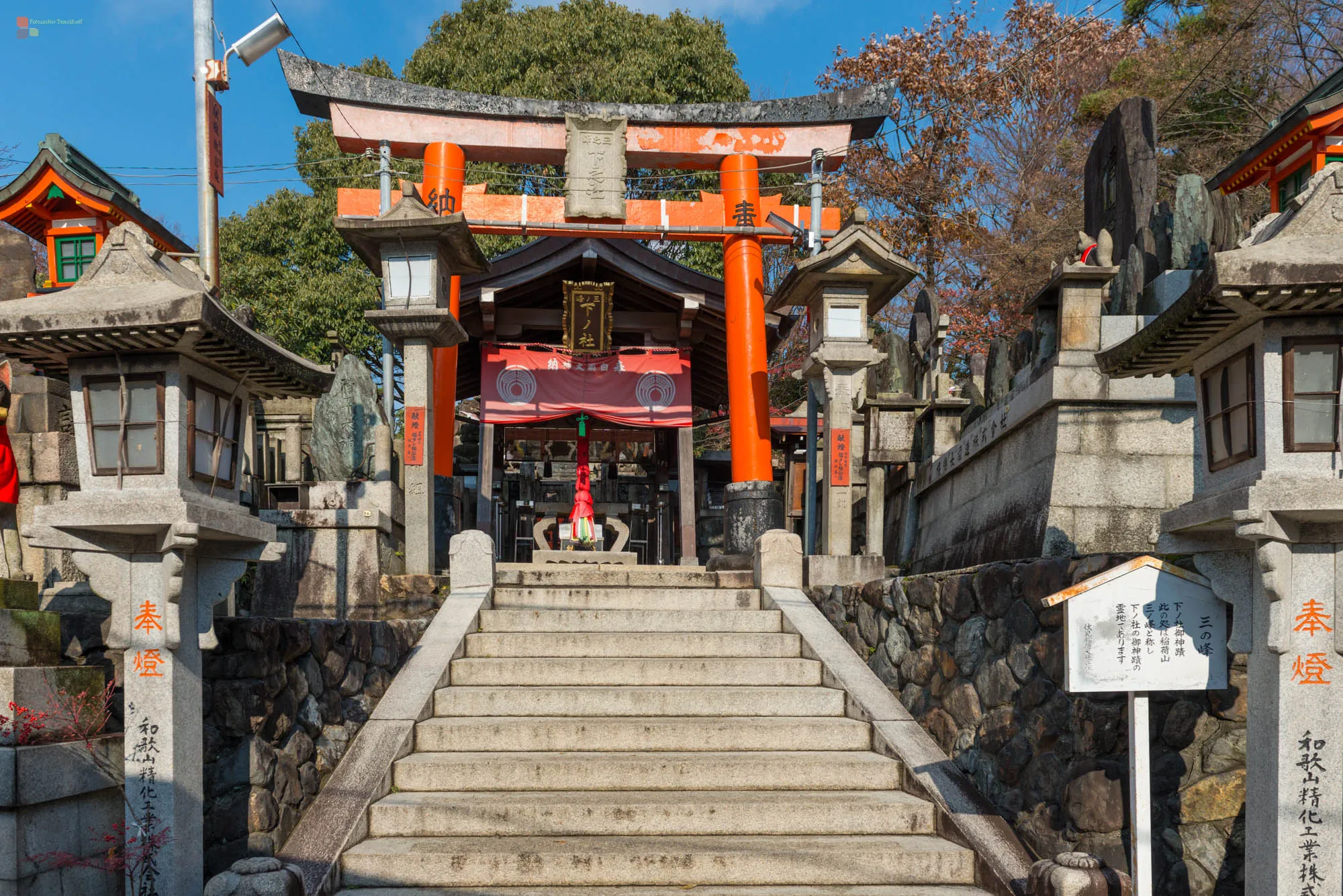
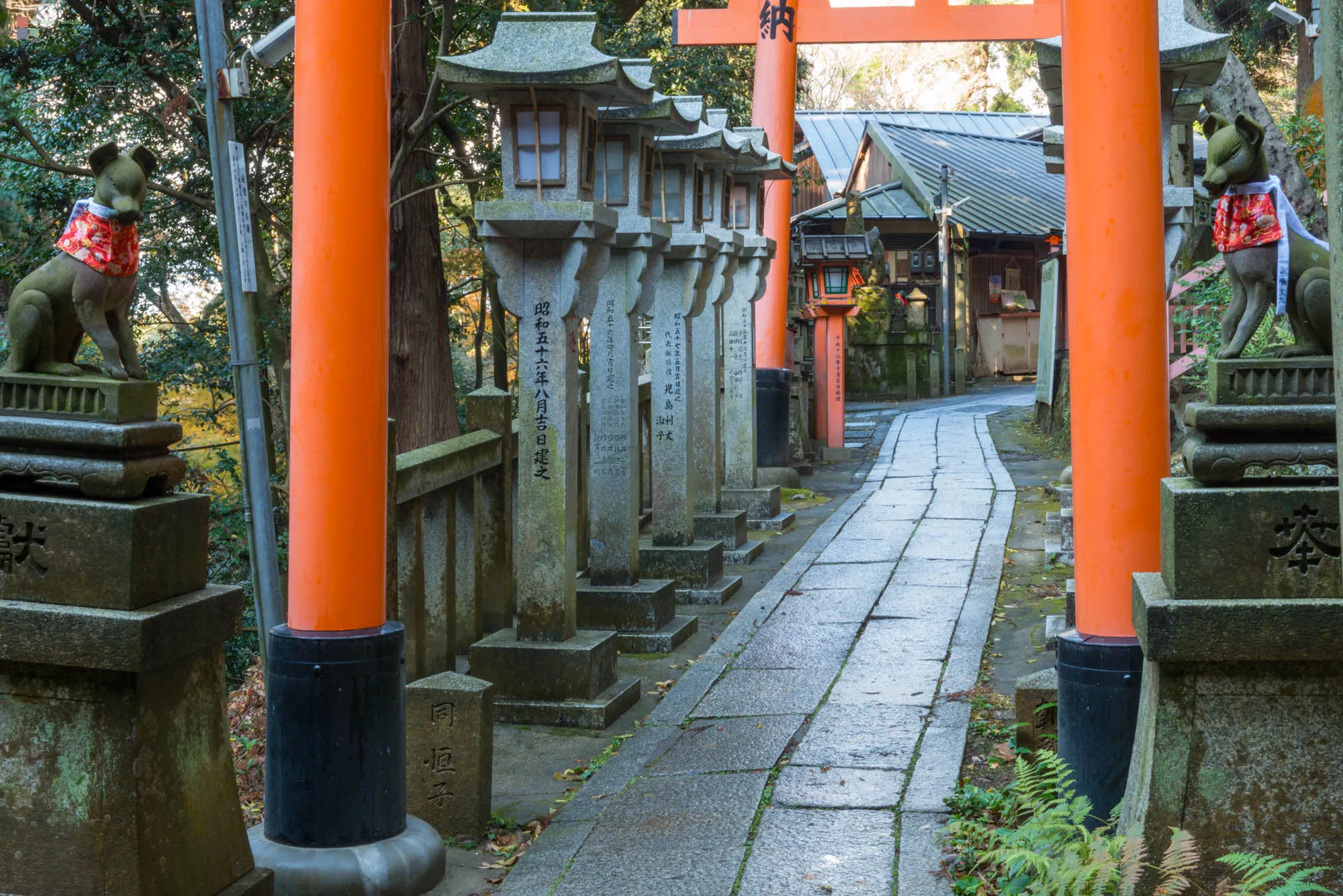
The path winds upward, step by step, past small sub-shrines, stone foxes, and offerings of rice, sake, and coins. Two guardian dogs watch over the entrance to one of the stations, each wearing a red cloth around its neck – one even holds a scroll in its mouth, as if keeping the message of the gods safe.
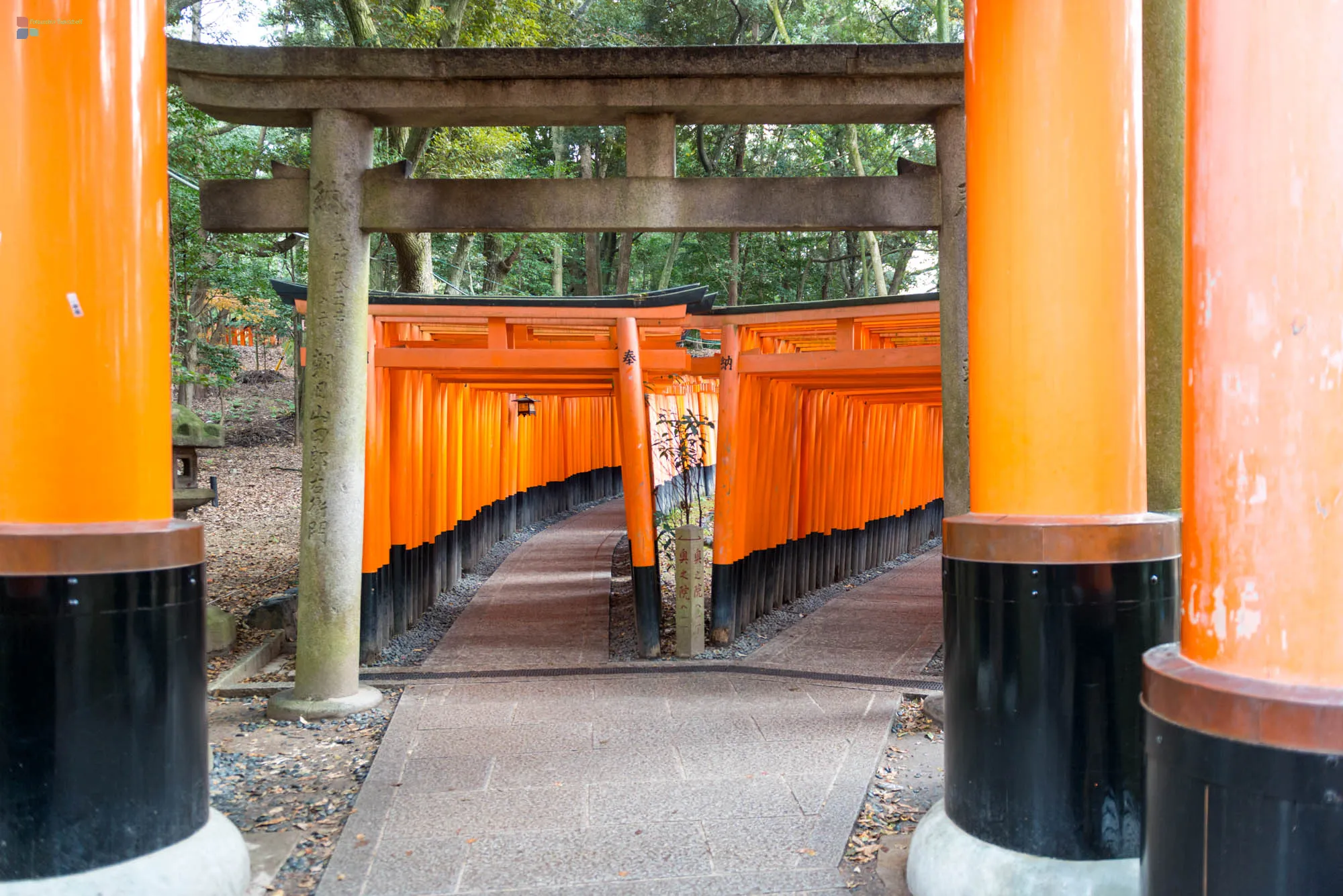
With every turn the crowds thin out. The air clears, the forest deepens, and the torii form a corridor of light that seems to lead from one world into another. The Fushimi Inari Taisha is not just a place to visit – it is a path to experience.
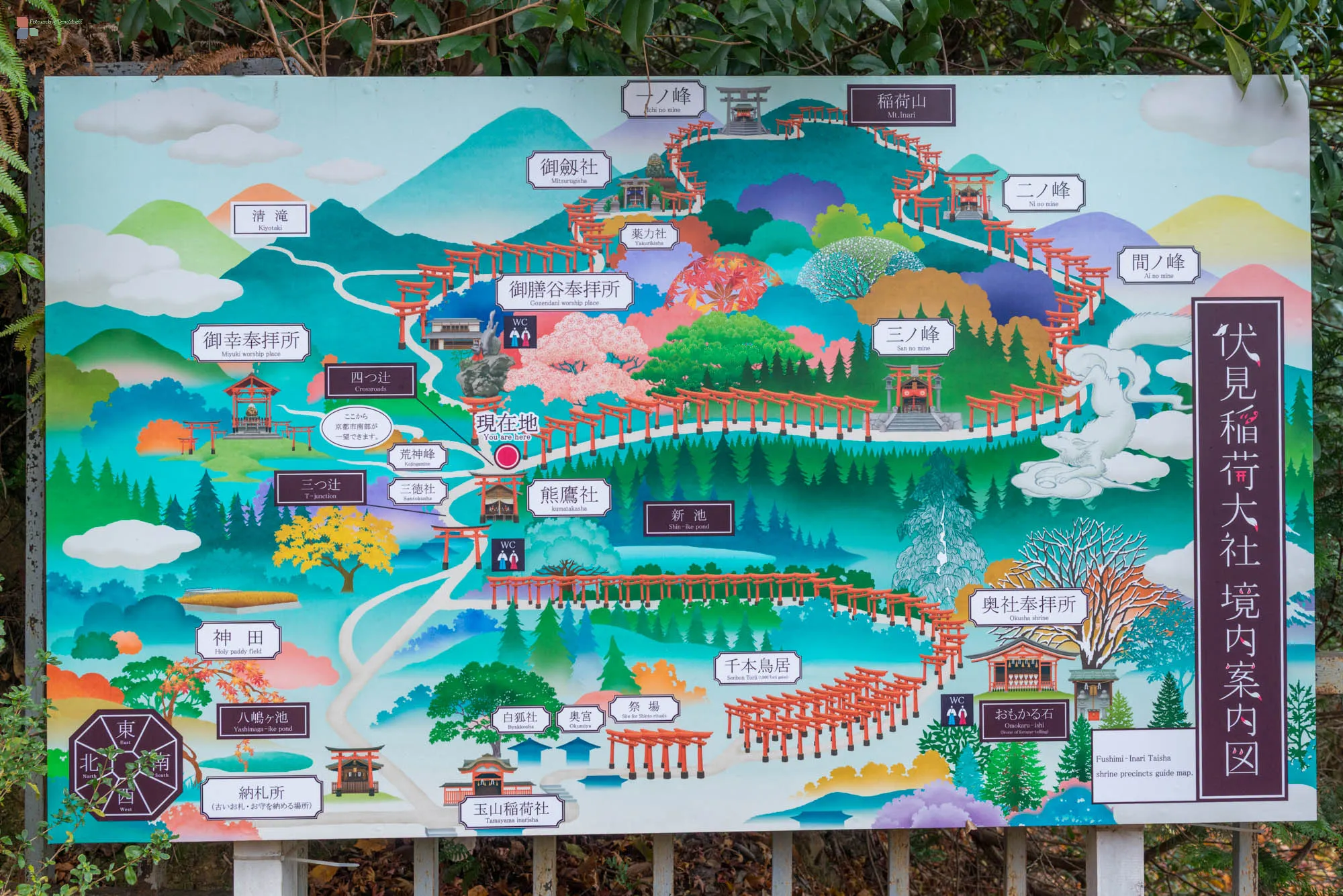
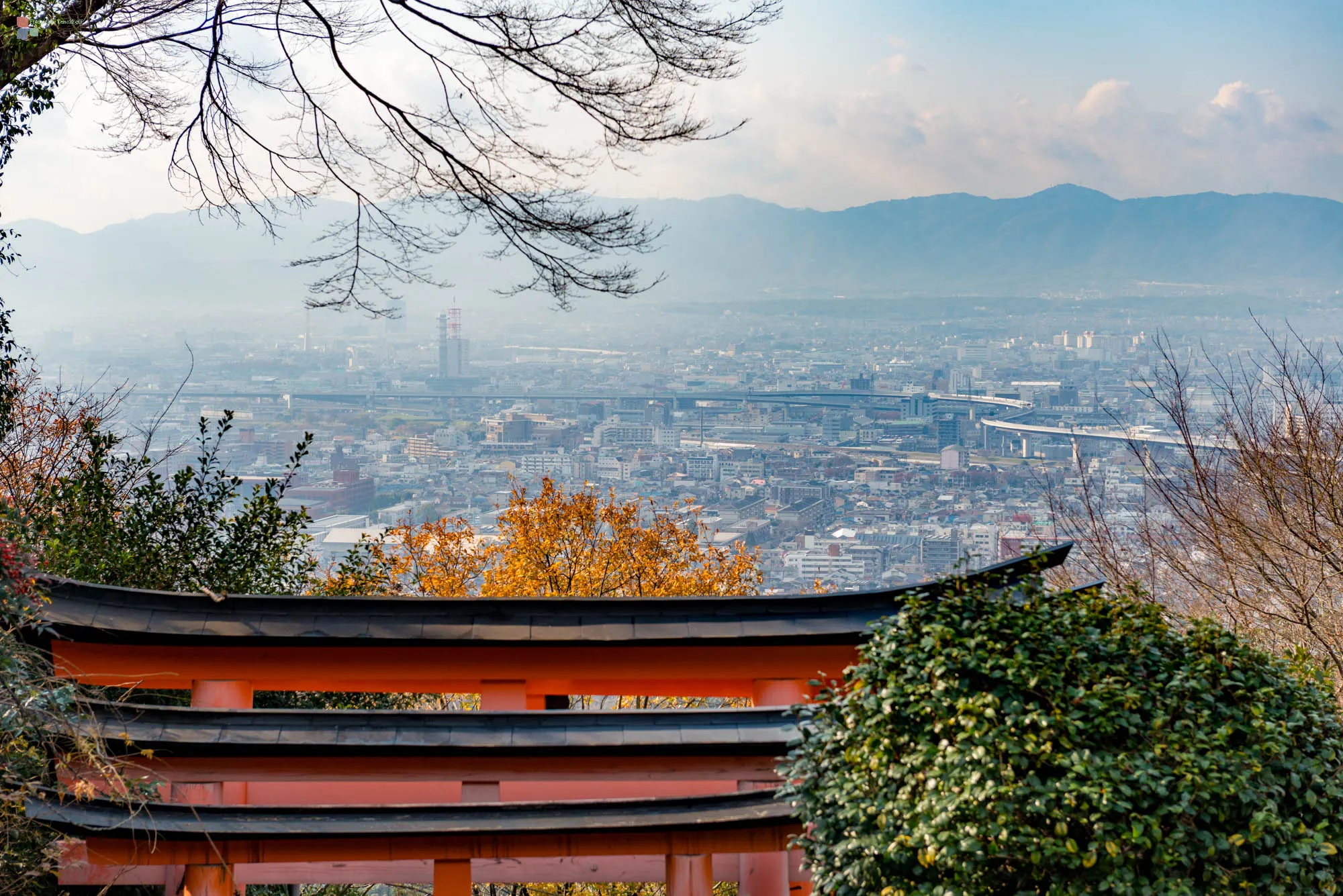
The full circuit stretches for about five kilometers around Mount Inari, rising roughly 170 meters in altitude and passing through over ten thousand torii. It is a pilgrimage of color and silence, ending in wide views over Kyoto and a feeling of calm that lingers long after the descent.
According to legend, those who complete the round without falling will find good fortune on all their future paths. Perhaps that’s why, after hours of walking, we return to the starting point tired but light-hearted – as if the mountain itself had shared a bit of its peace.
Information & Travel Tips
Location: Fushimi-ku, Kyoto, Japan
Elevation: Mount Inari (Inariyama) rises to about 233 m; the path climbs roughly 170 m.
Trail length: Approx. 5 km, 2–3 hours round trip at an easy pace.
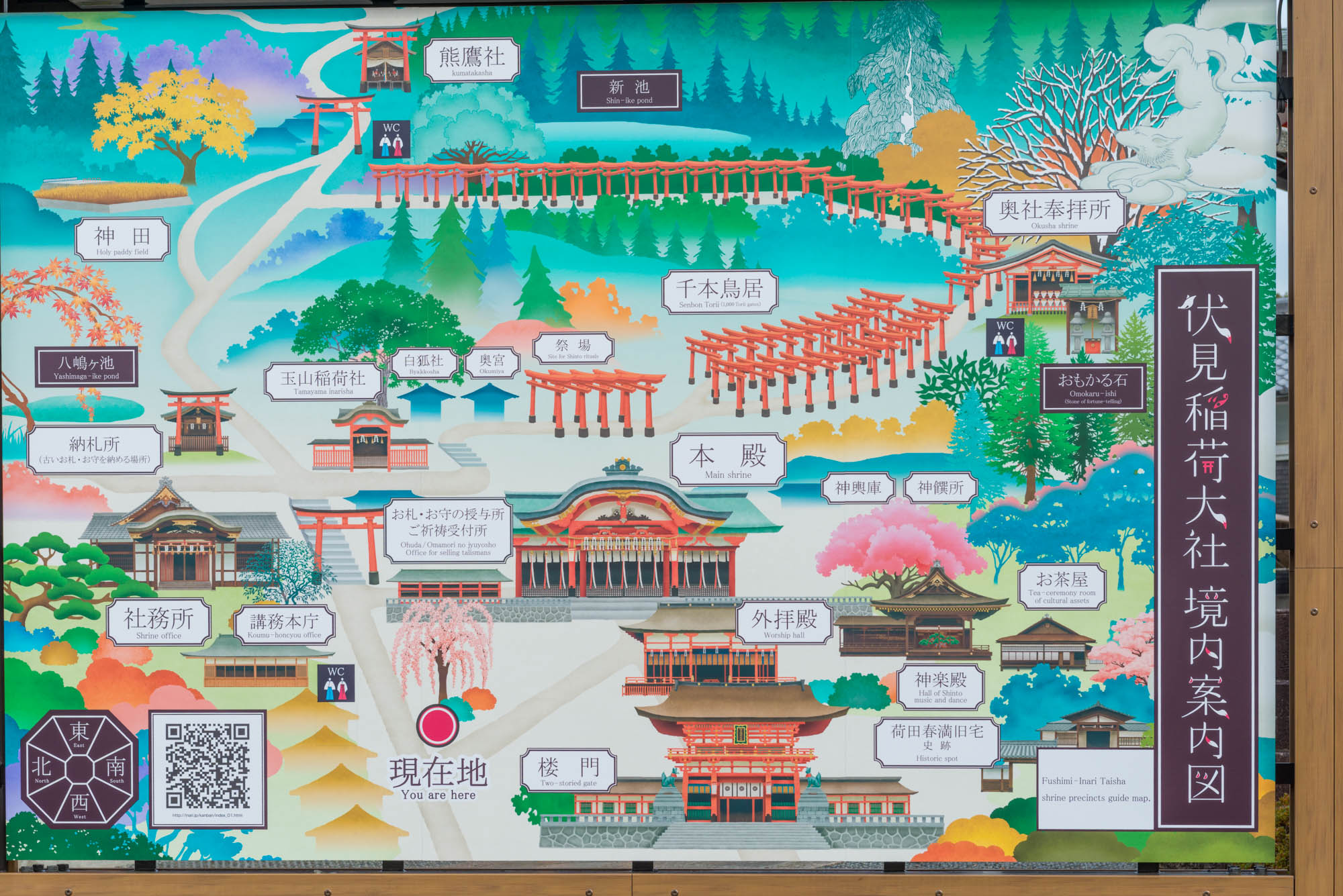
Main stops:
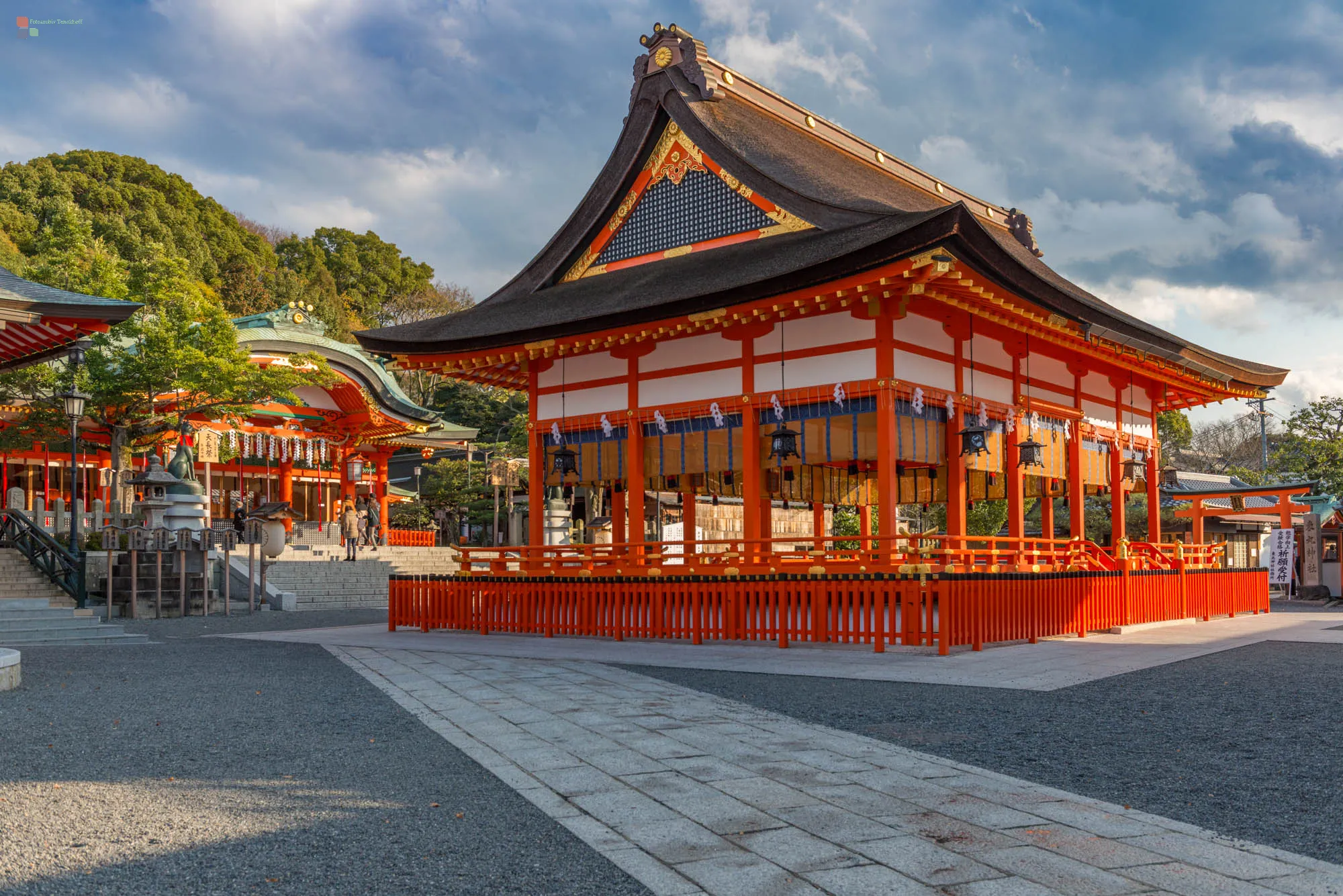
Honden (Main Shrine): dedicated to Inari, the deity of rice and prosperity.
Okusha Hohaisho: small prayer area with a view of the torii tunnel.
Yotsutsuji Intersection: mid-way viewpoint over Kyoto.
Ichinomine Shrine: the highest point of the route.
Symbolism: Each red torii marks the boundary between the human and the divine world. Most gates are donations by companies hoping for success.
Best time to visit: Early morning or late afternoon, when the sunlight glows softly between the gates.
Photo tip: Use a polarizing filter to enhance the orange hues and contrast between light and shadow.