In this article: Okunoin – The Path to the Mausoleum of Kōbō Daishi
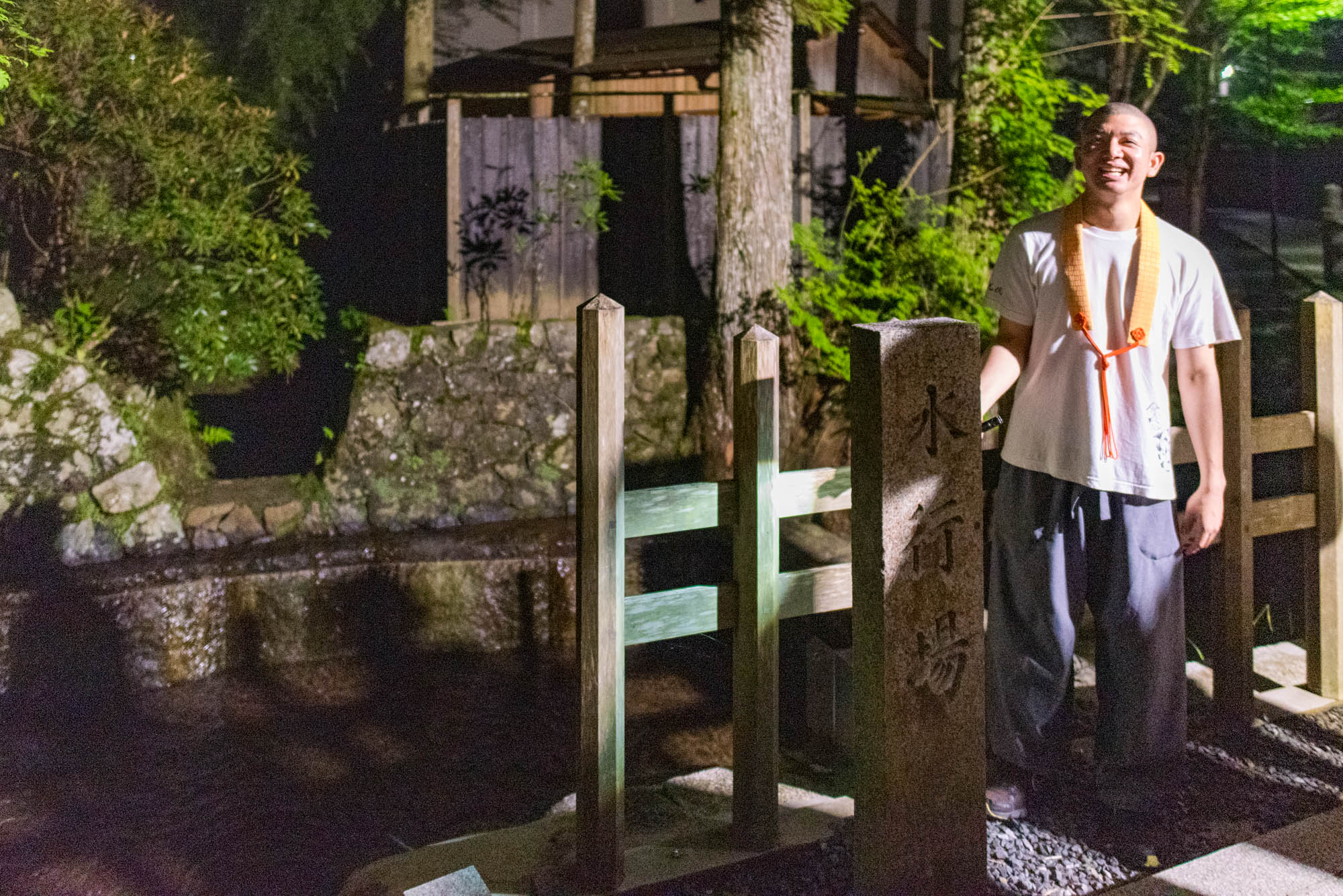
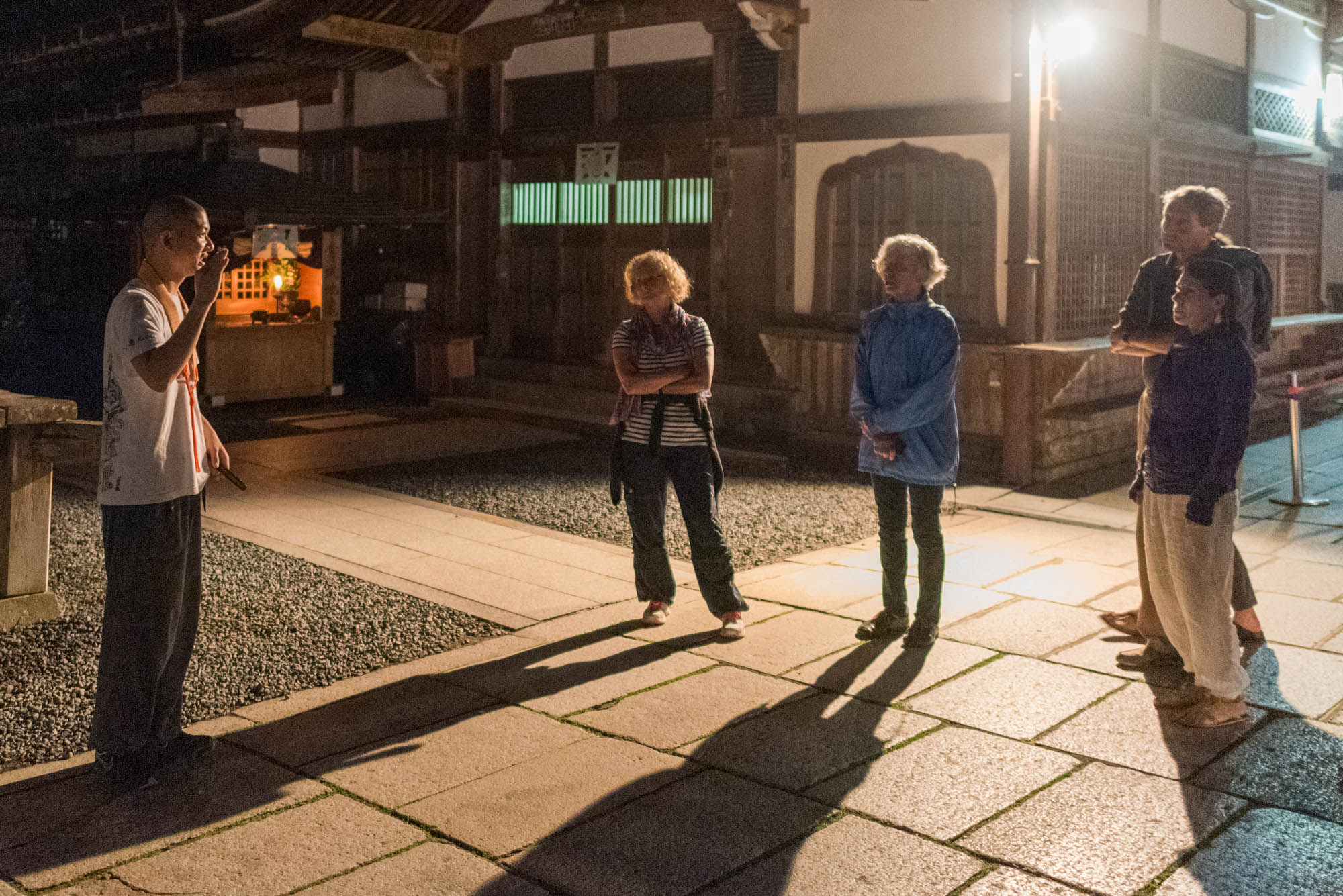
On the evening of our arrival in Kōyasan in the summer of 2015, the monk Nobo guided us to the extraordinary Okunoin Cemetery, the spiritual heart of the mountain.
Here, people of many different faiths have found their final resting place — a site that draws no boundaries but embodies a sense of universal compassion.
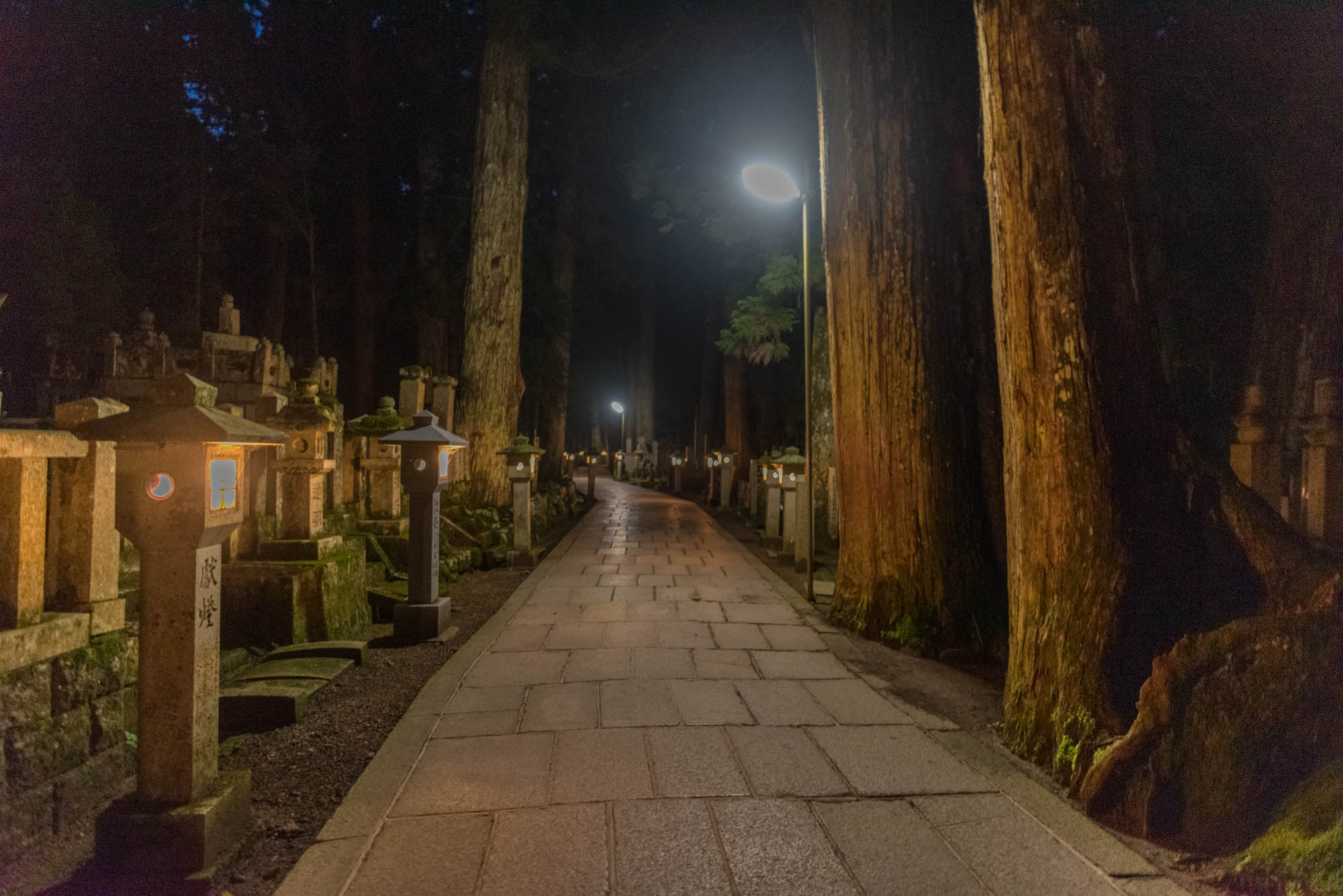
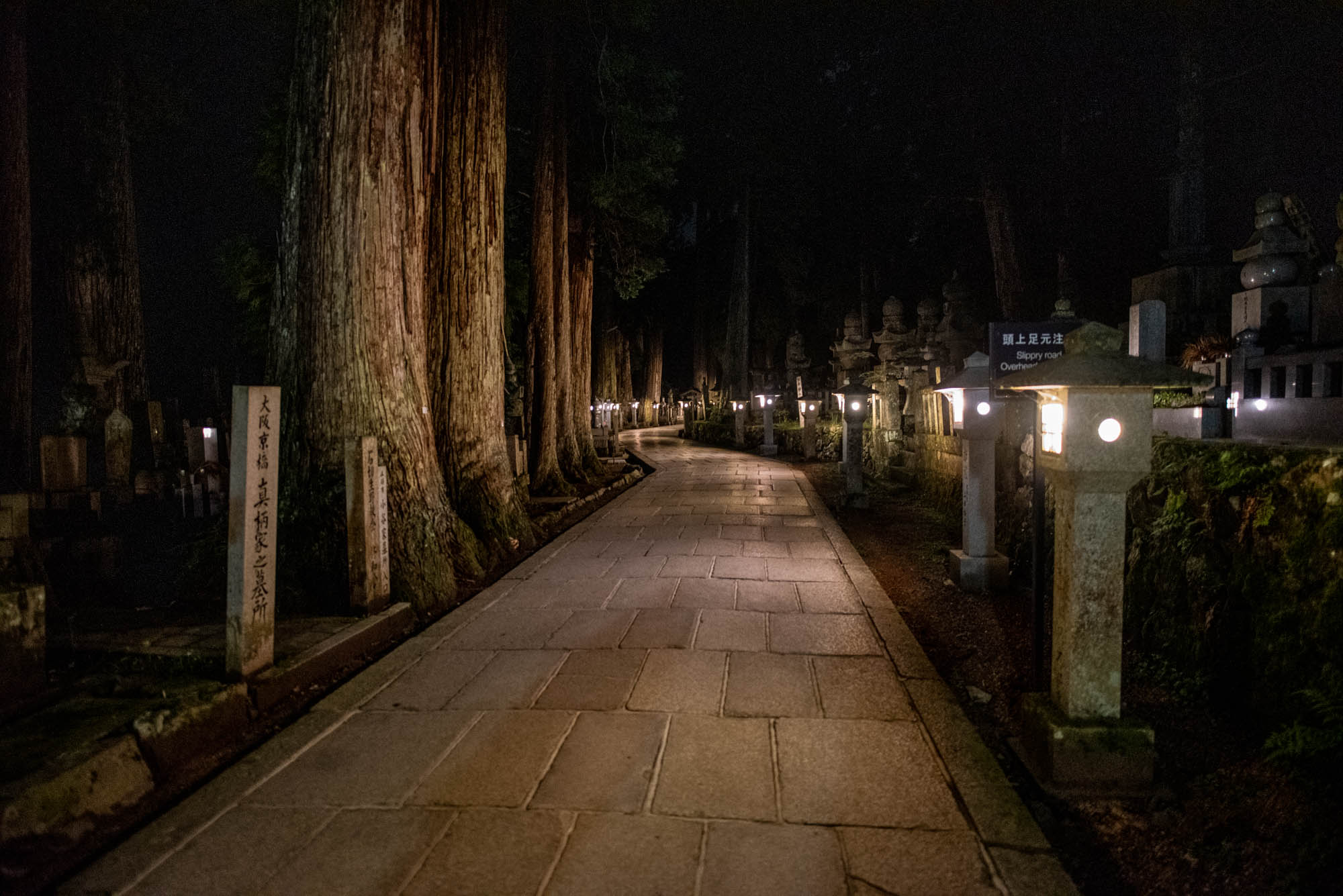
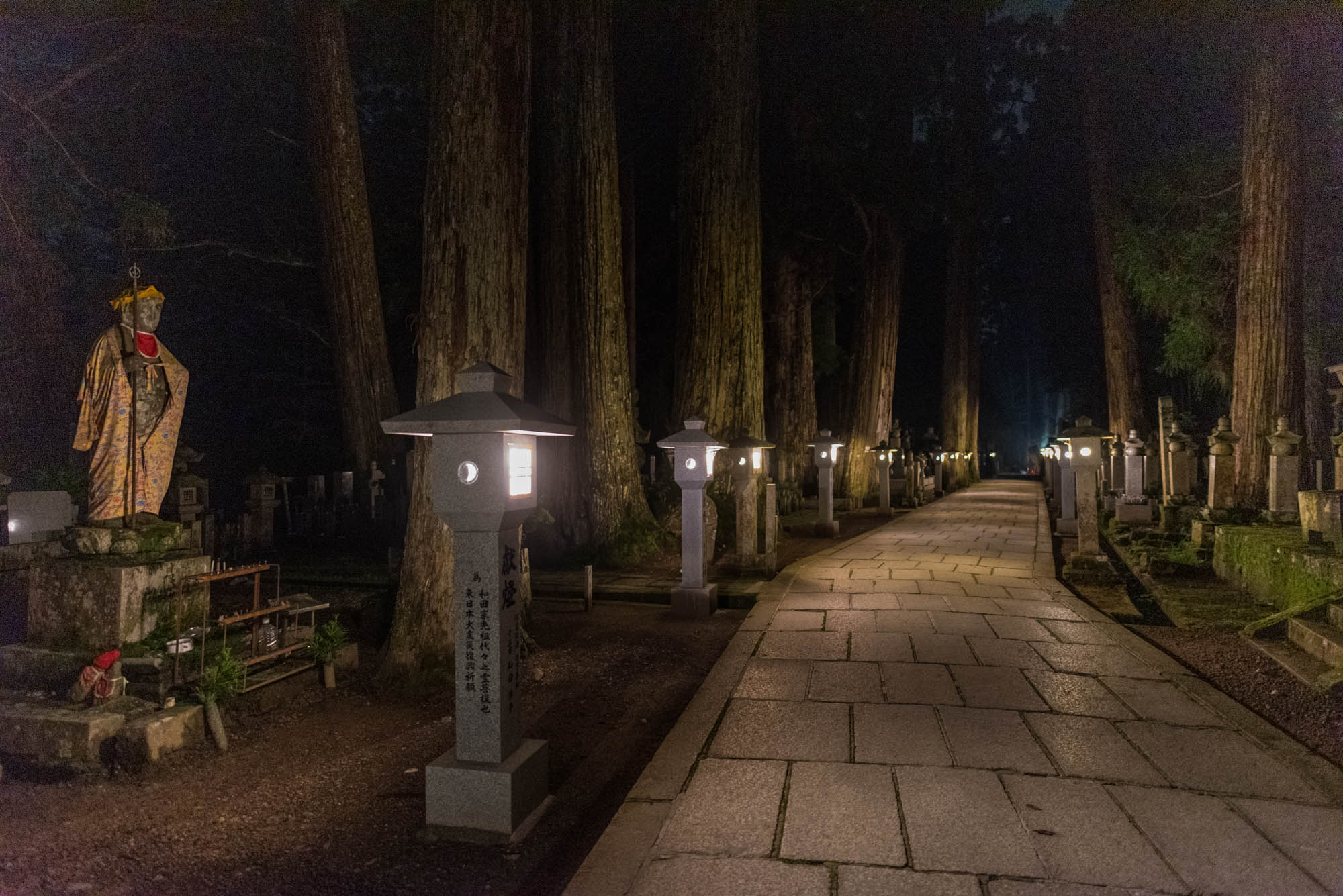
Mighty cedars flank the entrance, their crowns disappearing into the darkness.
Following Nobo’s example, we bowed before entering — a gesture of respect to the souls of the departed.
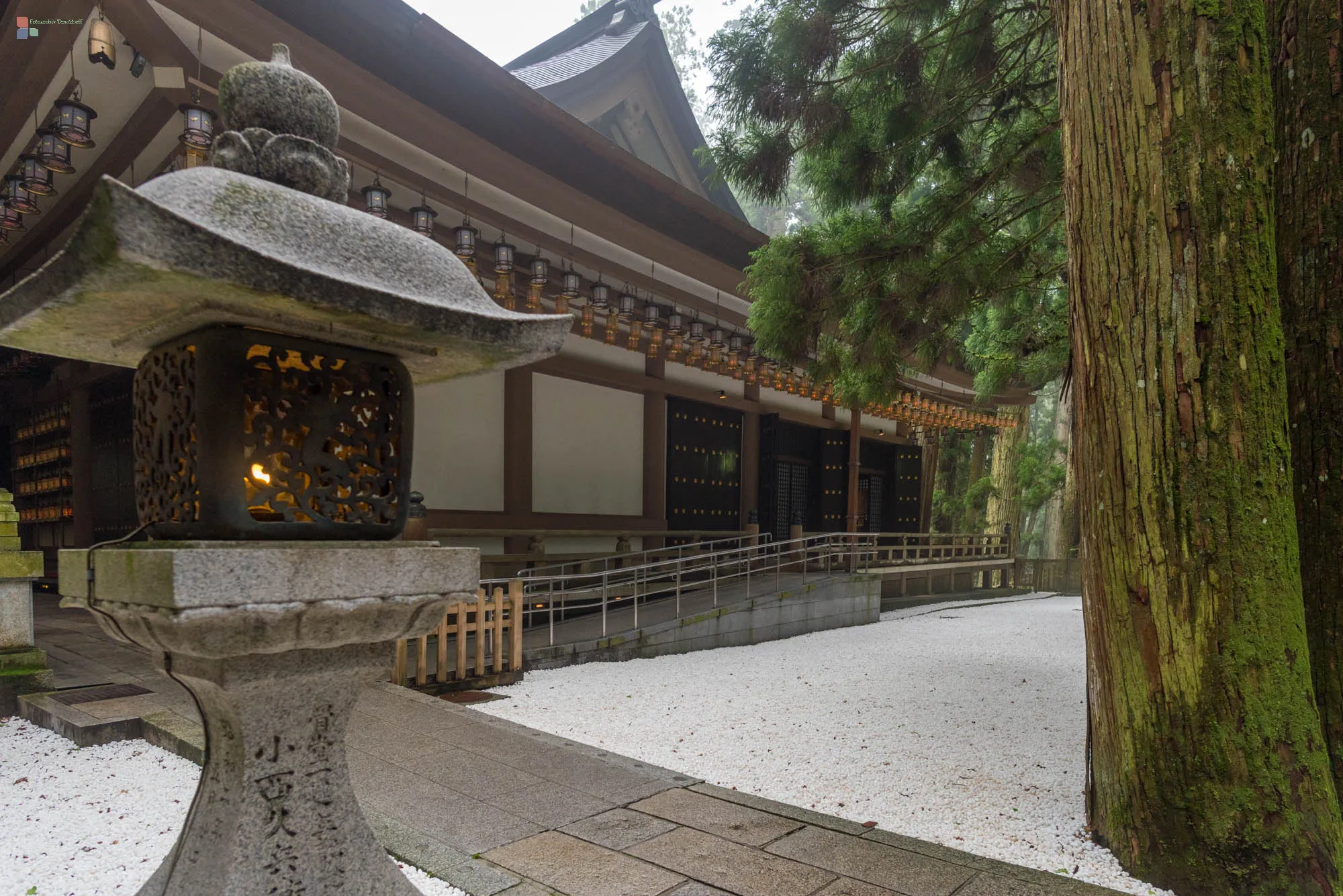
The path ahead was lined with square stone lanterns, their warm light reflected on the damp stones.
In this mixture of twilight and silence, the atmosphere felt timeless — as if the air itself were filled with memory.
A Cemetery for All
As we walked along the path, Nobo told us stories of those who rest here:
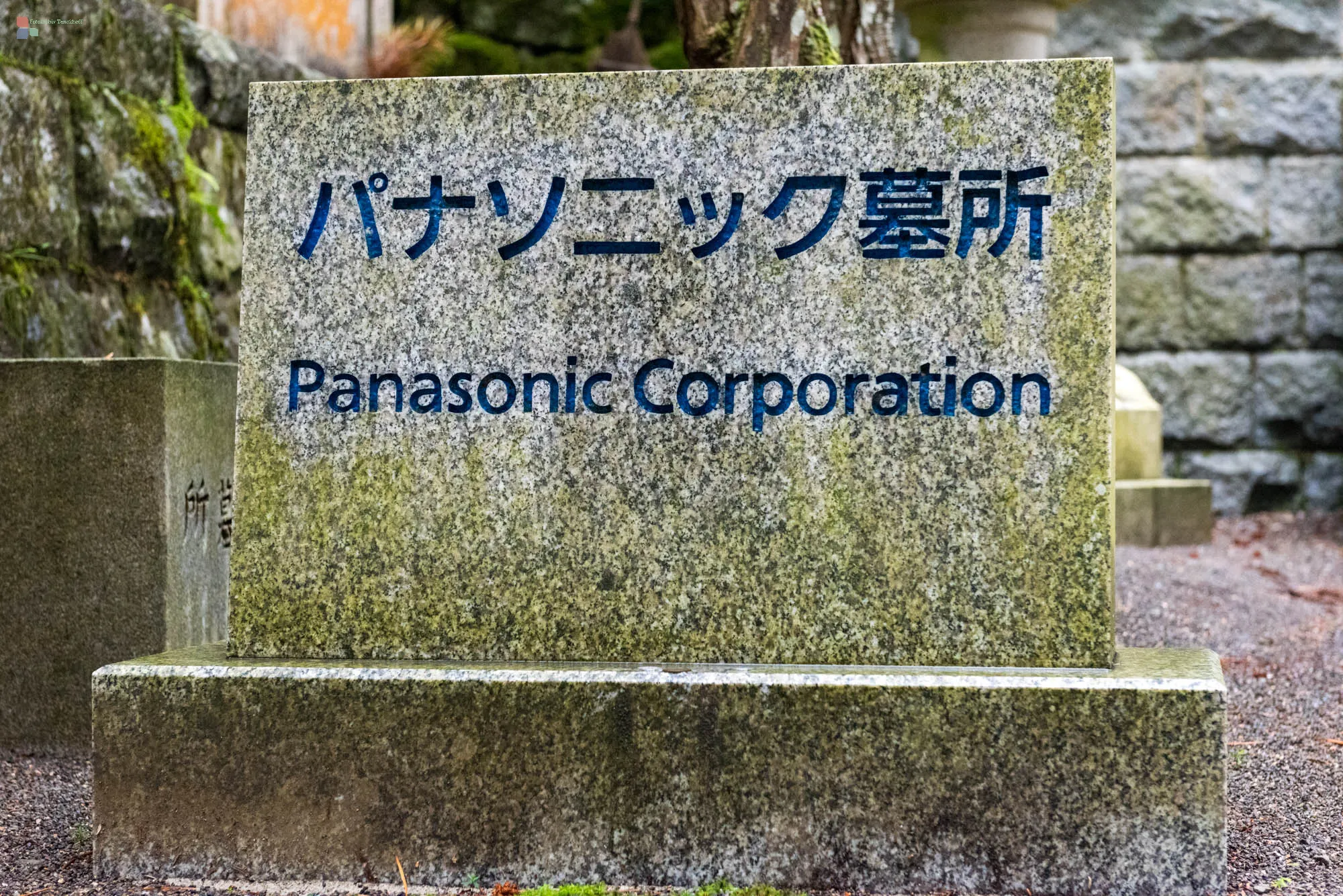
samurai, monks, merchants, families — and even the founder of Panasonic, whose grave lies quietly among the ancient monuments.
“This place does not distinguish,” he said. “Everyone is welcome here — anyone who wishes to lay their hyoid bone to rest.”
It was his humorous reference to the ceremony performed at Okunoin, where symbolically the organ of speech — the link between body and mind — is offered to the Buddha.
When we asked him how people of such different religions coexist in one place, Nobo smiled in that distinctively Buddhist way:
“Many Japanese are Shintō by nature.
When they marry, they adopt Christian customs.
And when they grow old — Buddhism offers the guidance for their final path.”
A gentle truth spoken with humor — revealing the syncretic heart of Japanese spirituality.
Of Spirits, Wells, and Trials
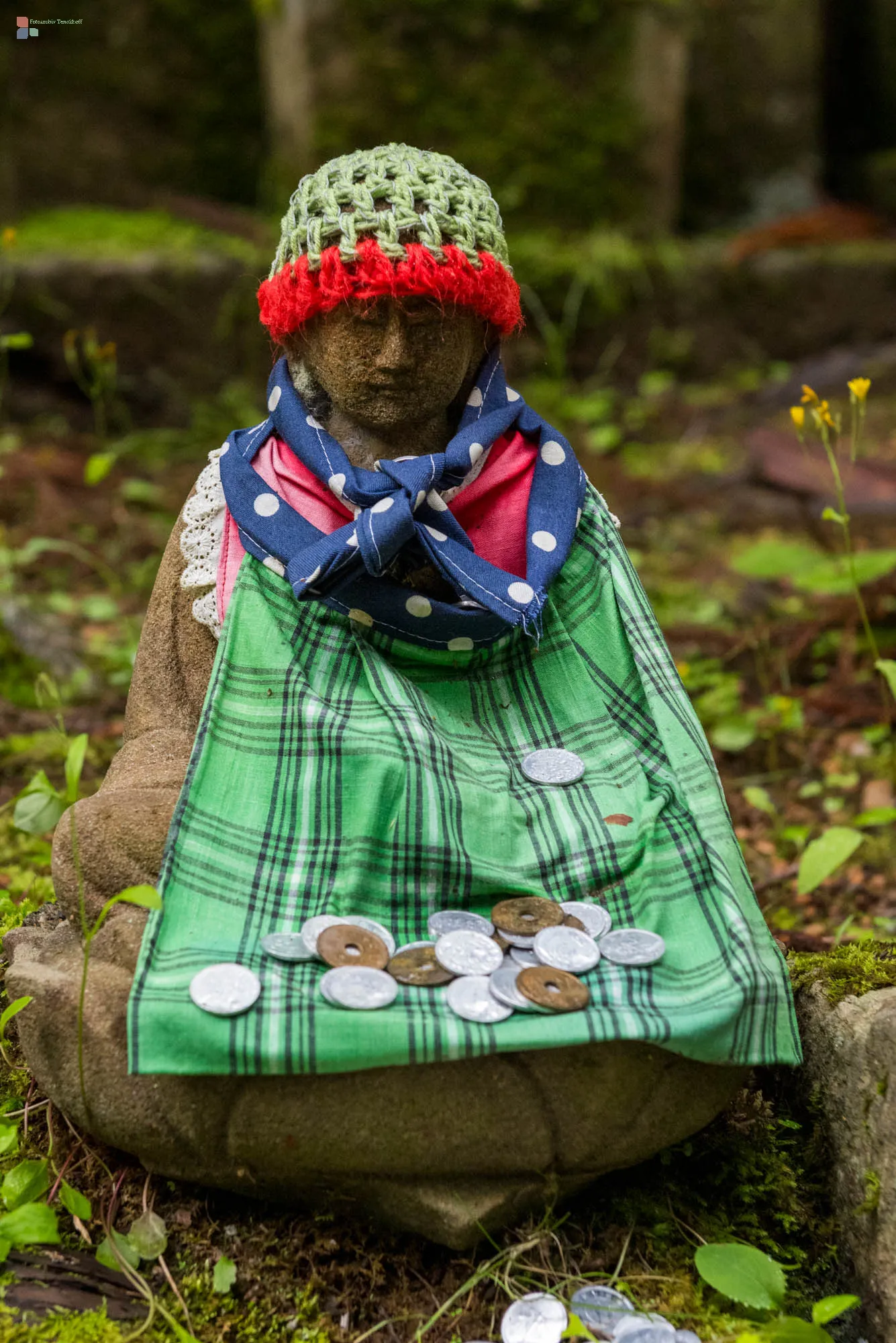
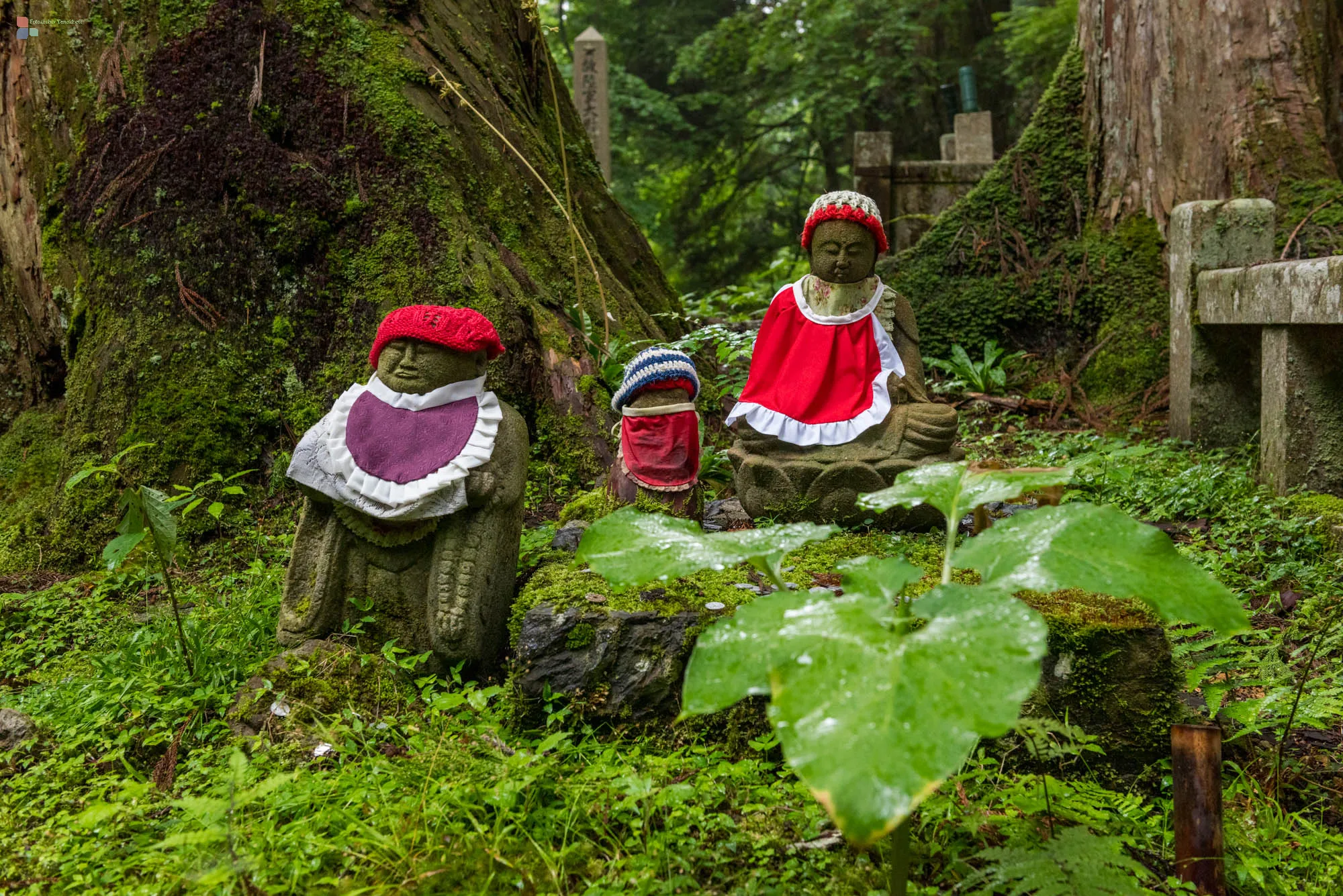
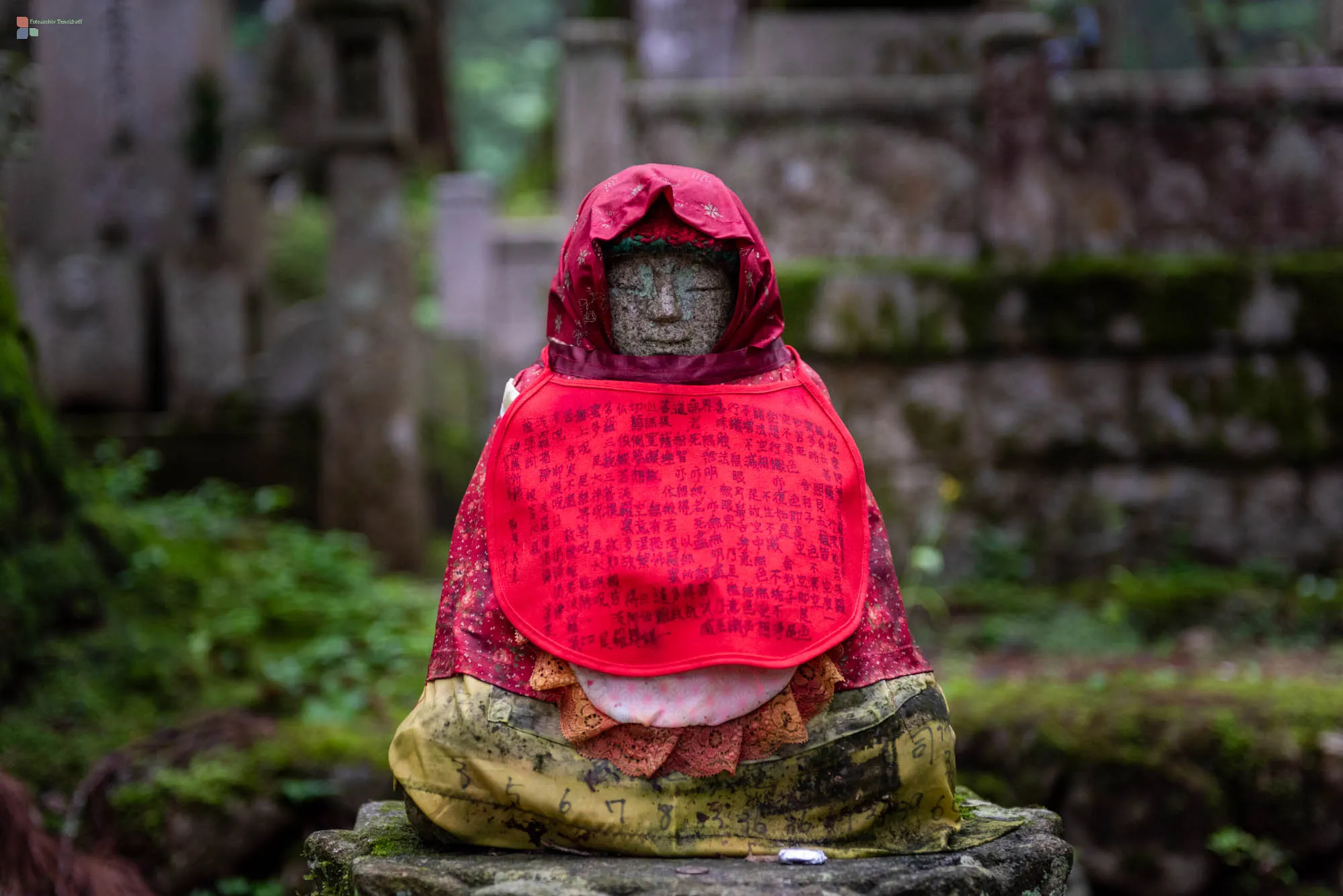
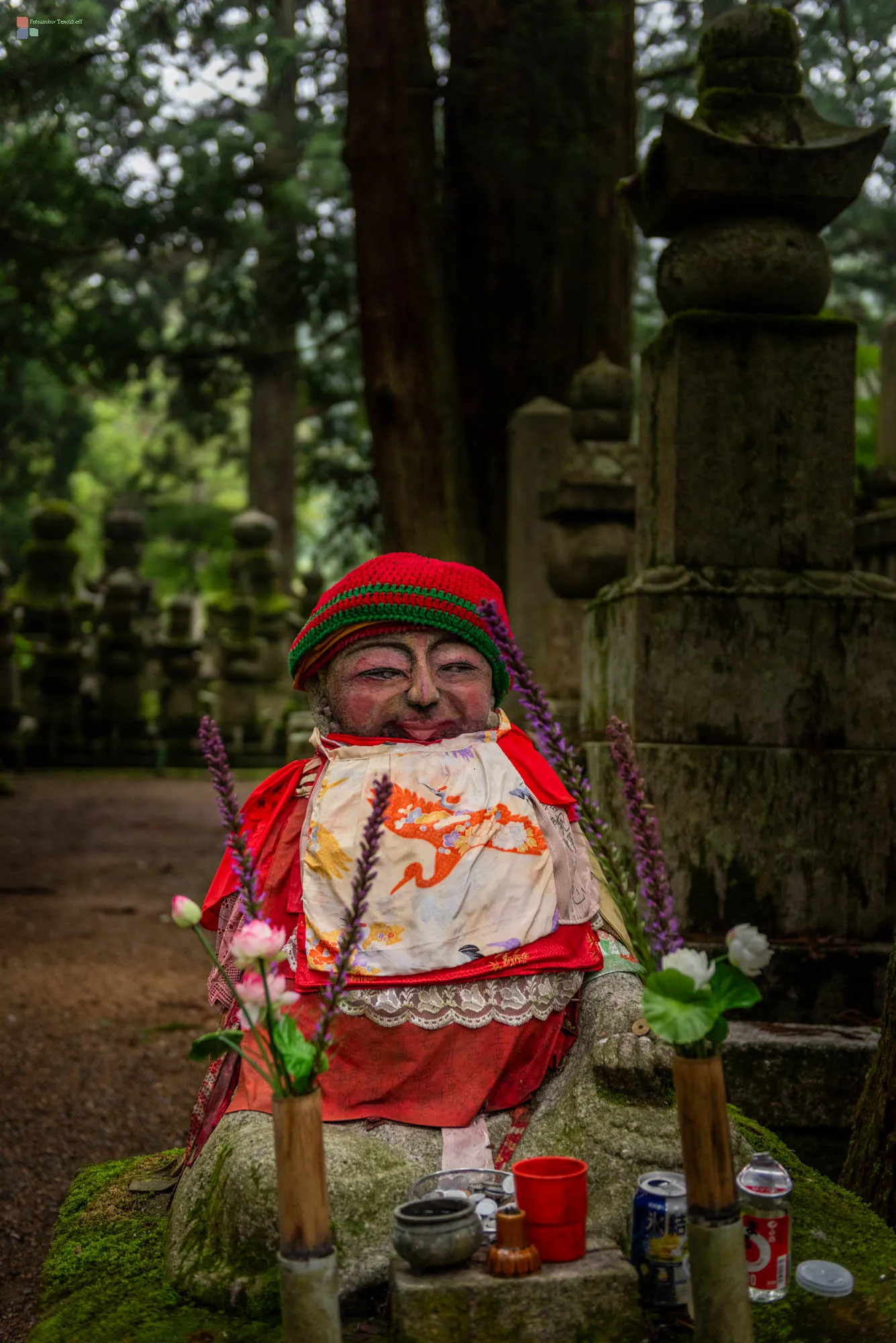
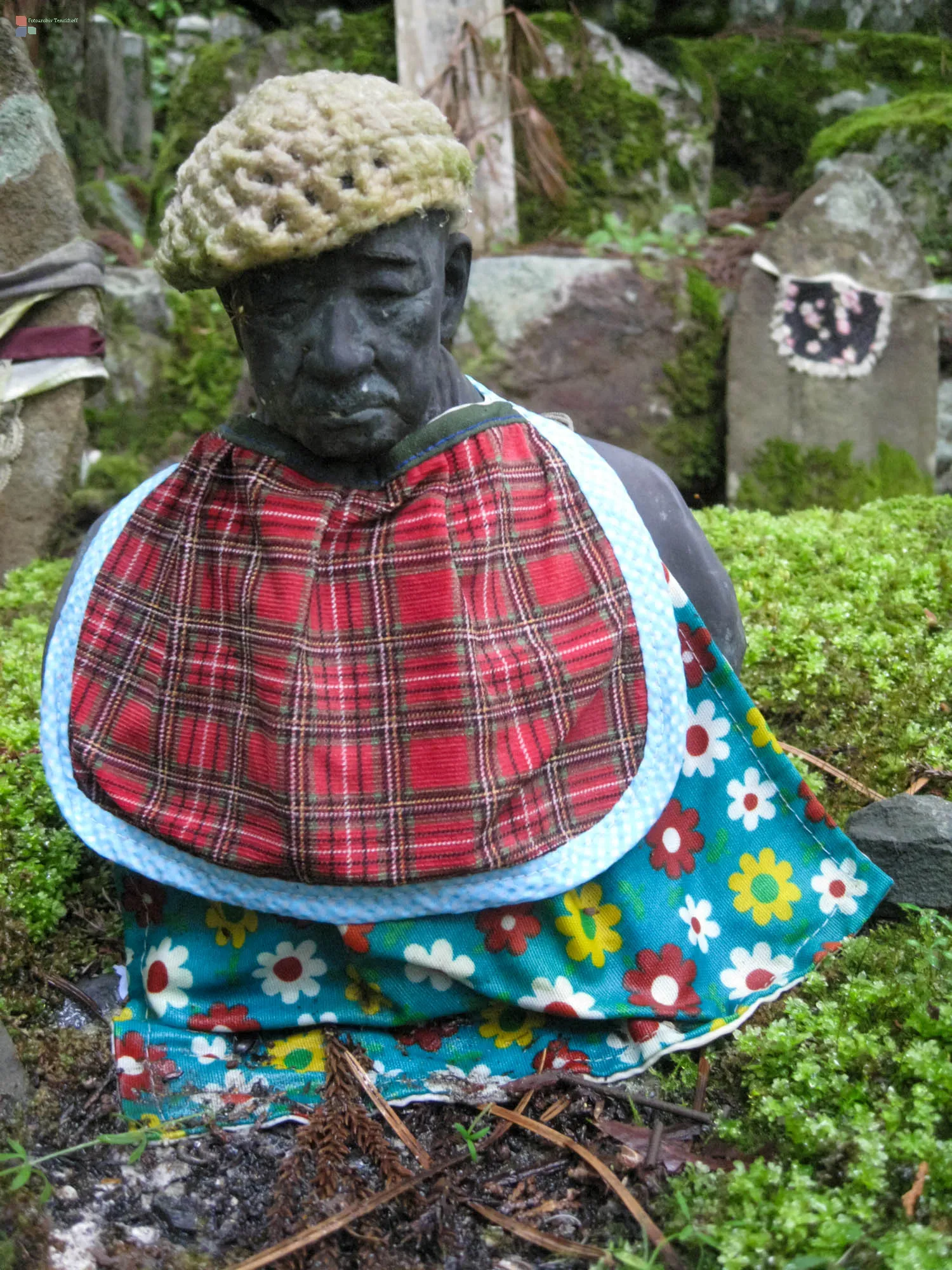
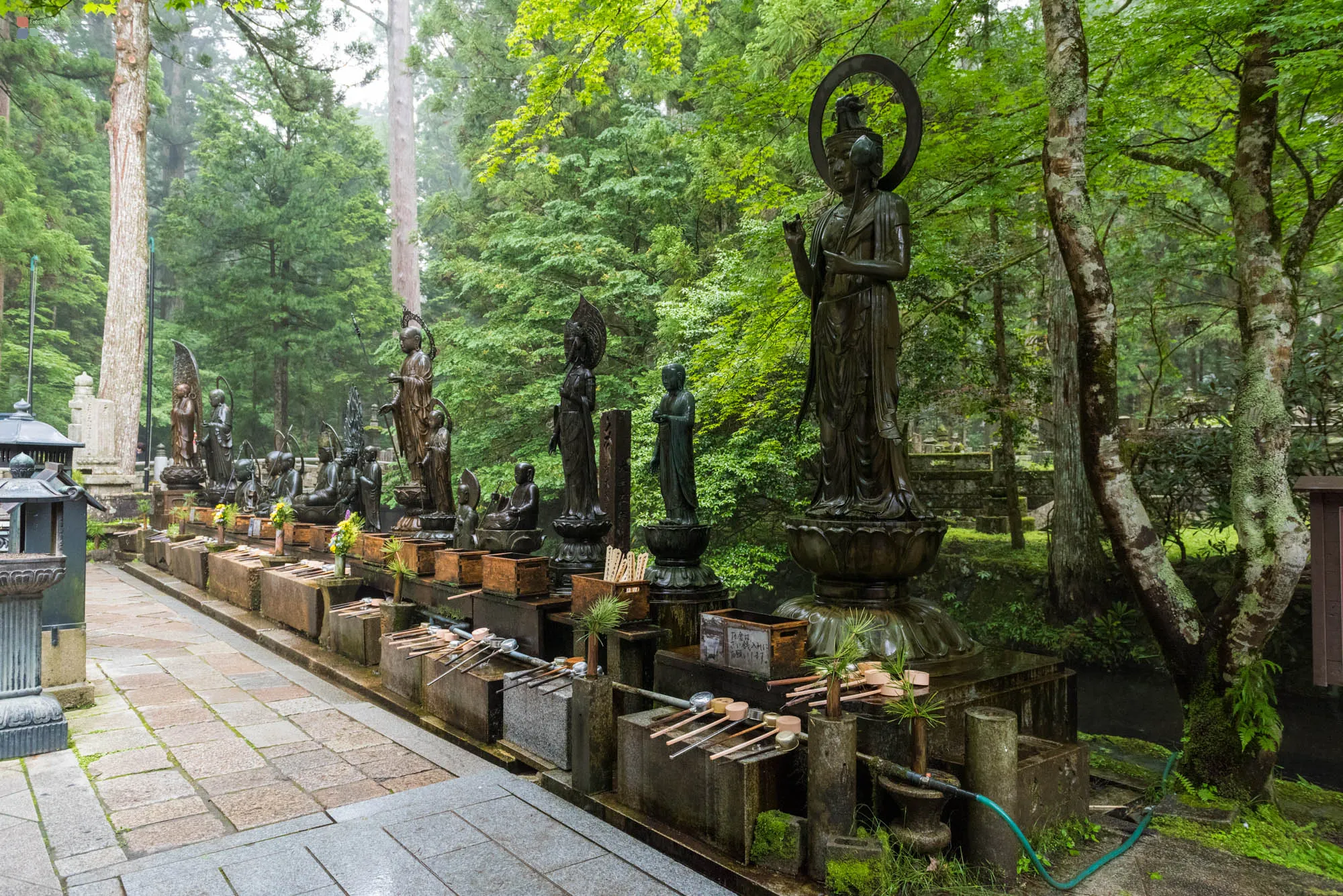
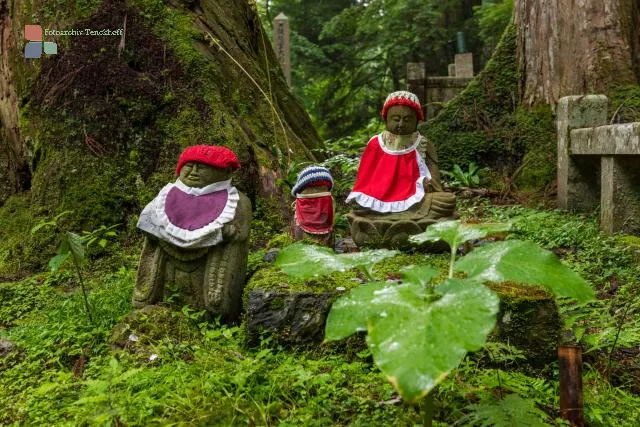
Along the way, Nobo showed us the many Jizō statues — small stone figures with red bibs and knitted caps, guardians of children, travelers, and souls between worlds.
In the glow of the lanterns, they seemed almost alive — serene, patient, compassionate.
The next day we returned by daylight and discovered the sacred places said to connect directly with “the other side”:
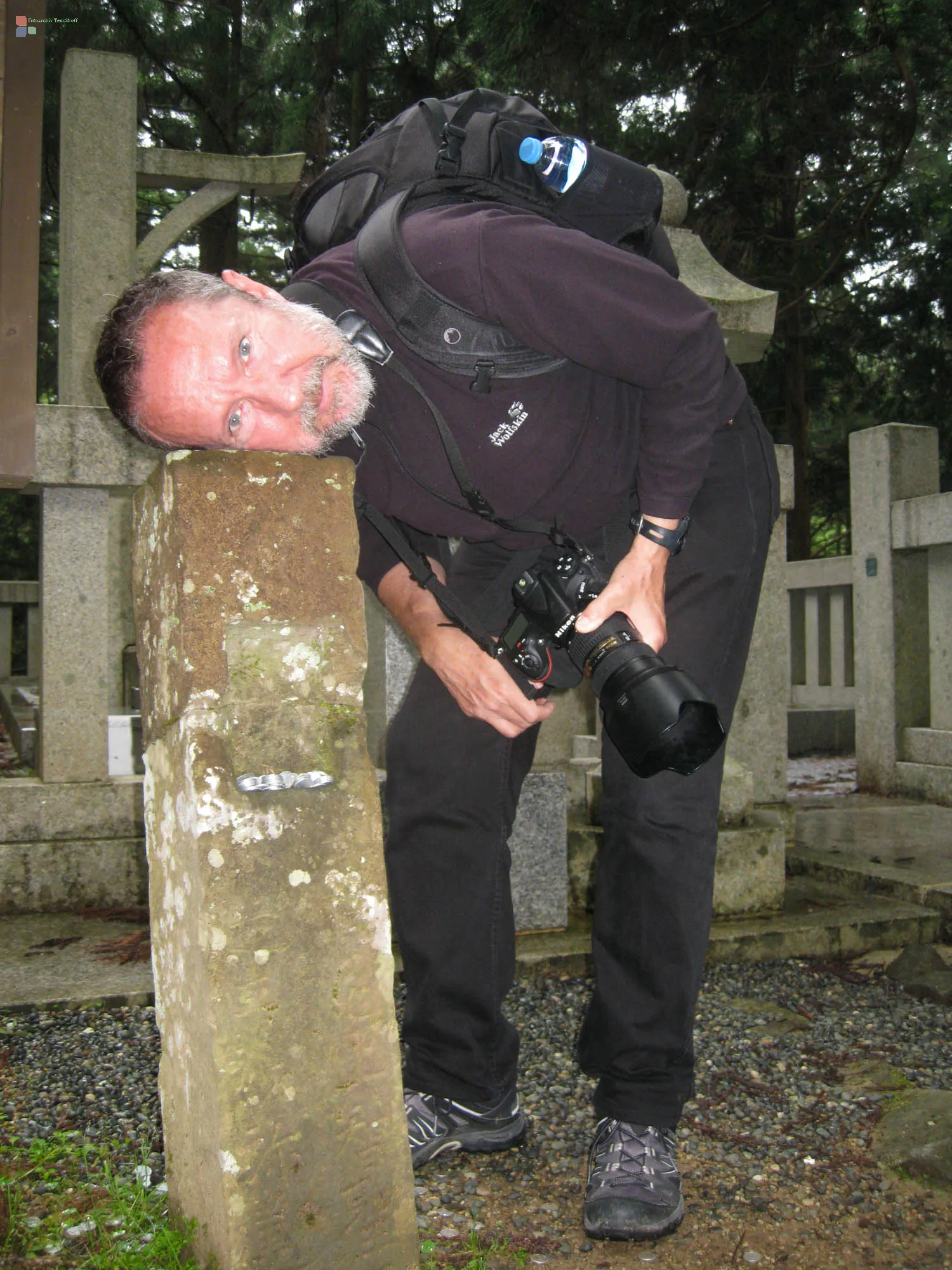
A stone pillar, chest-high, on whose top one can place an ear to hear the voices of spirits murmuring deep within the earth.
The Sugatami-no-Ido, the “mirror well,” which, they say, foretells death within three years if one’s reflection fails to appear on its surface.
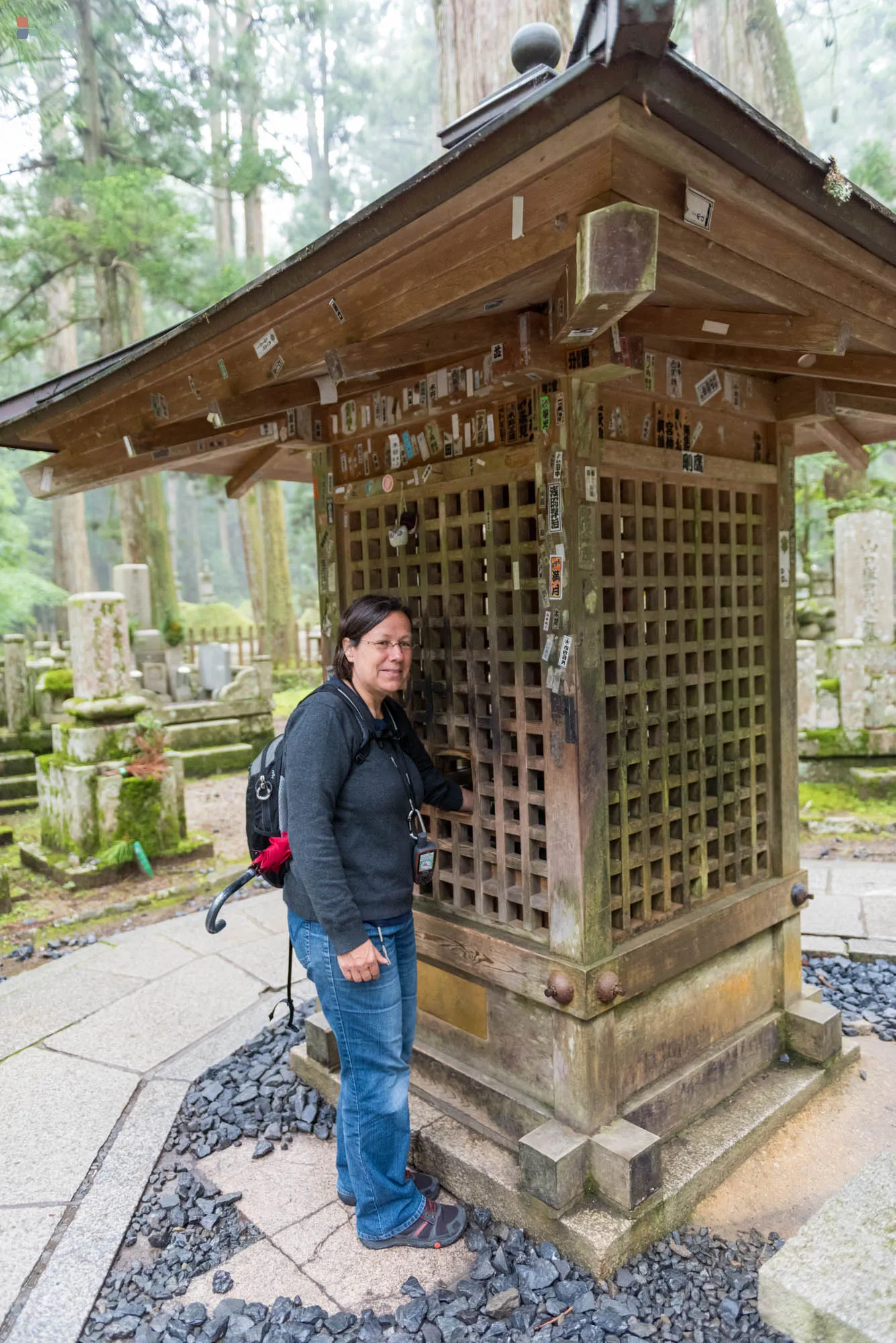
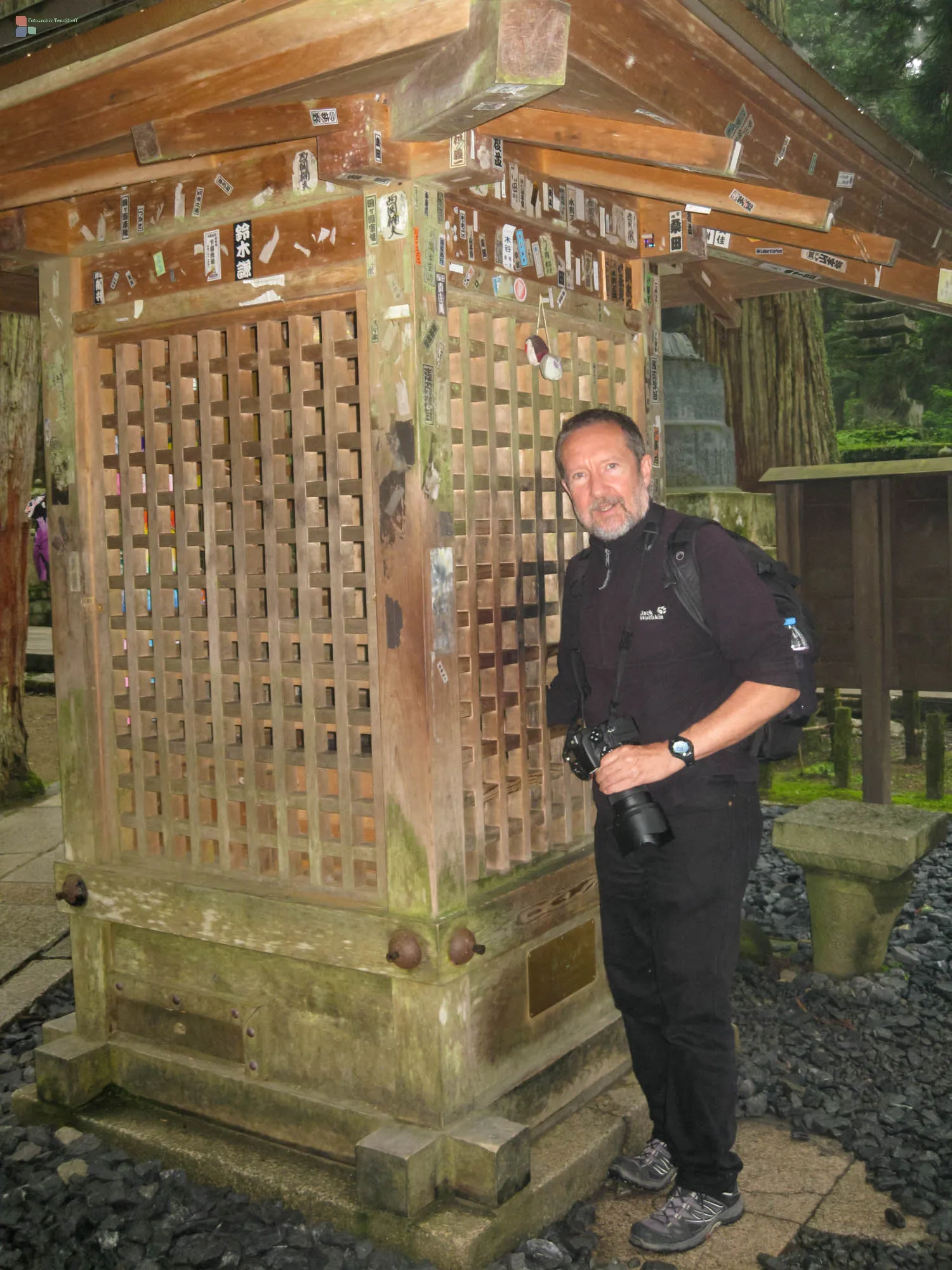
And the sacred stone behind a wooden lattice — those who reach through and can move the stone are said to find good fortune on their future paths.
Some tales sound mythical, others breathe the quiet authority of centuries.
Mizuko Jizō and the Wooden Tablets
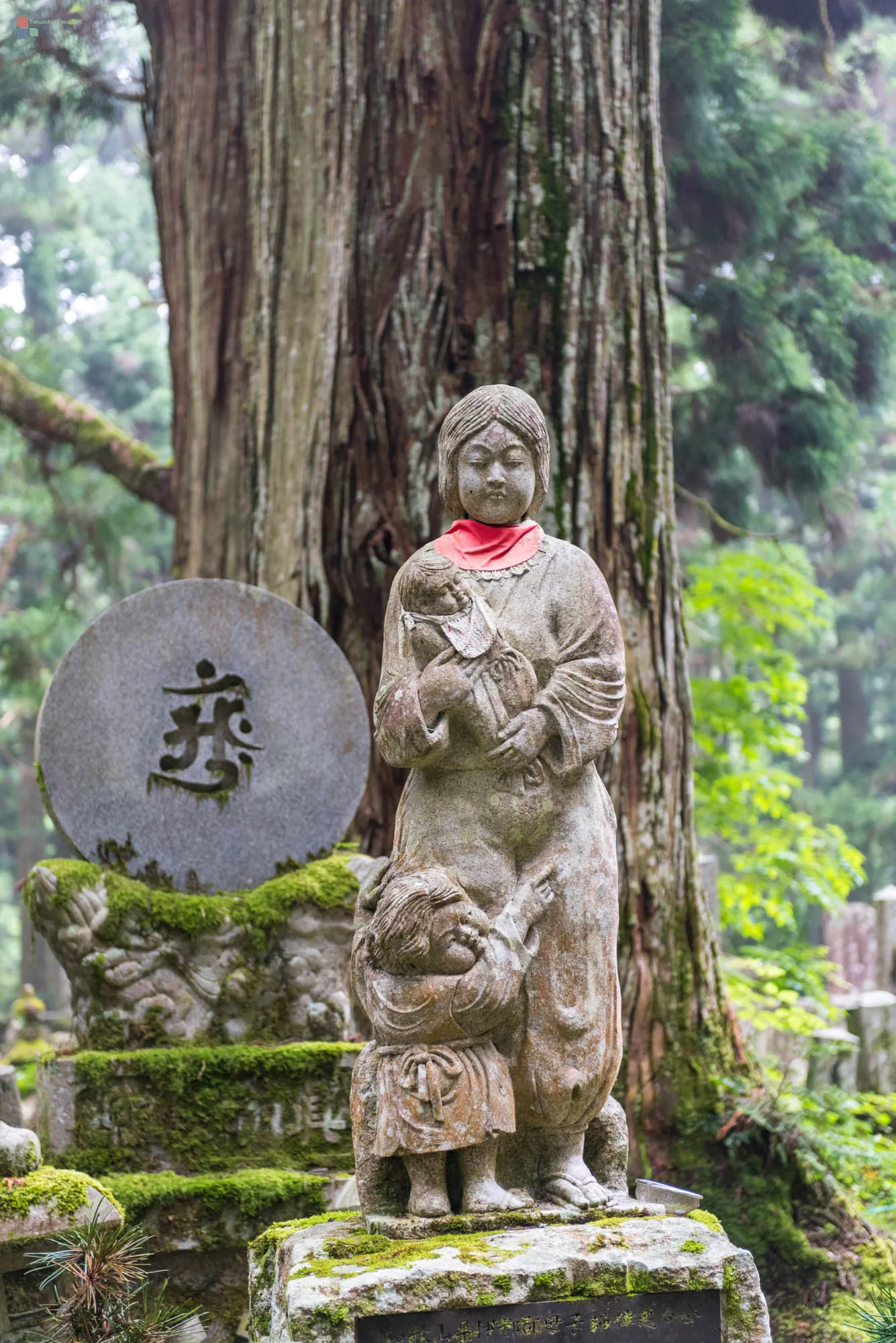
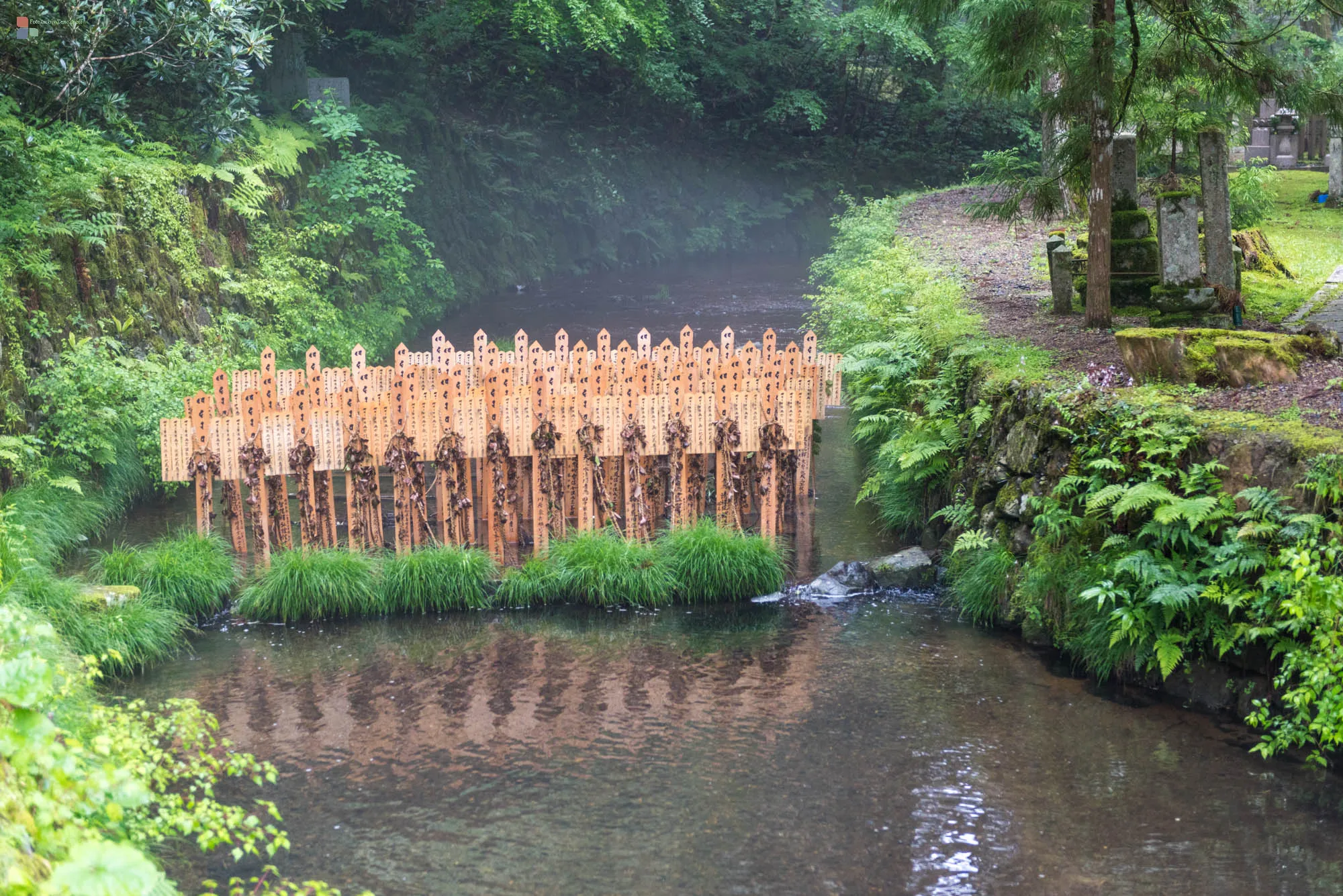
A particularly moving place lies beside a small stream, where hundreds of wooden tablets (itahō) stand in the water — memorials to unborn or stillborn children.
Among them, small toys, windmills, and candy offerings shimmer in the light.
The air feels heavy with tenderness and remembrance.
Here, compassion takes visible form — not as doctrine, but as practice.
The Mausoleum of Kōbō Daishi
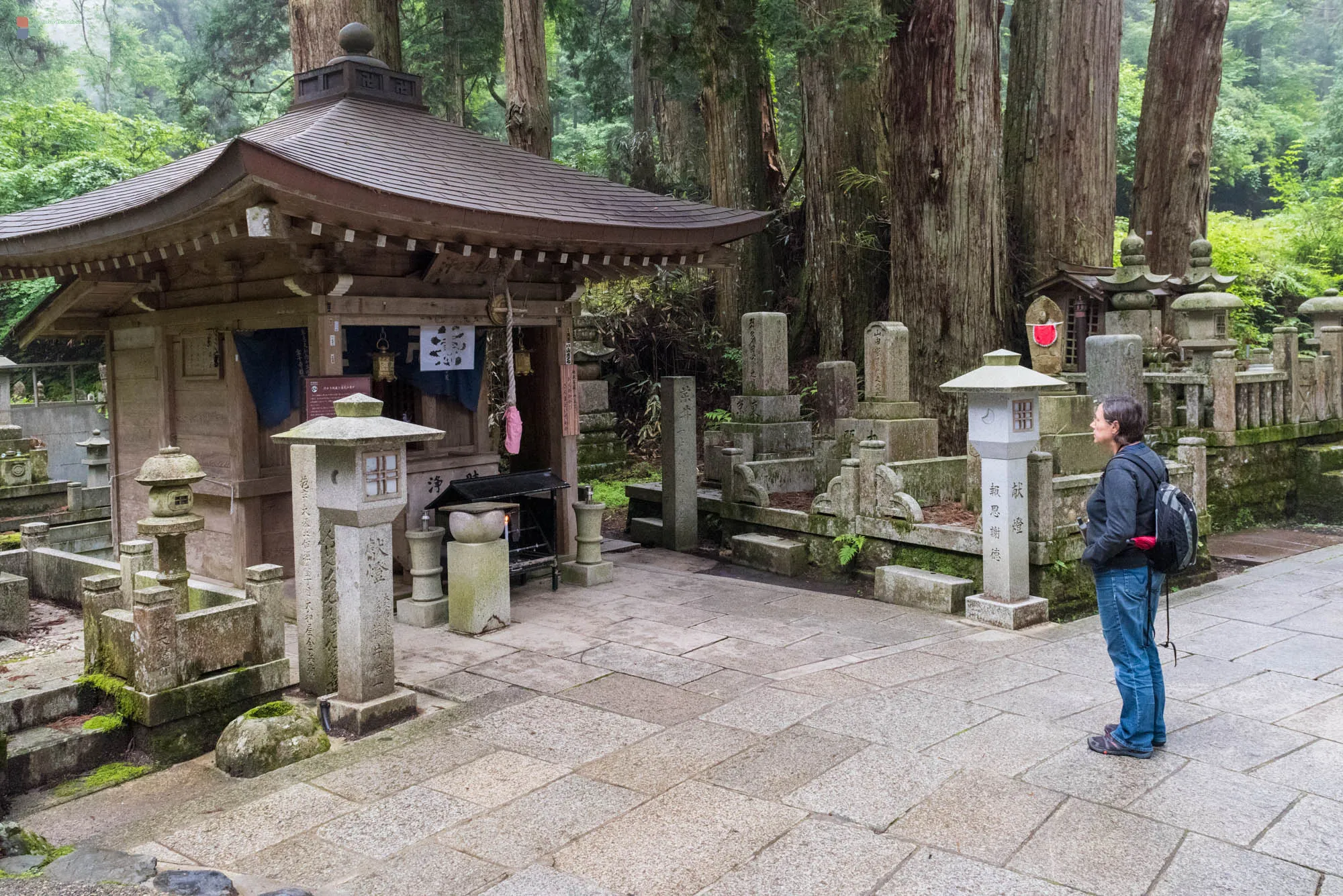
Eventually we reached the temple buildings that guard the entrance to the Mausoleum of Kōbō Daishi (Kūkai).
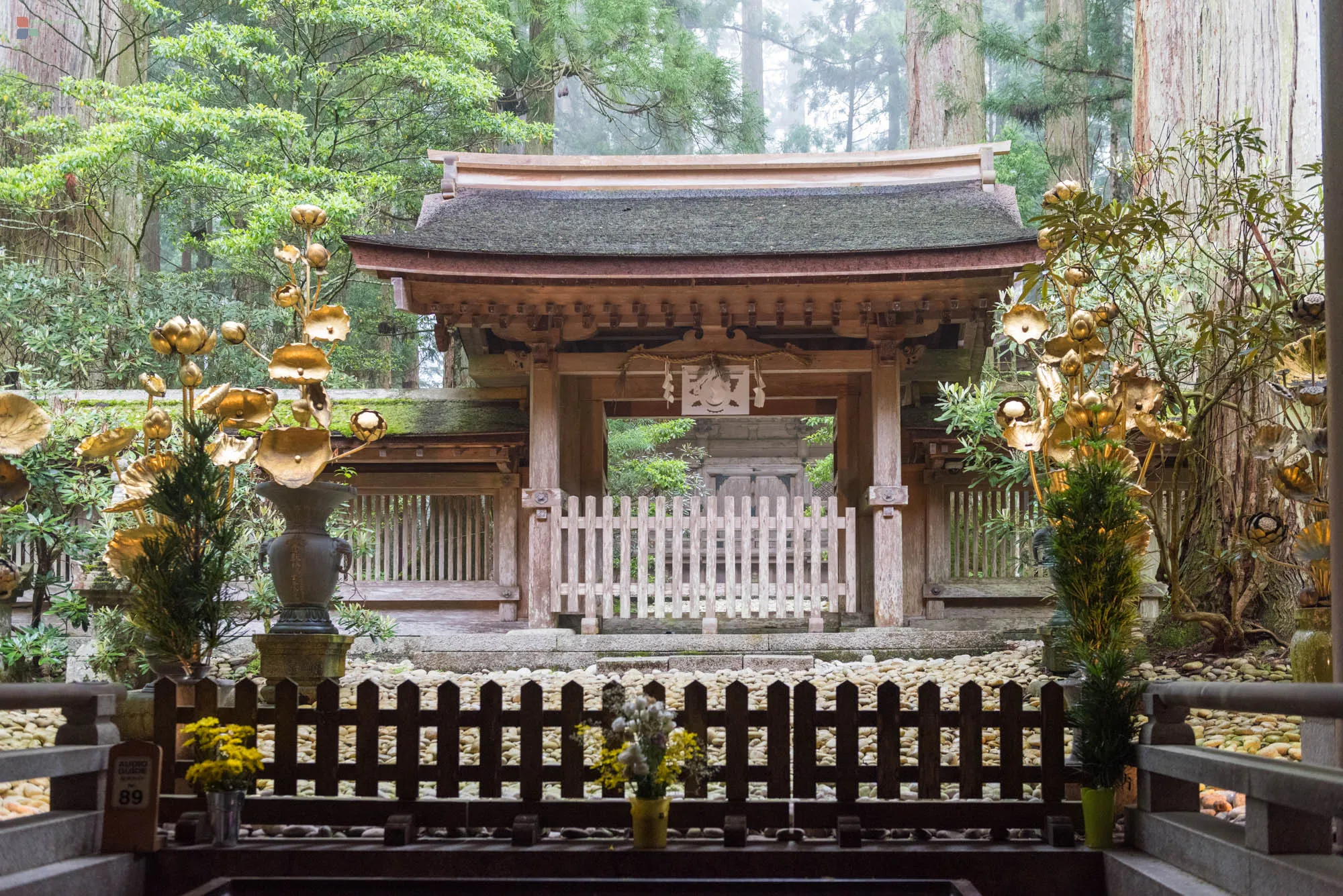
A monk painted a new calligraphic seal into our Sacred Book, and we bowed among golden lotus blossoms before the sacred enclosure.
Beyond the gate — which only the head monk may enter — lies the inner sanctum where, according to belief, Kūkai has remained in deep meditation for over a thousand years.
He is not considered dead but eternally present, meditating for the salvation of all beings.
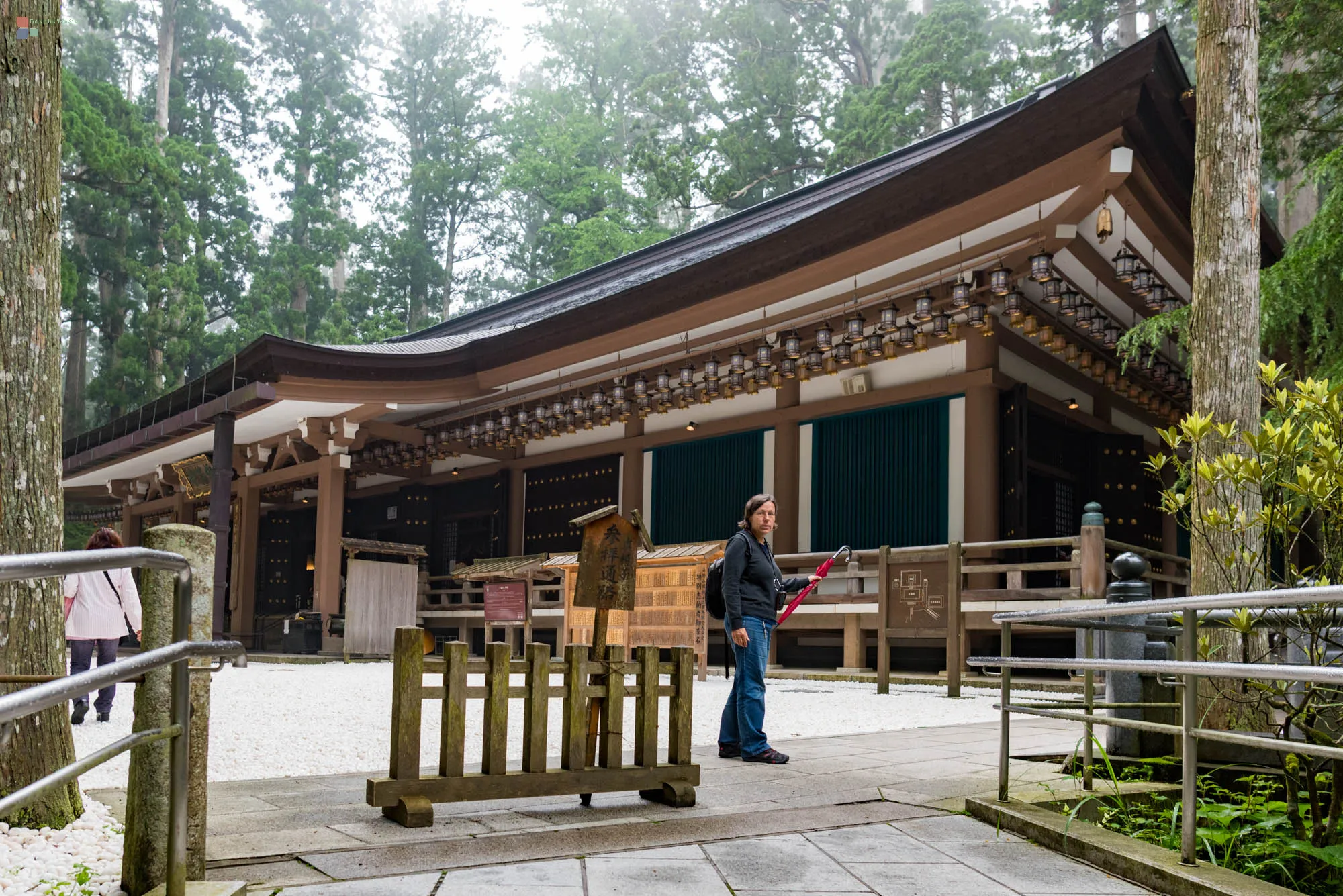
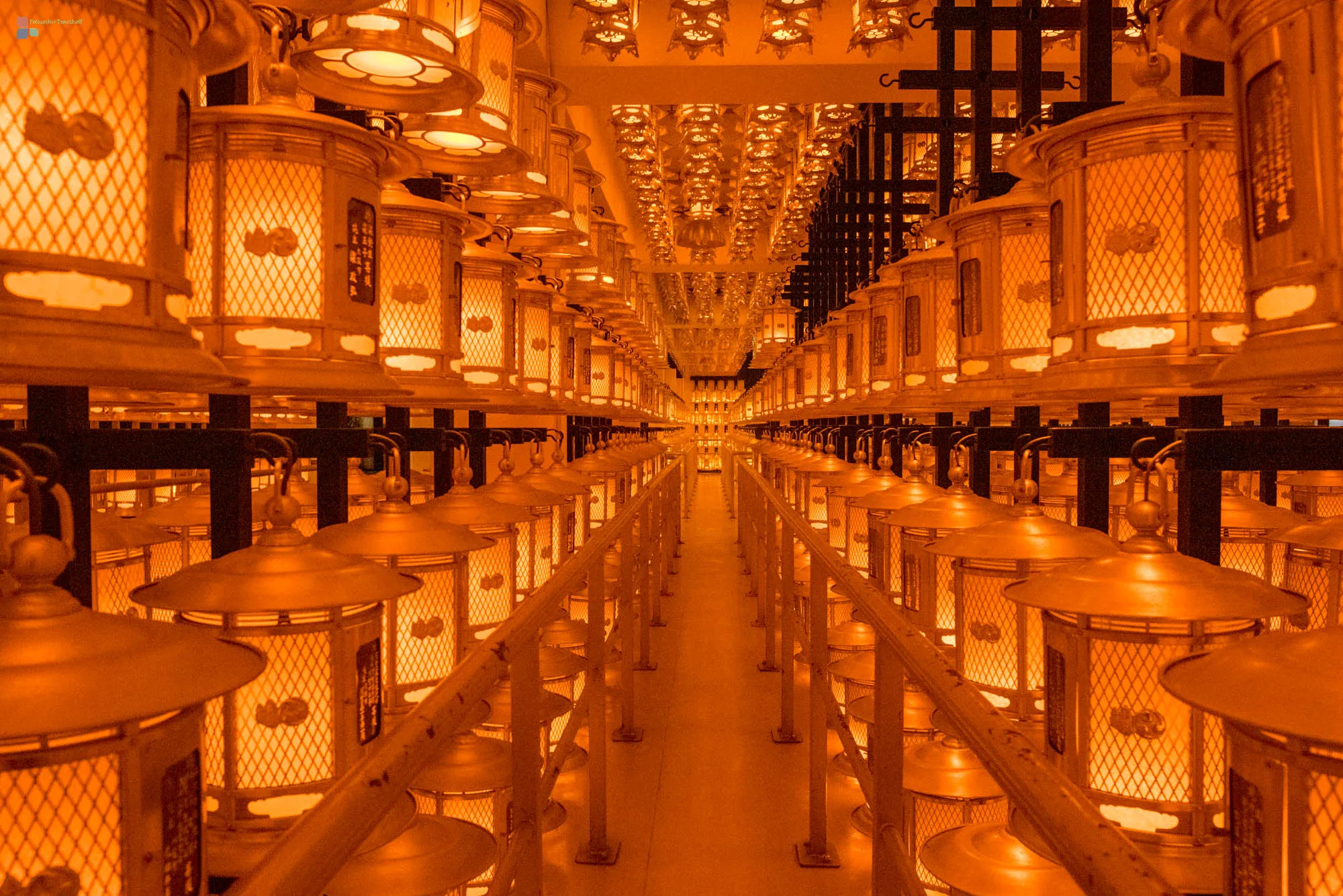
A little farther on stands the Hall of Lamps, filled with hundreds of glowing golden lanterns.
Their warm light fills the space like a gentle sea — a breathtaking conclusion to our walk through Okunoin, this unique place between the worlds.
Reflection
Okunoin is more than a cemetery.
It is a mirror of Japanese spirituality — open, inclusive, and deeply reverent toward every form of life and death.
Perhaps its quietest teaching is this: that life and death are not opposites but neighbors, and that between them lies nothing but silence.