In this article: Kongōbu-ji – Temple of the Diamond Peak on Mount Kōya
First Visit – In the Rain of Summer 2015
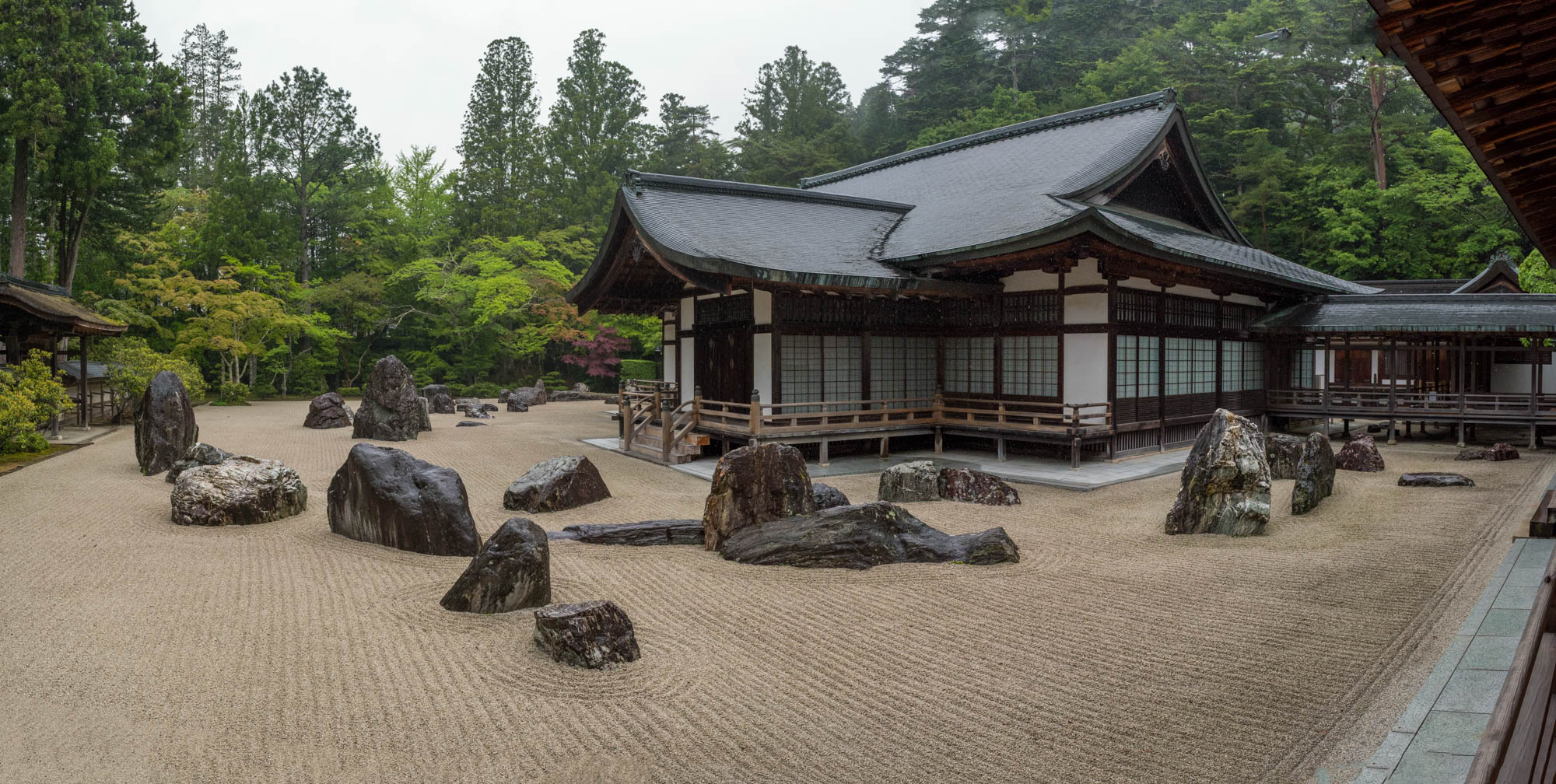
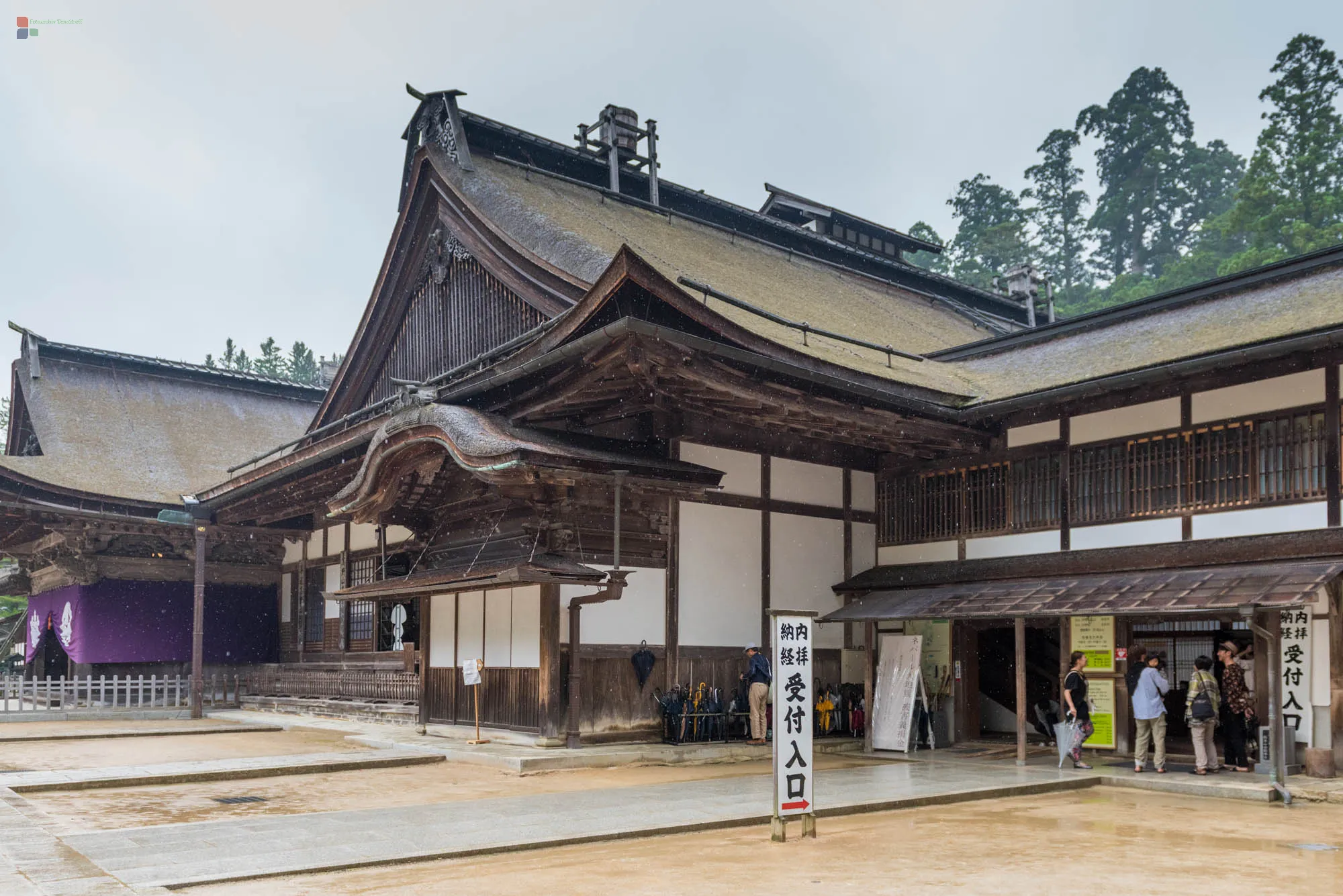
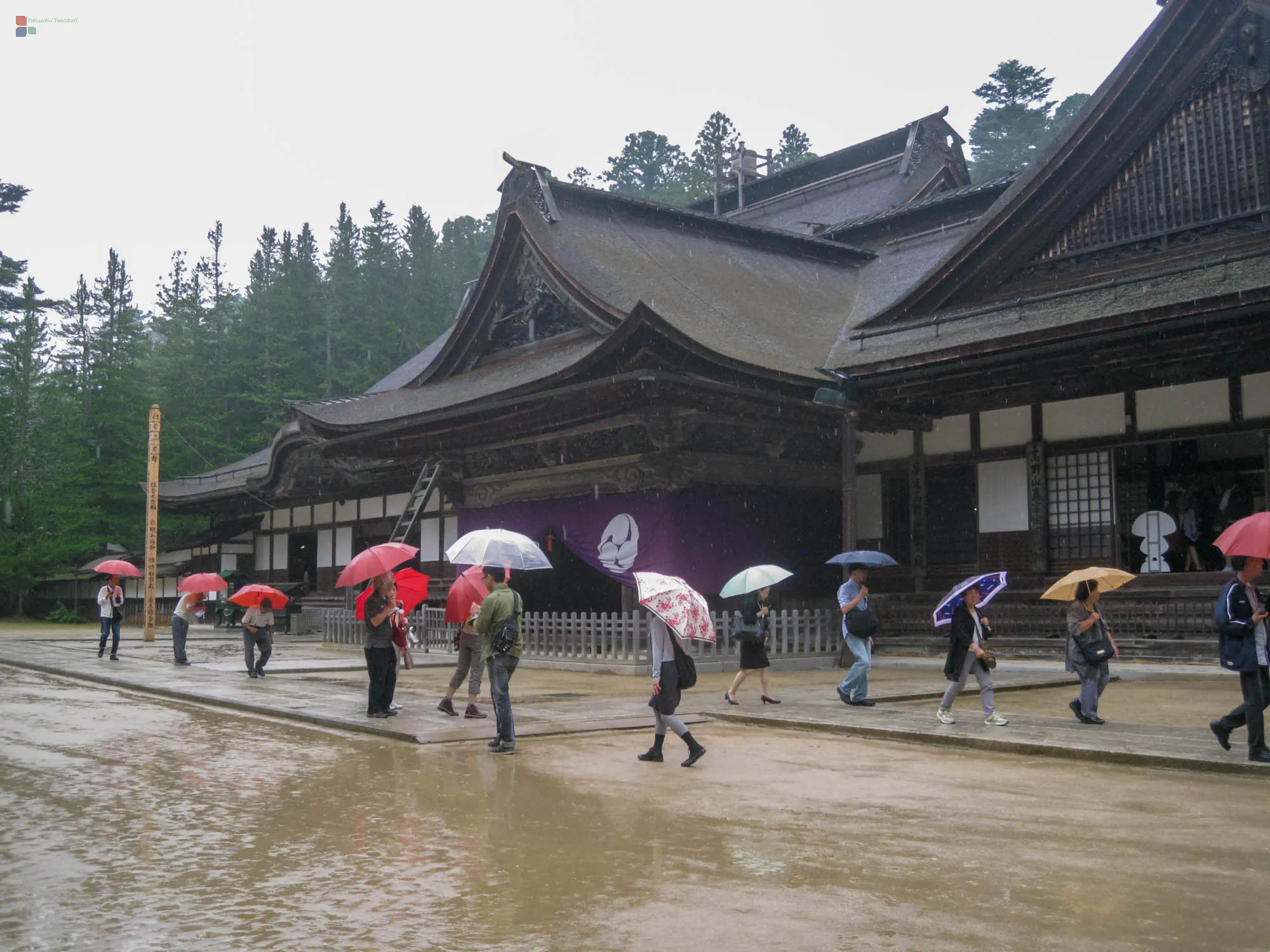
Our first visit in 2015 led us there on a day of fine, steady rain.
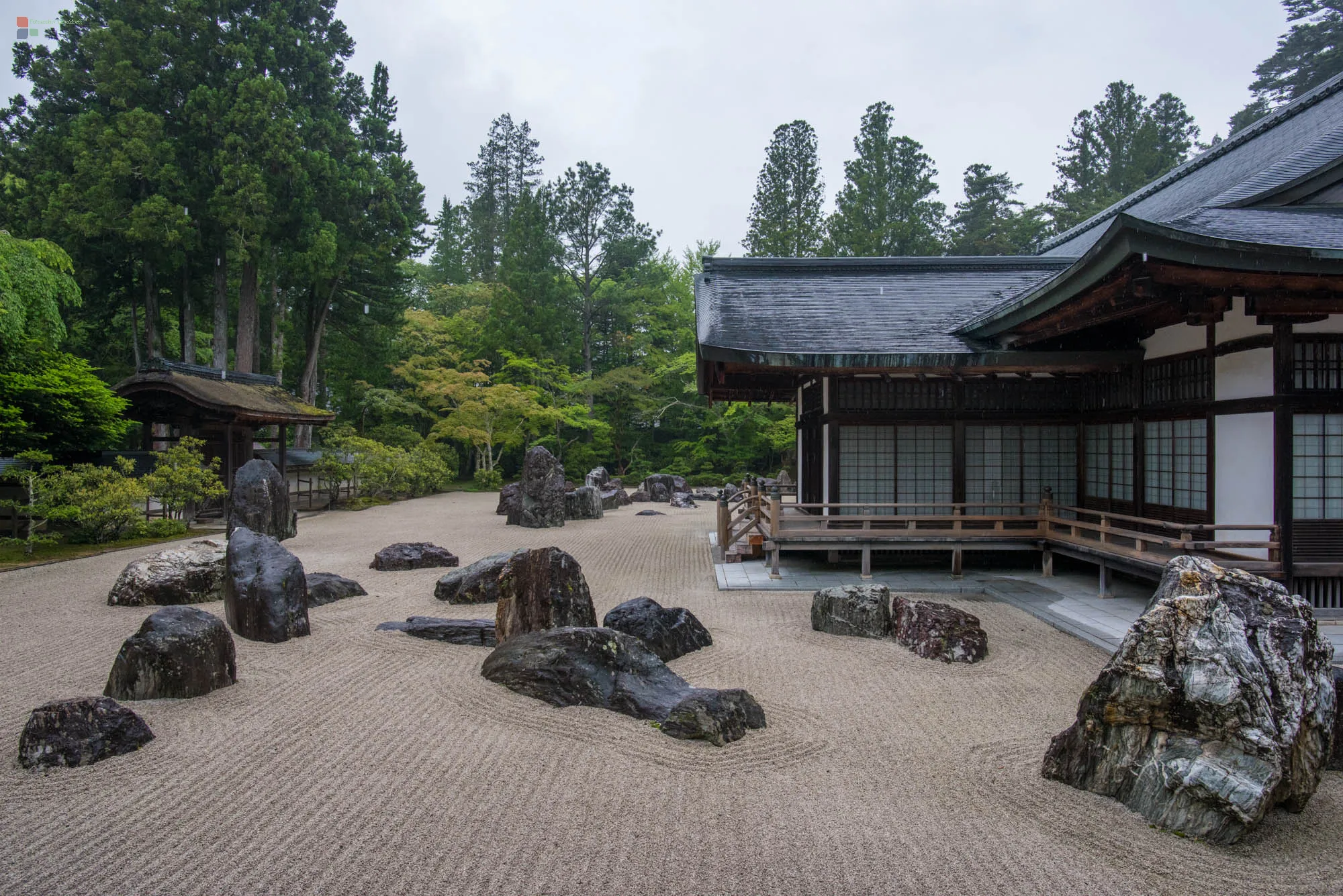
Raindrops slid silently along the wooden walkways of the temple, while the gardens lay veiled in mist.
There was a certain beauty in that stillness — the sound of the rain itself becoming a meditation.
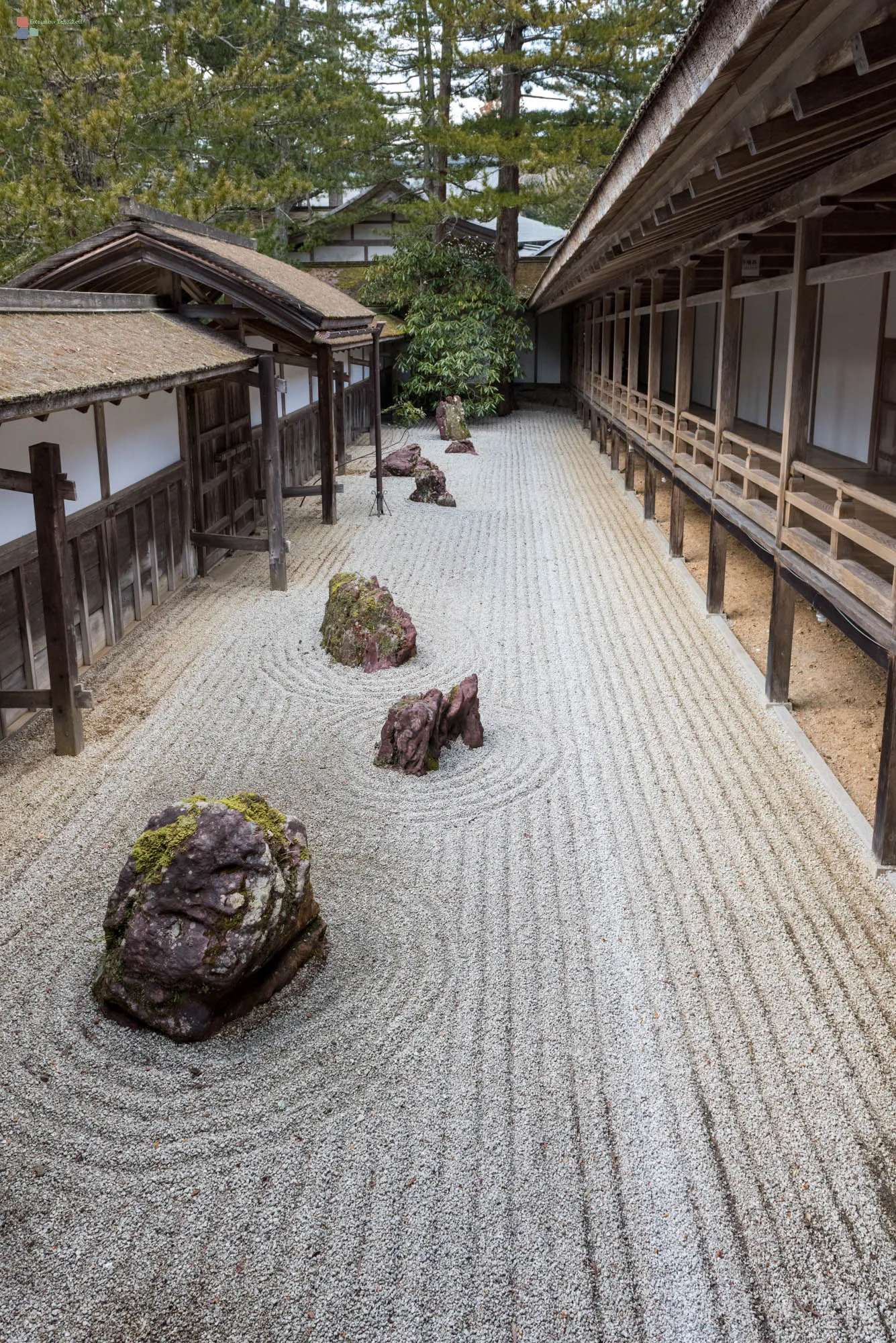
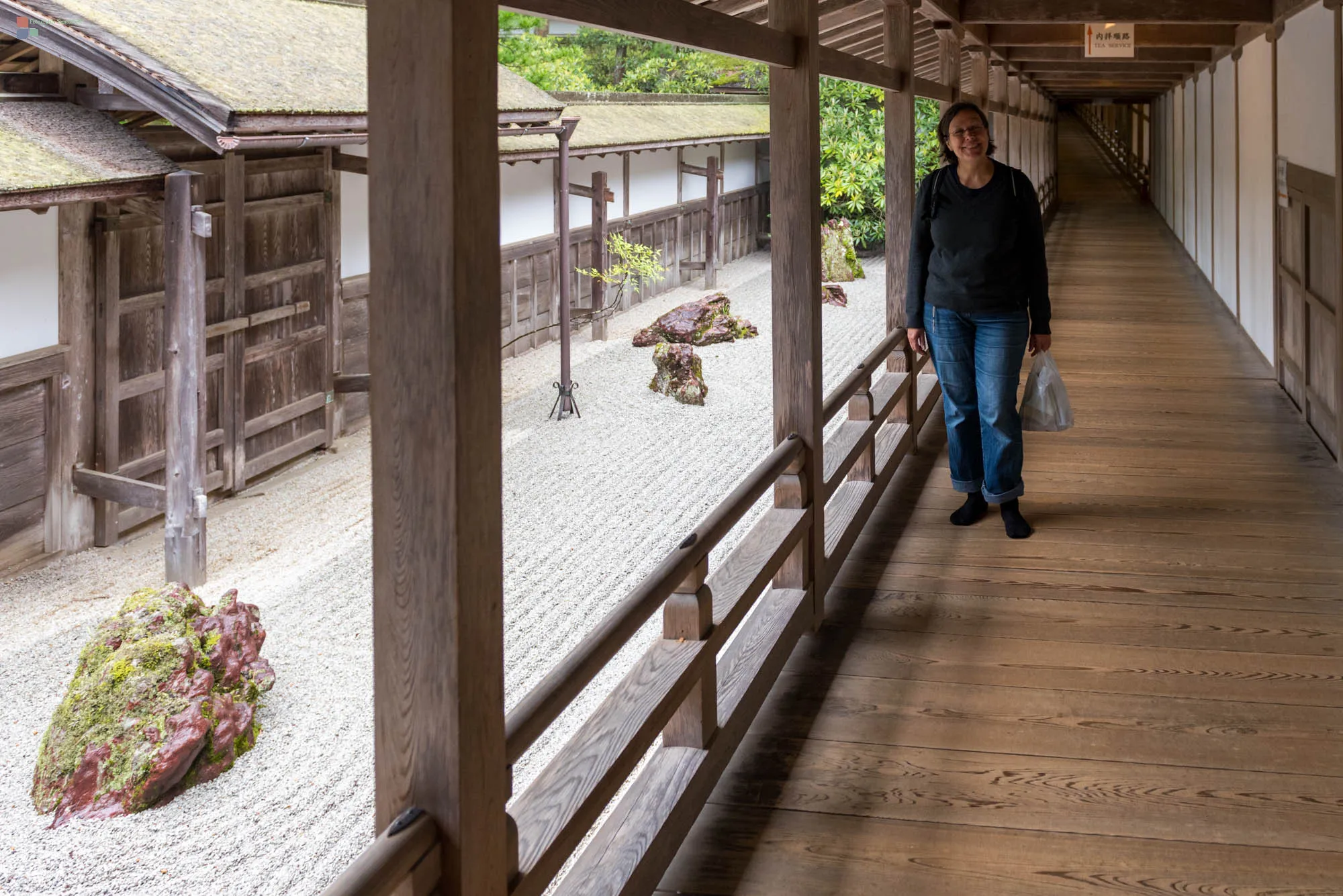
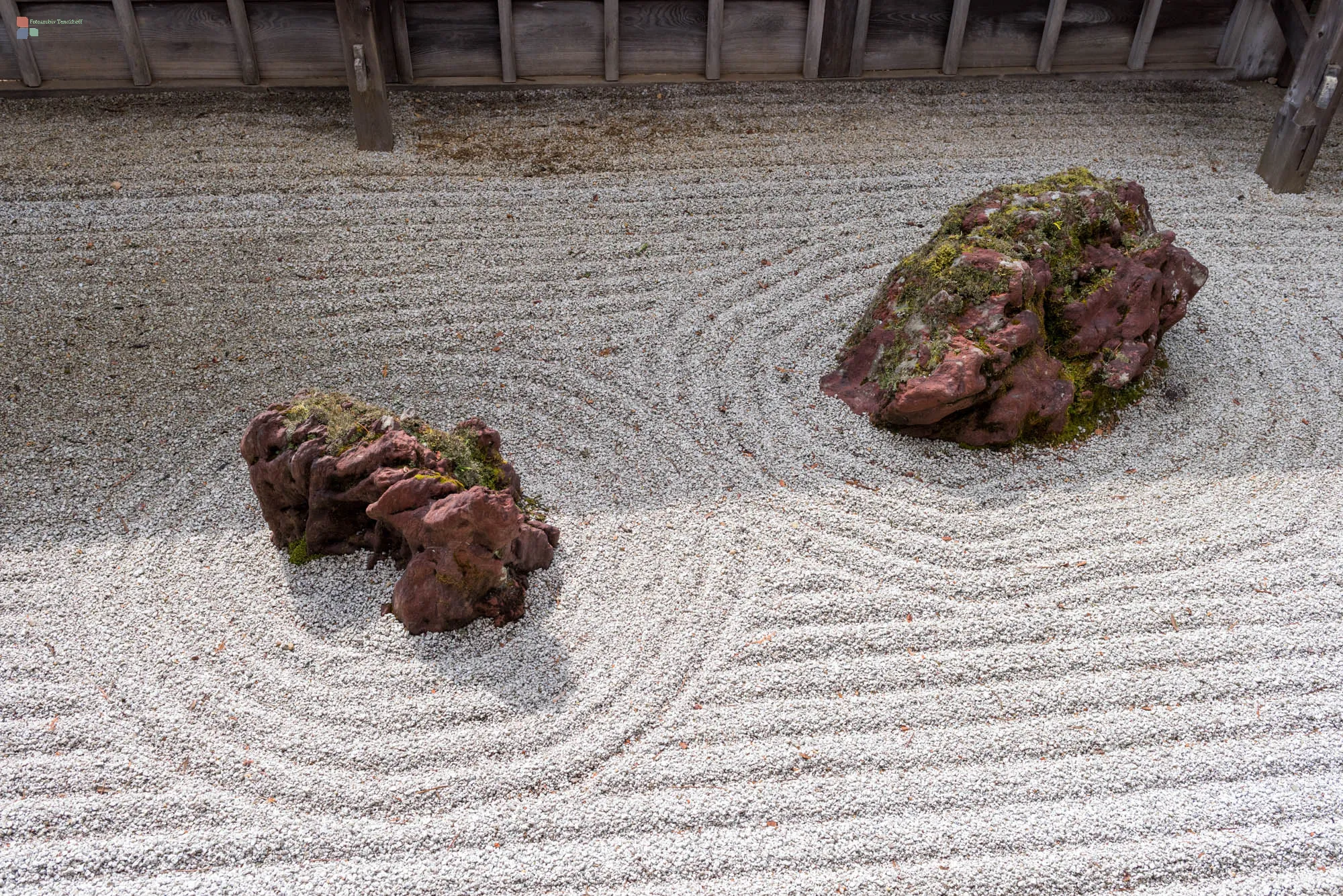
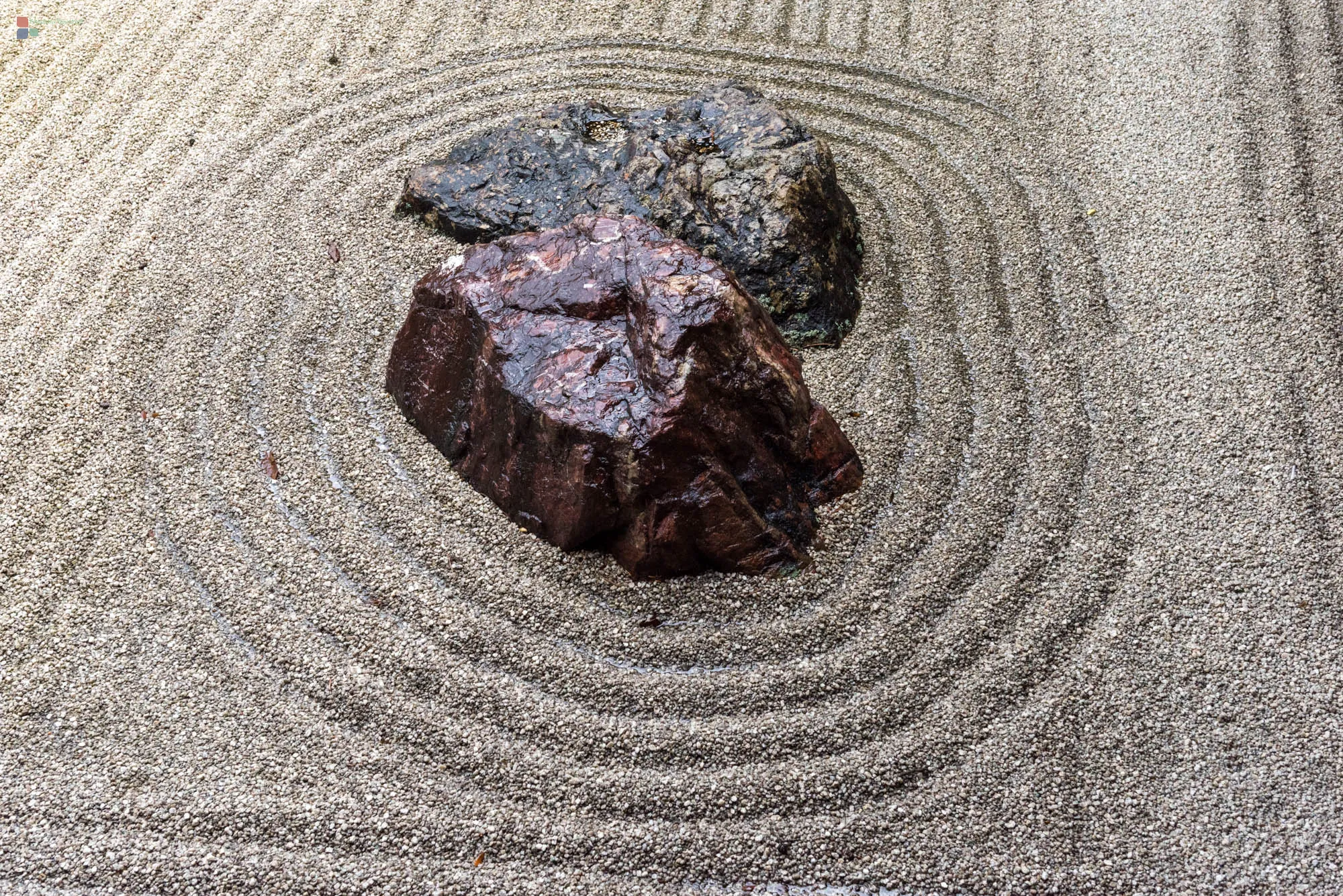
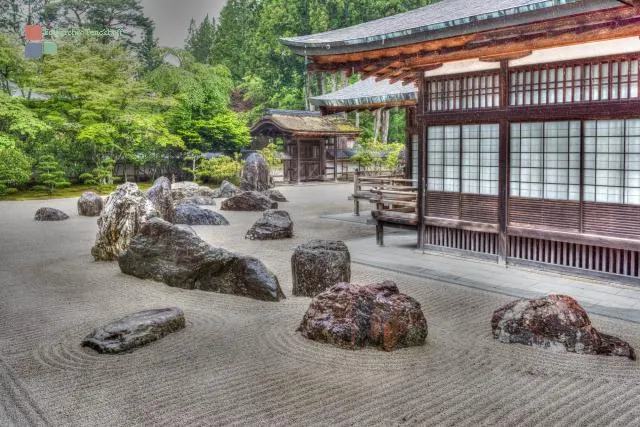
The rock gardens of Kongōbu-ji — their immaculate raked sand, the carefully placed stones, islands within emptiness — seemed like material metaphors for concentration and composure.
Each stone appeared deliberately set; each circle in the sand, the trace of an invisible motion.
We stood for a long time beneath the eaves, watching the rain blur the perfect lines, and felt no sense of loss — rather the thought that impermanence itself belongs to order.
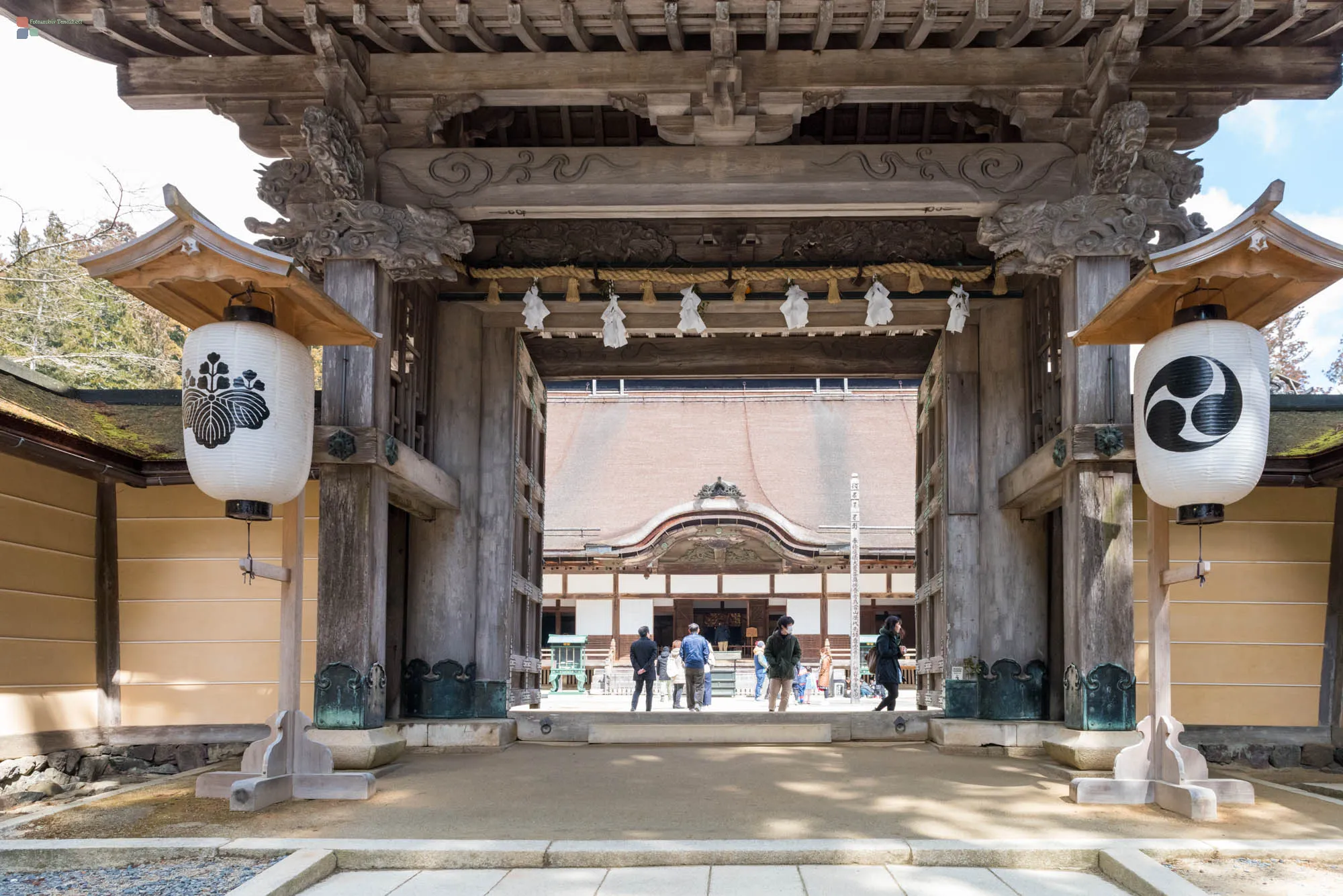
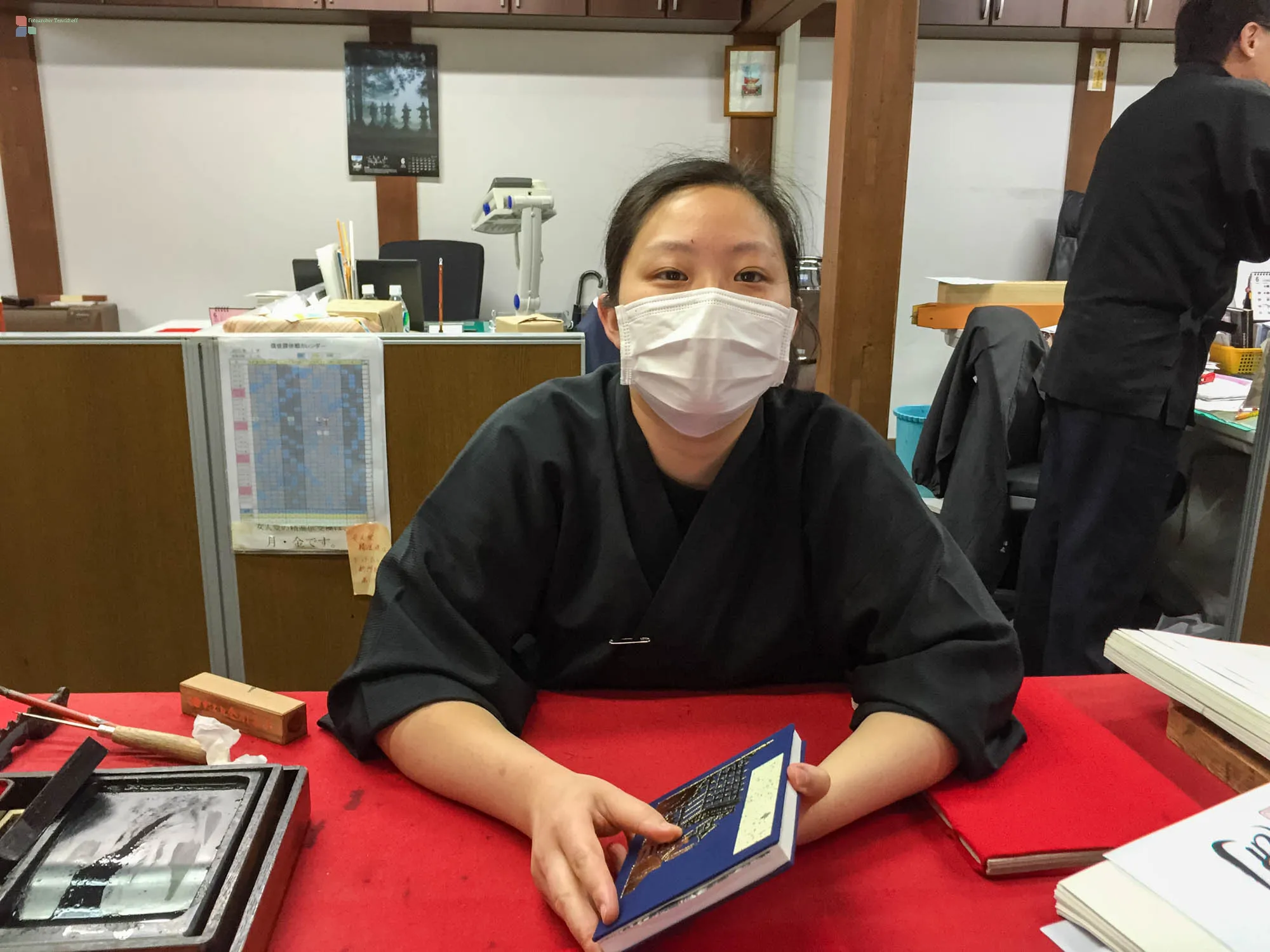
At the entrance, a young novice painted the temple’s calligraphic seal into our “Sacred Book” with black ink — a fluid circular stroke still lingering in the air as she laid down her brush with a quiet smile.
Second Visit – In the Sunlight of 2017
Two years later, in 2017, we returned to Kongōbu-ji — this time under clear skies and warm sunlight.
The sand gleamed, the stones cast sharp shadows, and the gardens seemed even more silent, almost timeless.
It felt as if the place had lost nothing, but rather deepened its presence.
Since we had already received the temple’s seal on our previous visit, we refrained from repeating the ritual and devoted ourselves entirely to the atmosphere.
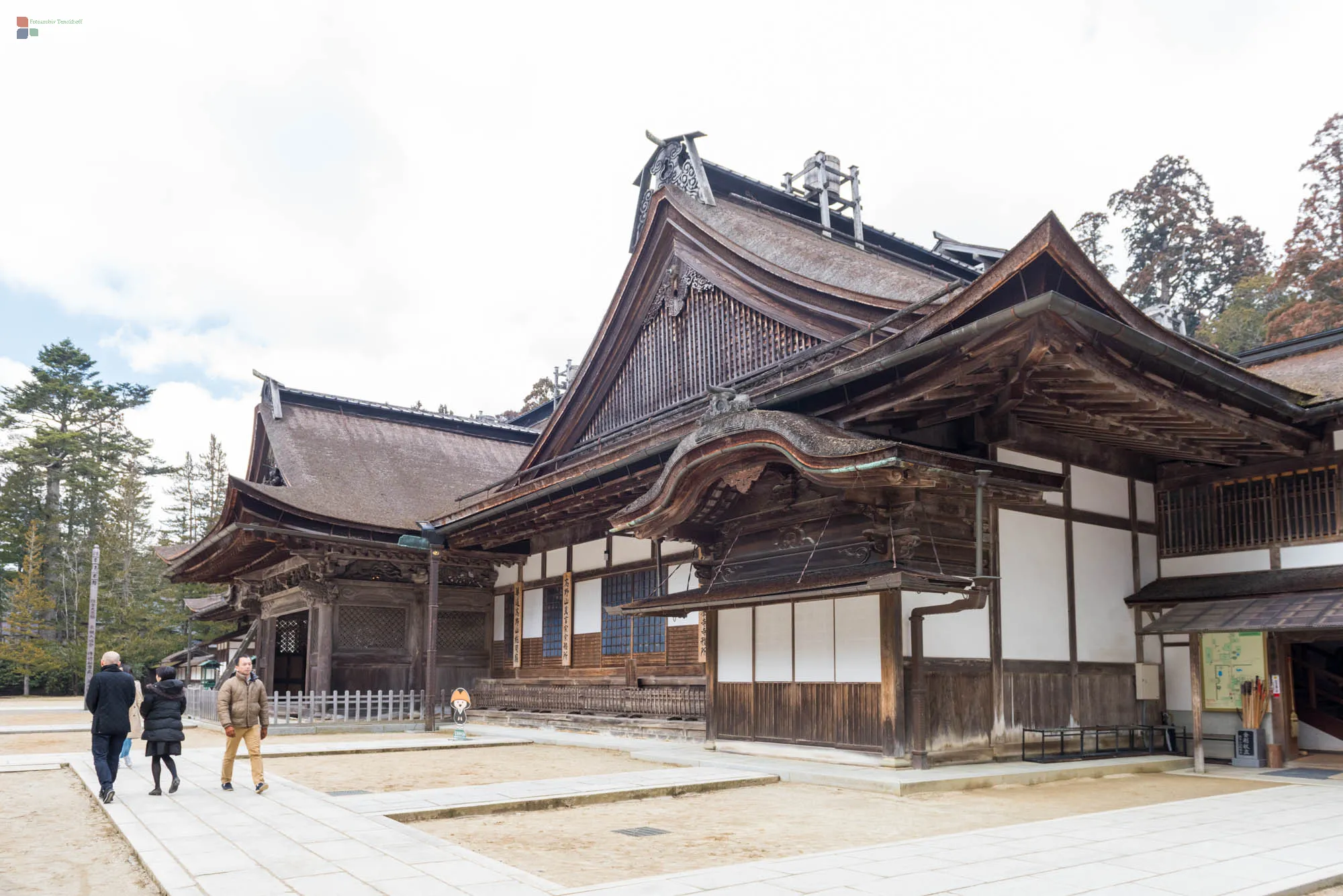
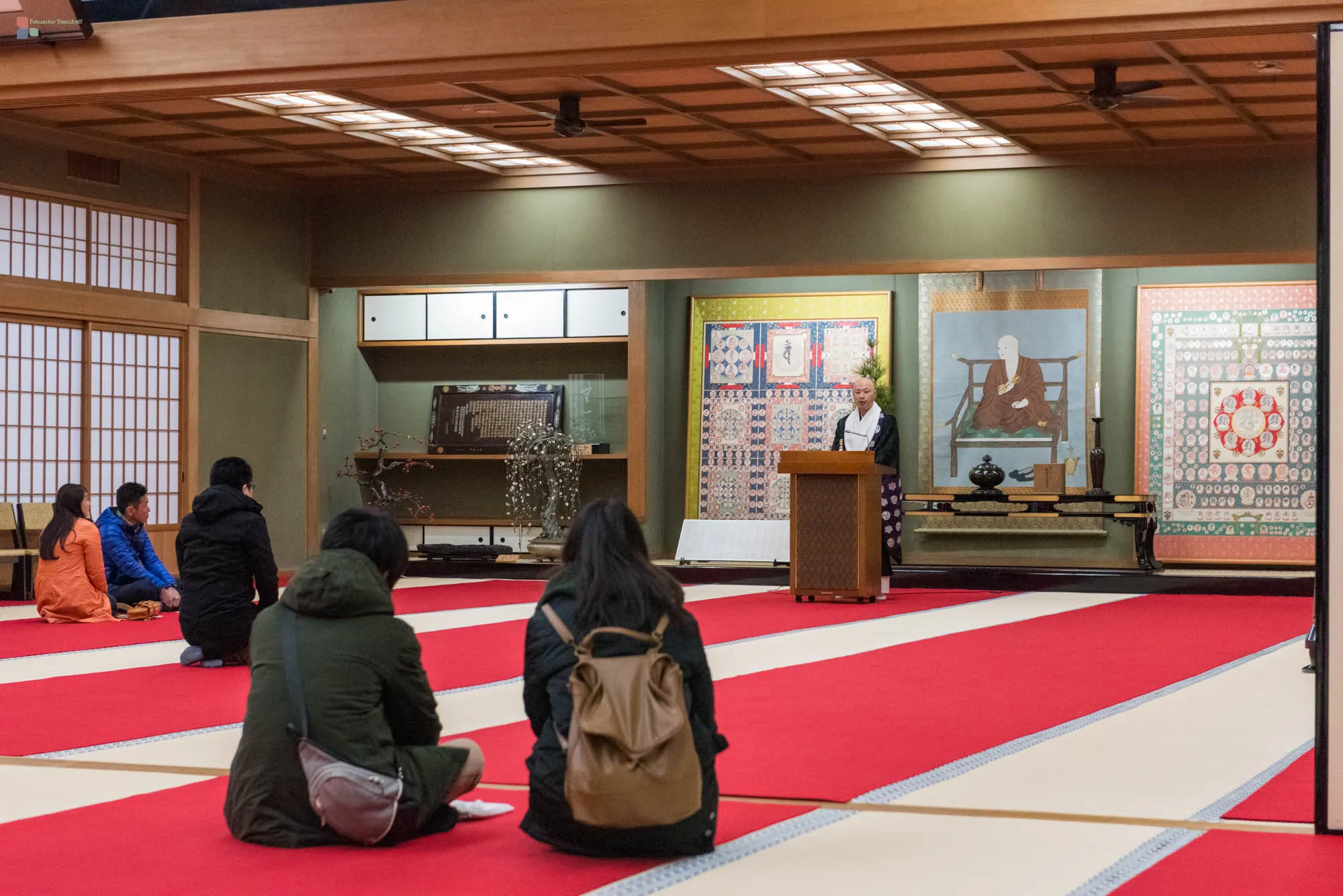
One of the most memorable experiences was a Buddhist reading held in one of the main halls.
We sat on the floor, upon long red-and-white carpets, and listened to the rhythmic recitation of a monk.
The words echoed through the room, carried by the scent of incense, merging with the breath of the listeners into a collective stillness.
It was less a sermon than a vibration — an experience of resonance rather than instruction.
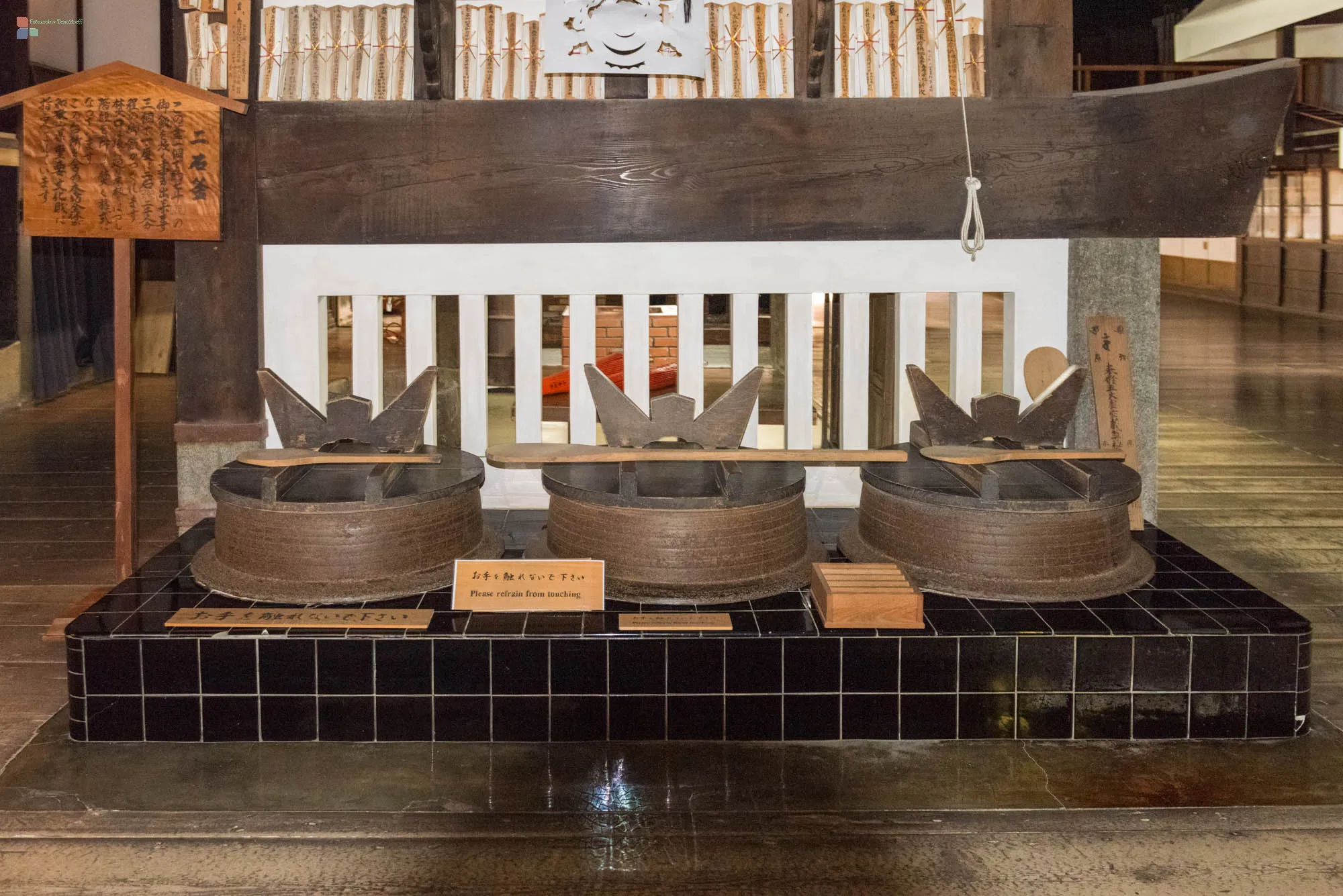
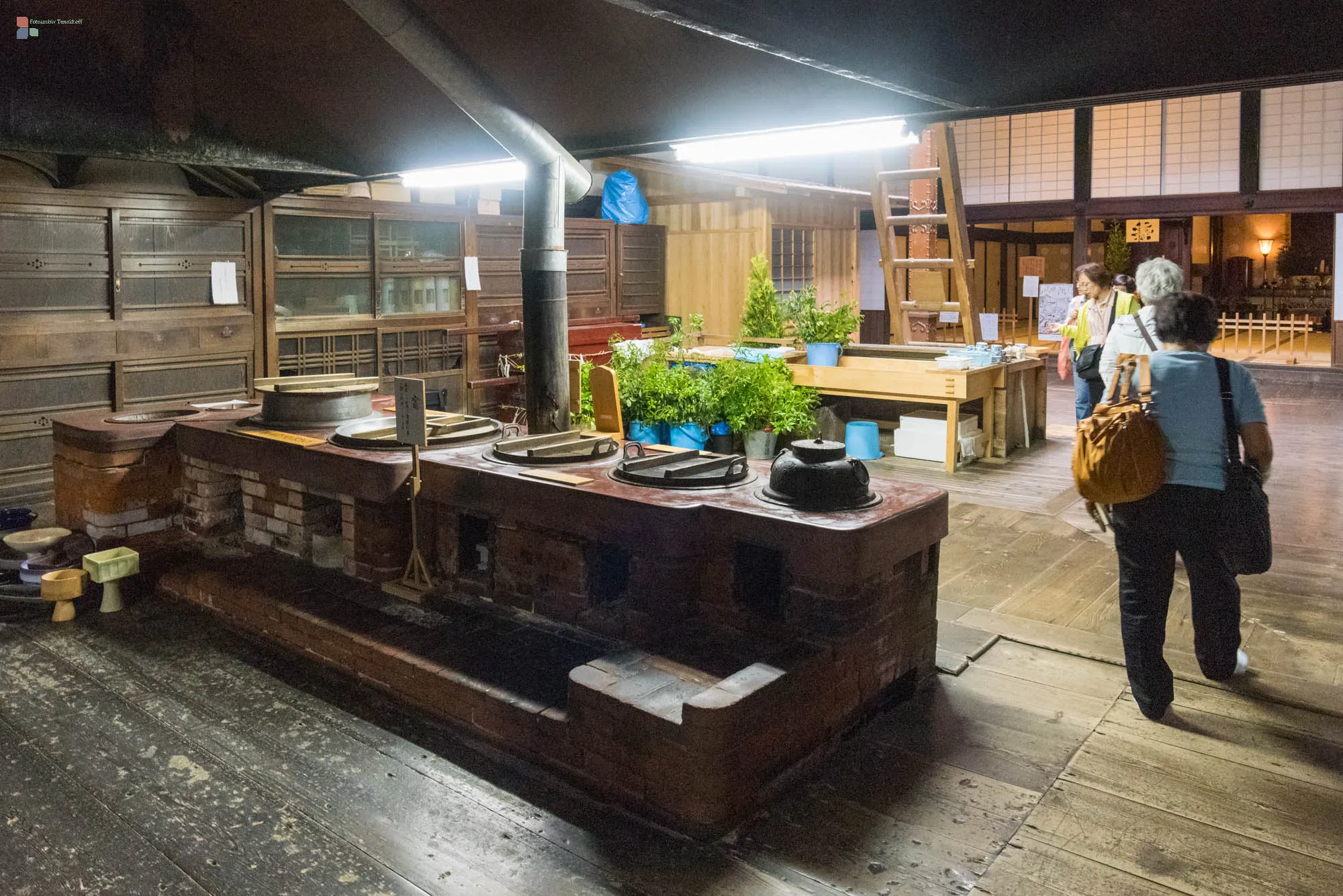
We also visited the temple kitchen once again — a vast space with blackened kettles and heavy wooden lids, testifying to centuries of monastic discipline and hospitality.
Here, daily life itself seemed part of the meditation.
Farewell and Reflection
Rain or sunlight, sound or silence — Kongōbu-ji changes with the weather and yet remains the same.
Perhaps that is its quiet teaching: that the mind rests not in the absence of motion, but in the balance between change and constancy.
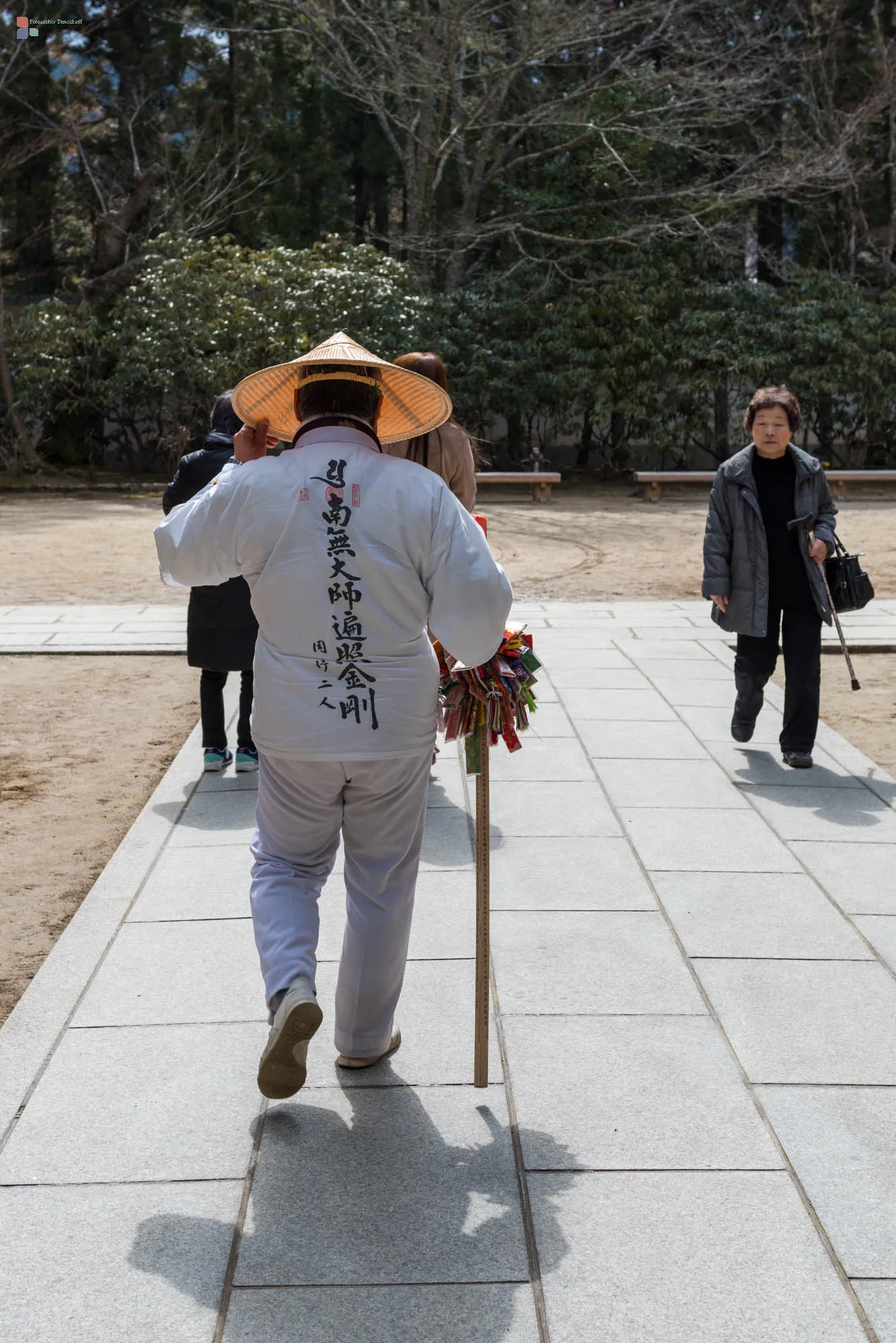
As we left, we saw a pilgrim in a white robe, already marked with the first stamps of his pilgrimage.
With a sturdy staff in his hand, he walked slowly out of the temple grounds — and for a moment, it seemed as if he carried the stillness of the garden with him down into the world.
We, too, return there in thought —
to the Temple of the Diamond Peak,
where stones speak, lines breathe,
and the word impermanence loses all sadness
and becomes simply the shape of being.