In this article: The Dragon in the Fire – The Goma Ritual at Ekōin Temple
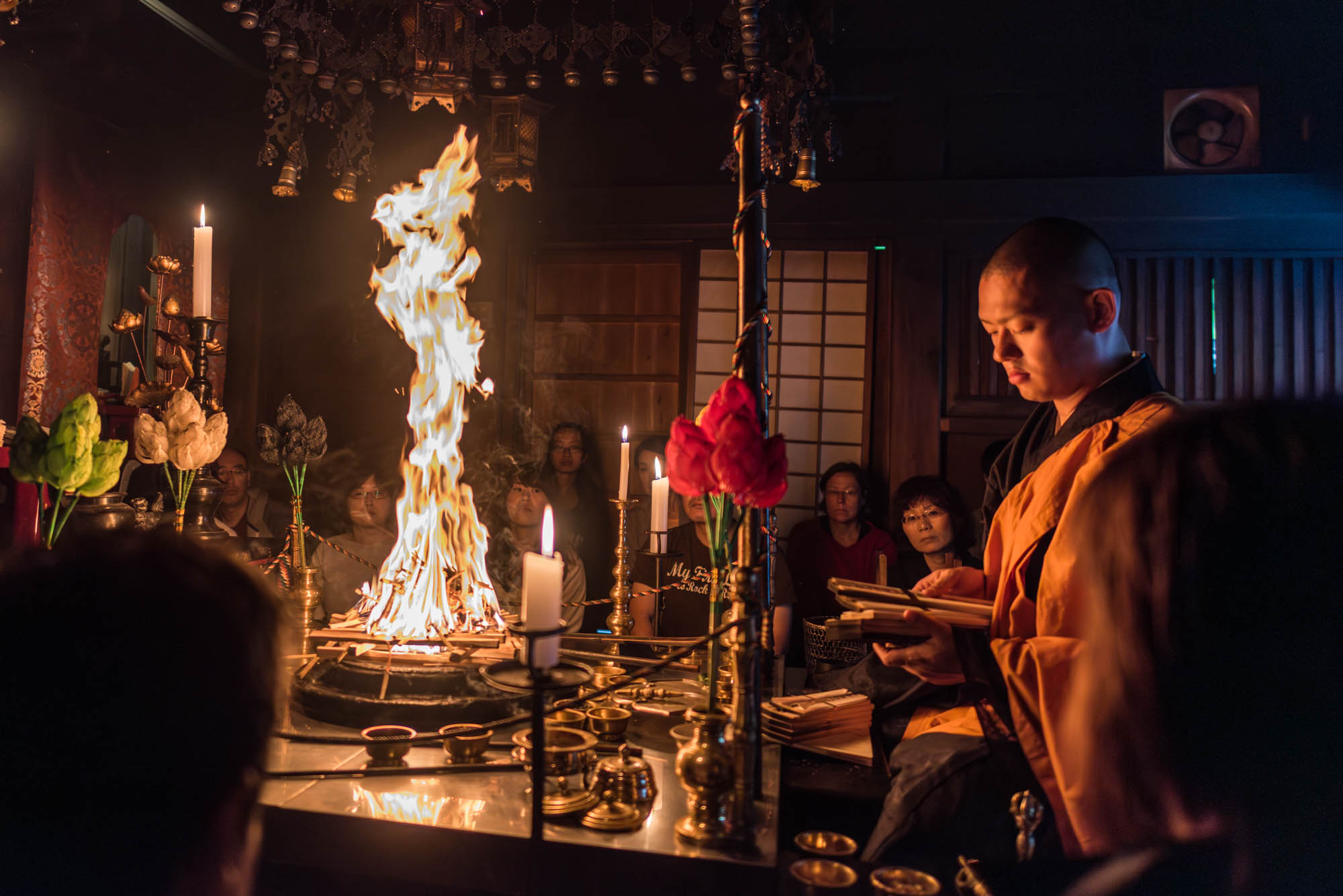
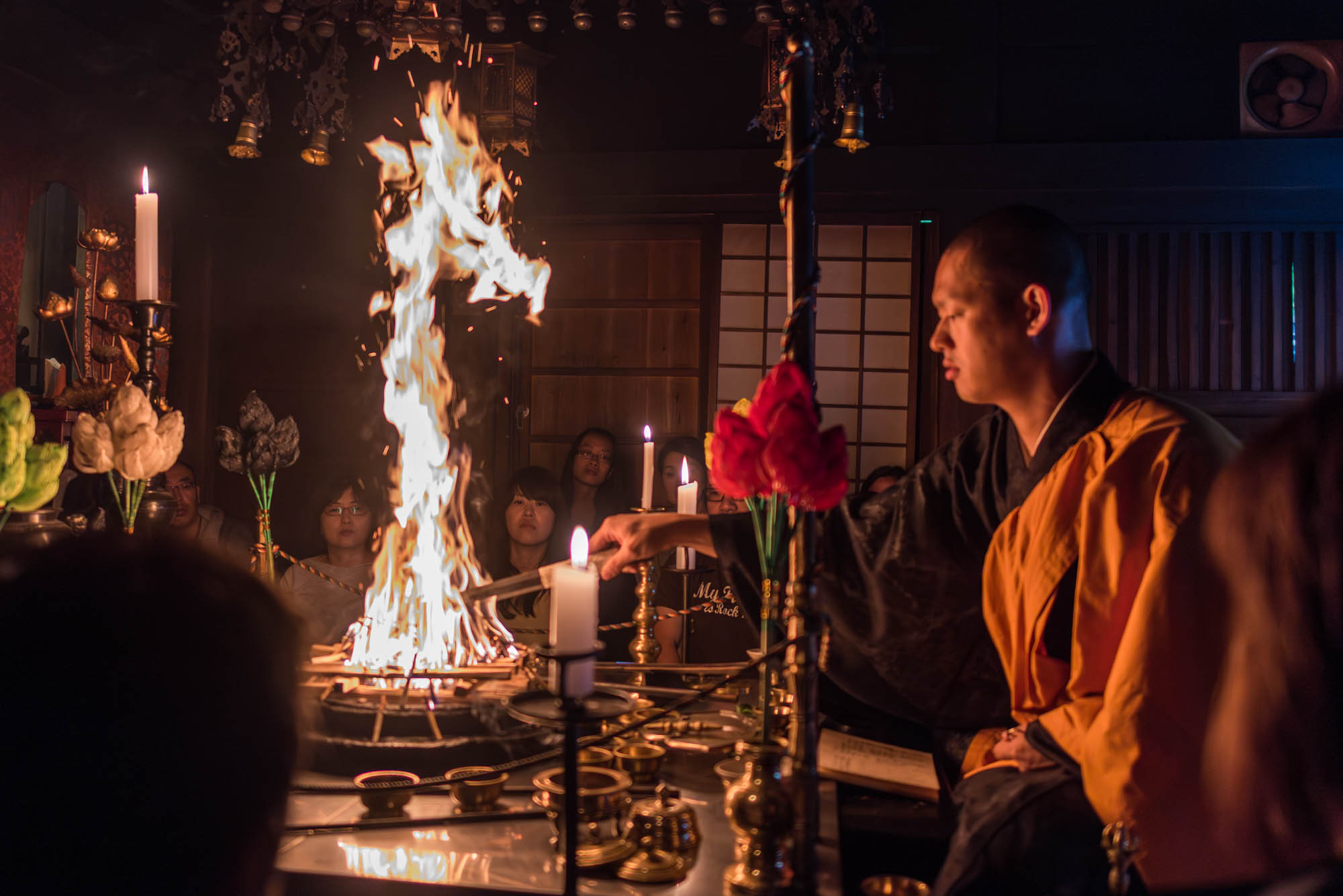
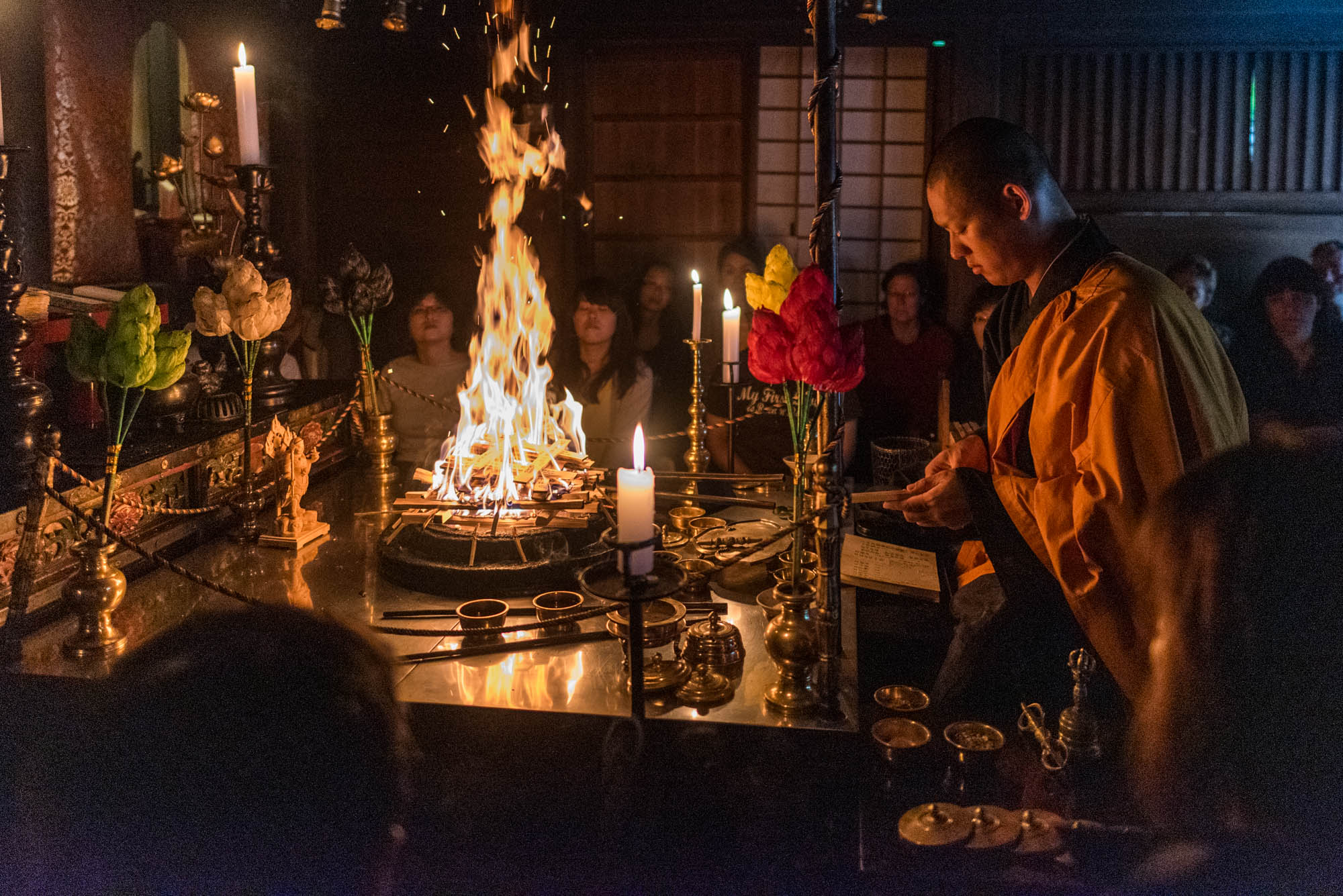
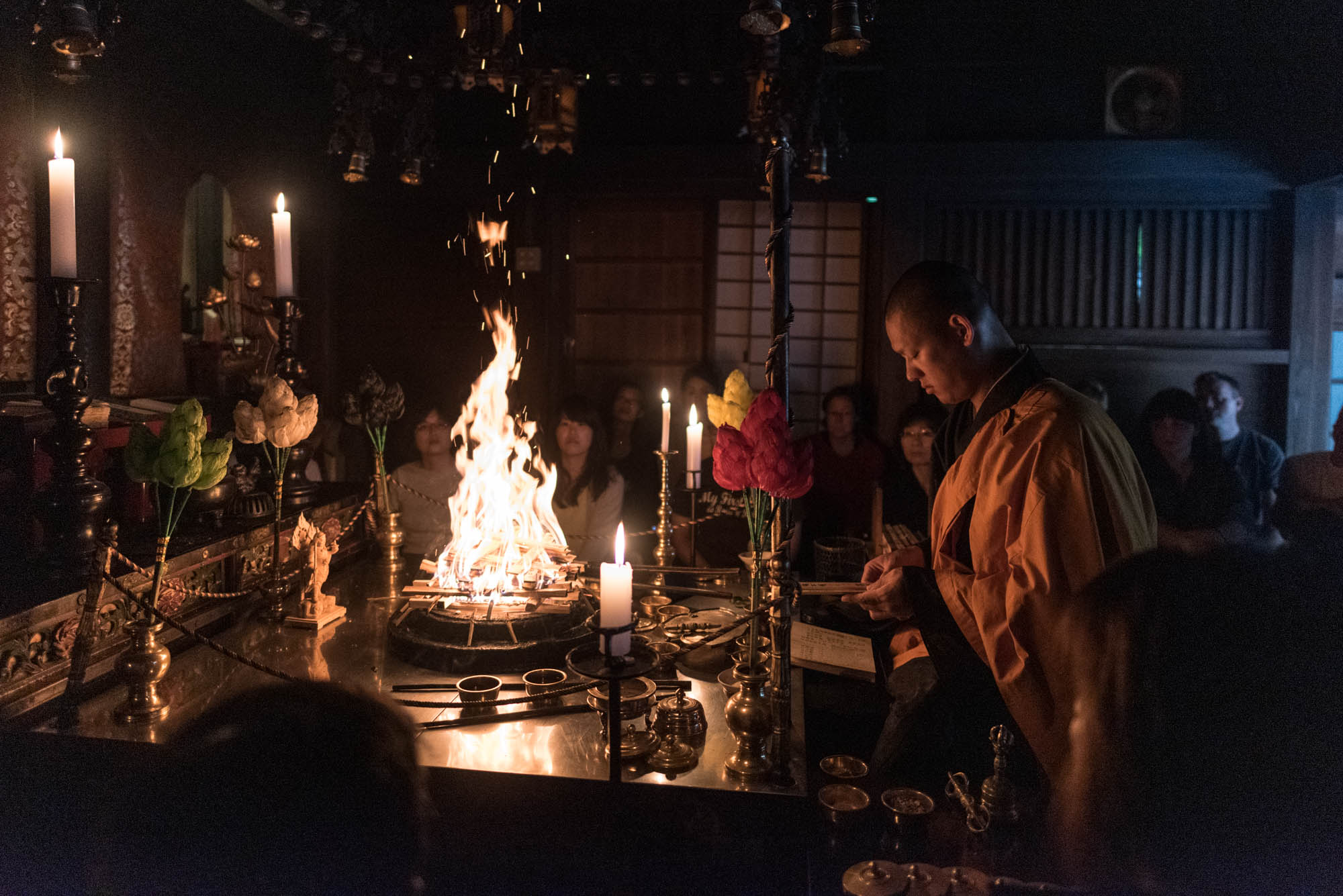
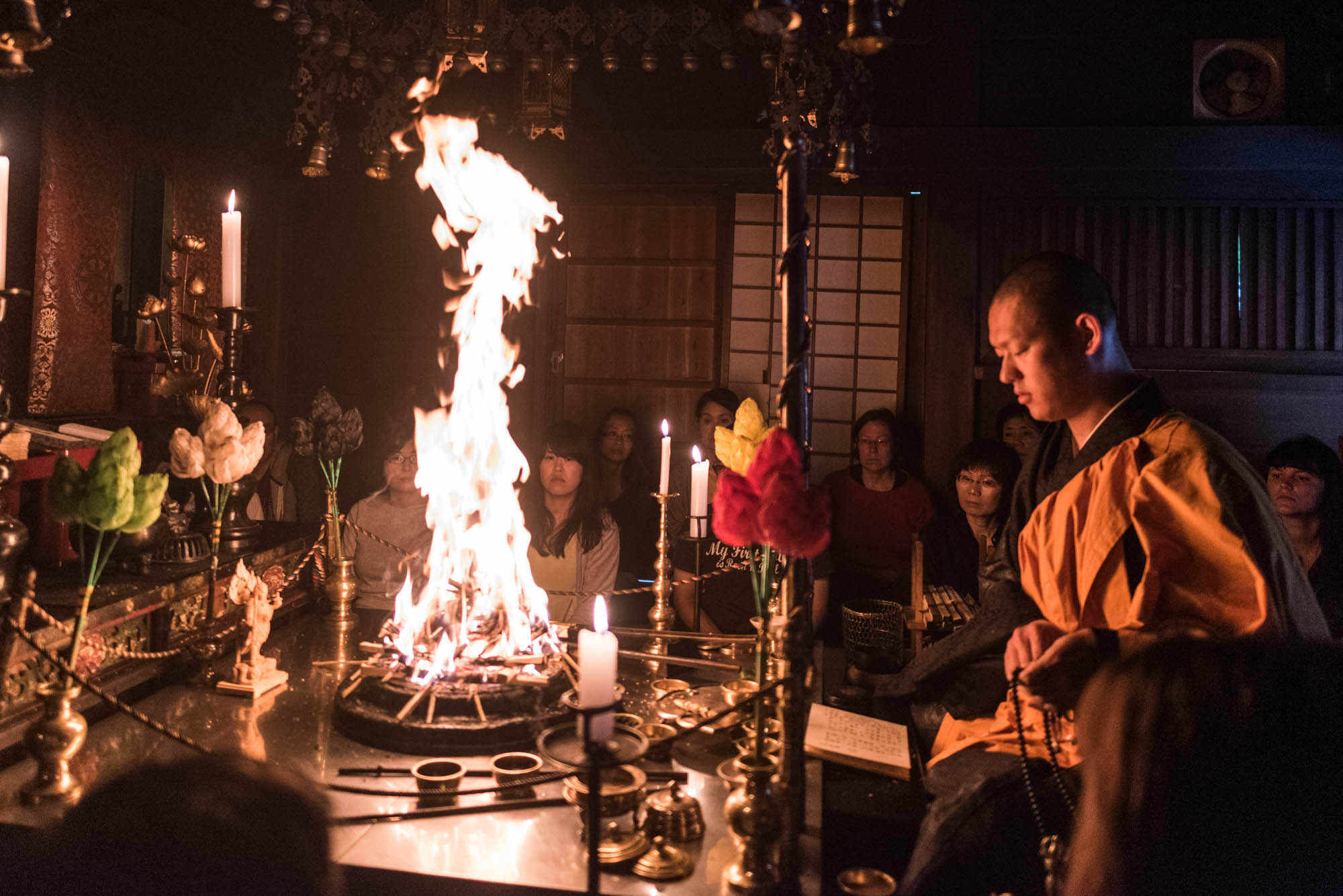
One early morning in Kōyasan, we attended the Goma fire ceremony (護摩法要) at Ekōin Temple – one of the most profound rituals of Japanese Esoteric Buddhism.
In the dimly lit hall, monks chanted sutras while the sacred fire rose and flickered, filling the air with smoke, rhythm, and energy.
As the flames danced, the ceremony became a gateway between worlds – where the visible turns into the language of the invisible.
The Dragon Appearing in Fire
In Esoteric Buddhism, especially in the Shingon and Tendai schools, the dragon (Ryū 龍) is a being of water and clouds.
It brings rain, fertility, and enlightenment, yet it also symbolizes the transformative power of fire – energy in motion, formless awareness manifesting through the elements.
During the Goma ritual, where fire represents the wisdom of Dainichi (Mahāvairocana), a paradox arises:
The dragon (water) appears in the fire (wisdom) – the union of opposites, the dissolution of duality.
To see the dragon within the flames is to perceive beyond the senses – to witness not merely fire, but the principle of transformation itself.
Kūkai’s Vision
Ancient Shingon writings tell that Kūkai once saw a dragon rise from the fire during a Goma ceremony on Kōyasan.
It spiraled upward and vanished into smoke – a sign of unity between heaven, earth, and consciousness.
Even today, at Ekōin, some participants report glimpsing a dragon’s head or a twisting flame form.
The monks interpret this not as illusion, but as a moment of resonance between the mind and the cosmic mandala – the outer manifestation of an inner state.
Symbolism and Meaning
The “fire dragon” represents spiritual transformation – the ascent of consciousness through the five elements:
earth, water, fire, wind, and space.
It parallels the kundalini energy rising within, and in Shingon it signifies Bodhicitta, the awakening mind.
To see the dragon in fire is to witness the ascent of form into formlessness.
Meditatively, this means not seeing something in the fire, but recognizing the fire itself as living, conscious energy.
At that moment, the separation between observer and phenomenon dissolves.
“Ryū ga arawareta” – The Dragon Has Appeared
Many pilgrims describe this vision as a moment of deep calm rather than awe – a sense that the fire itself has answered.
When this happens, the monks simply whisper:
“Ryū ga arawareta.”
The dragon has appeared.
And then they continue chanting in silence, as if the circle were complete.
Afterword
When the dragon appears in fire,
water touches the sky.The visible becomes a sign,
the invisible a mirror of the mind.In that instant, the flame itself becomes a sutra.
The Goma ceremony at Ekōin was not merely a ritual – it was an experience of transformation itself.
For a brief moment, the dragon seemed to dance within the flames, and the duality of fire and water, heaven and earth, matter and mind was dissolved into pure awareness.