Tokyo’s Quiet Gardens – Oases Beyond the Rush

Hidden between skyscrapers and city rush, Tokyo’s gardens offer peaceful retreats – like Koishikawa Korakuen and Hama-rikyū. A journey through time and stillness.
On this page: Shinto — Parents: Fotografische Themen › Kultur › Religionen — Photography, Technology & Science at the Tenckhoff Photo Archive.
Shinto is Japan’s indigenous religion, originating from prehistoric nature and ancestor worship. The term Shintō means “the way of the gods.” Central to it is the veneration of Kami — spiritual beings or forces residing in mountains, rivers, trees, and even man-made objects.
Shinto has no formal dogma or canonical scripture; instead, it emphasizes purity, gratitude, and harmony between humans, nature, and community. Rituals such as purification (Misogi), offerings, and festivals (Matsuri) sustain balance between the visible and invisible worlds.
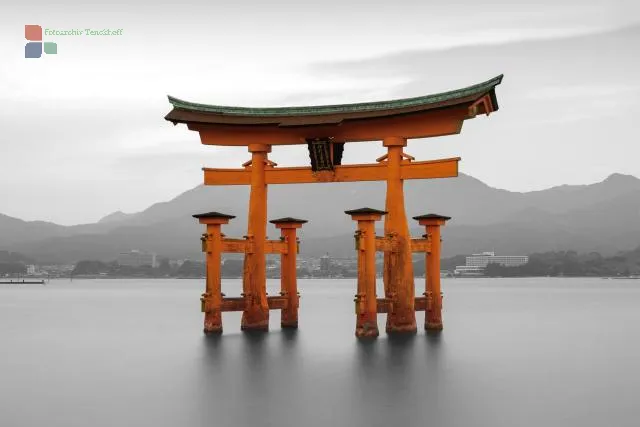
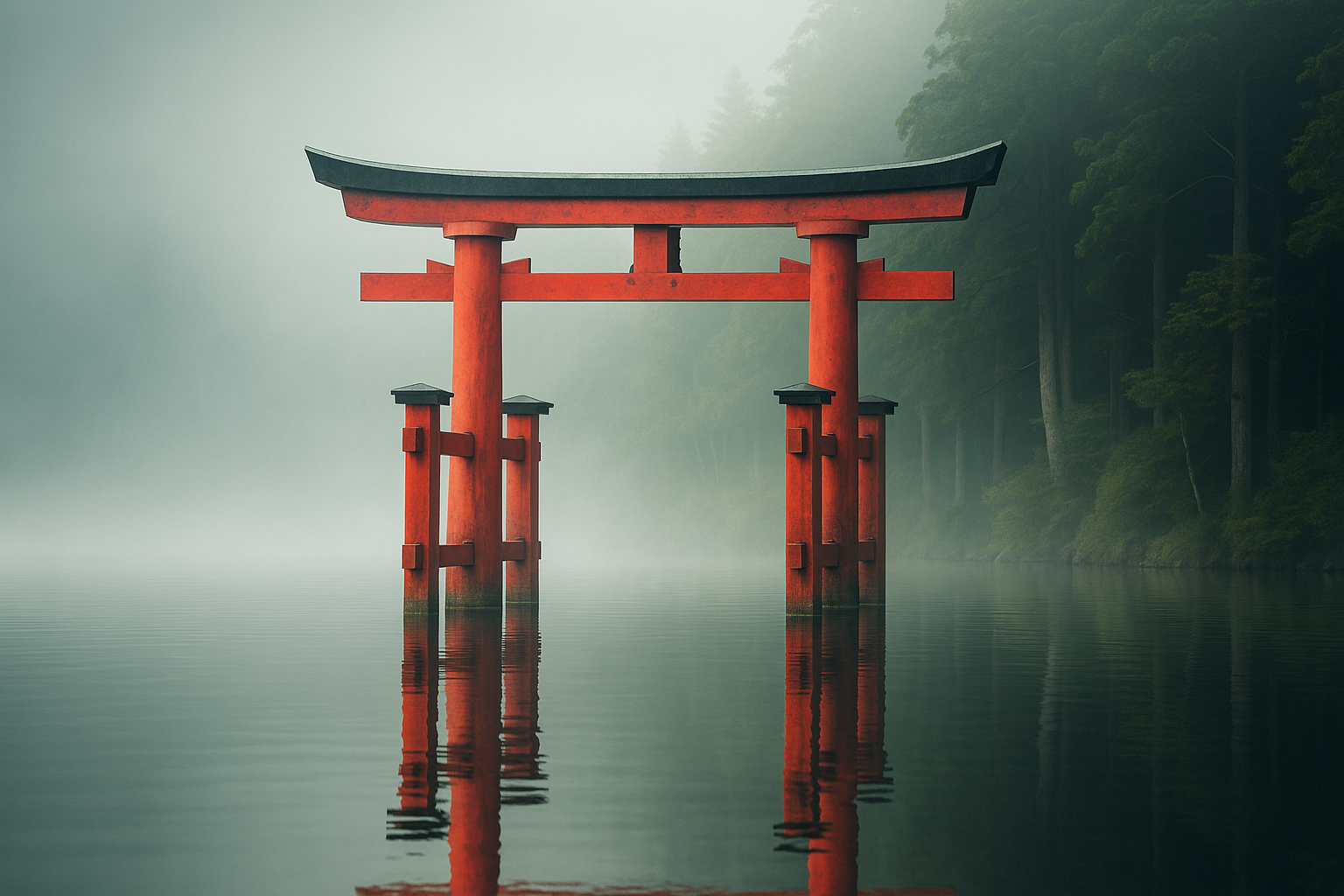
The Torii gate marks the boundary between sacred and profane space. Many Shinto shrines coexist beside Buddhist temples, reflecting centuries of cultural symbiosis. While Buddhism seeks enlightenment through insight, Shinto celebrates life itself and reveres nature’s vitality.
In modern Japan, Shinto functions less as a missionary faith than as a cultural ethos. Ideals of cleanliness, respect, and social harmony influence art, architecture, and everyday life. Shinto reminds us that spirituality can dwell in simplicity — in awareness, beauty, and connection to the living world.