Brittany

On this page: Brittany — Parents: Europa › Frankreich — Photography, Technology & Science at the Tenckhoff Photo Archive.

Brittany is a region in northwestern France that extends deep into the Atlantic Ocean. It is known for its rugged coastline with cliffs, lighthouses, and beaches, as well as its Celtic heritage, reflected in language, music, and festivals. Historic towns such as Saint-Malo, Rennes, and Quimper, along with the megalithic sites of Carnac, shape its cultural landscape. Brittany is also renowned for its cuisine, featuring crêpes, galettes, and cider.

Trail running in Brittany, the Sentier Côtier GR 34

The Breton coastal hiking trail, the Sentier Côtier GR 34, offers magnificent views from the headlands it passes. One section of the route, for example, leads from the Pointe du Raz via the Cape le Chevre to the Pointe de PenHir near Camaret sur Mer.

The Lighthouses at the End of the World

The two "lighthouses at the end of the world" called Phare de la Vieille and Tourelle de la Plate stand in the open sea off the Pointe du Raz.

The Cemetery of Cuddly Ships

Although shipwrecks can occasionally be seen on coasts or in ports such as Camaret sur Mer and Douarnenez in Brittany, the ship graveyard at Rostellec is exceptional.

The stone rows of Lagatjar

The Lagatjar Stone Rows are located on the Crozon Peninsula in the Finistère department of Brittany in France near Camaret-sur-Mer. It is believed that 400 menhirs - large and small - should have stood here, which made up the main building with a total length of 600 meters.

And these rows of stones are also of great importance for galactic hitchhikers, as the longest row consists of 42 menhirs with a length of about 200 meters.

Megalithic culture in Carnac

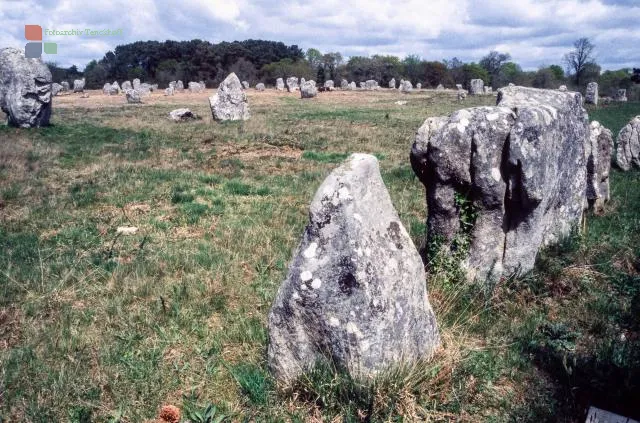
In Carnac there are rows of stones (French/Alignments) of menhirs (Celtic/large stone), which consist mainly of granite rock from the Breton coast and numbered around 3000 in the years of construction. The largest menhirs are about 4 meters high and are always at the western end of the corresponding row. To the east, the menhirs become smaller and smaller in their approximately 3 km long rows until they are only half a meter high. Originally, the rows were probably even 8 kilometers long.