Lower Saxony

On this page: Lower Saxony — Parents: Europa › Deutschland — Photography, Technology & Science at the Tenckhoff Photo Archive.

Lower Saxony (Niedersachsen) is a federal state in northwestern Germany, with Hanover as its capital. It is the second-largest German state by area, after Bavaria. The landscape stretches from the North Sea coast and the East Frisian Islands to the Lüneburg Heath and the Harz Mountains. Lower Saxony is an important industrial region, particularly in the automotive sector (e.g., Volkswagen in Wolfsburg), as well as in agriculture and energy. Culturally, castles, Hanseatic towns, traditional festivals, and UNESCO World Heritage Sites such as the Rammelsberg Mine and the Fagus Factory shape the state.

Volbers Hünensteine - 1956 und 2021
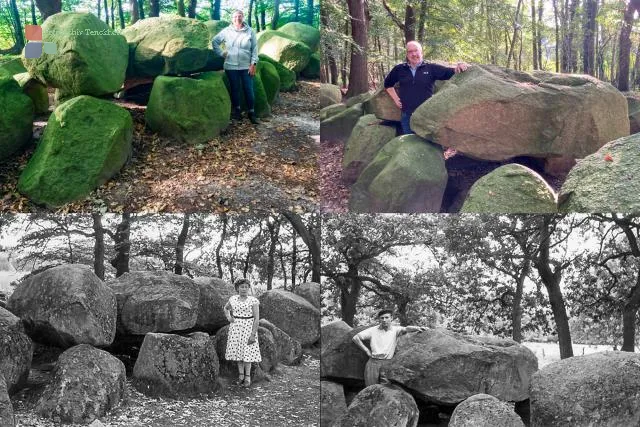
If you travel to the large and long graves of the road of megalithic culture between Osnabrück and Oldenburg, there is a very special Early Stone Age construction near Hüven in Emsland: the Volbers Hünensteine (also called Hüven-Nord with the Sprockhoff no. 842). In June 1956, Lisa and Rudi, Karin's parents, who lived in Lahn at the time, were photographed here. We have recreated the photos and the comparison also shows the changes in the dolmens over the past 65 years.
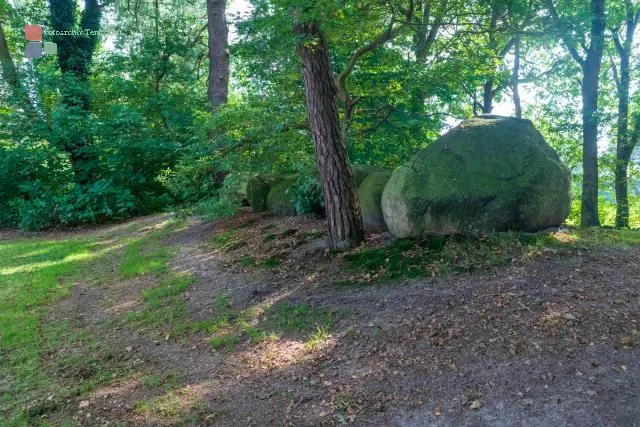
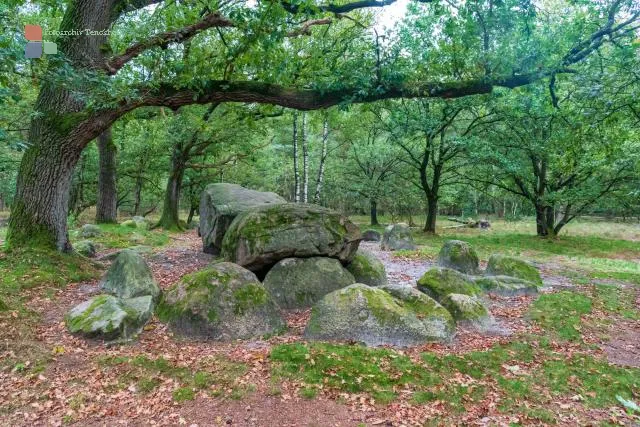
Route of Megalithic Culture in Emsland

From Oldenburg to Osnabrück, the route of megalithic culture in Emsland runs around 330 kilometers to 33 well-preserved Neolithic burial sites that were built around 5000 years ago. And detours from this route lead to other "dole graves" or at least to places where special rock formations serve as an indication of buildings from the Early Stone Age.

This article shows photos of the following megalithic tombs:

Großsteingrab an den Hünensteinen bei Werlte

Megalithic culture on the Hümling

Anyone who deals with Stone Age buildings may first think of England's world-famous stone circle called Stonehenge. But also individually standing menhirs (Celtic/large stone), rows of stones (French/alignements), cromlechs (Welsh/curvature) and dolmens (Breton/stone table) are well-known designations for buildings whose age is estimated at 3000 to 5000 years. The different languages ​​already show that these are not regionally limited architectural or structural achievements.